
Toy storage ideas for small living rooms work best when you stop trying to “store everything” and start designing a few reliable zones that fit how your family actually uses the room. If toys keep migrating from one corner to the entire couch, you’re not failing at tidying, your setup just isn’t doing any work for you.
Small living rooms get messy faster because every surface is doing double duty, play space, walk path, seating, sometimes even workspace. That’s why the most useful solutions tend to be boring in the best way: easy to access, quick to reset, and hard for toys to “spill” into the rest of the room.
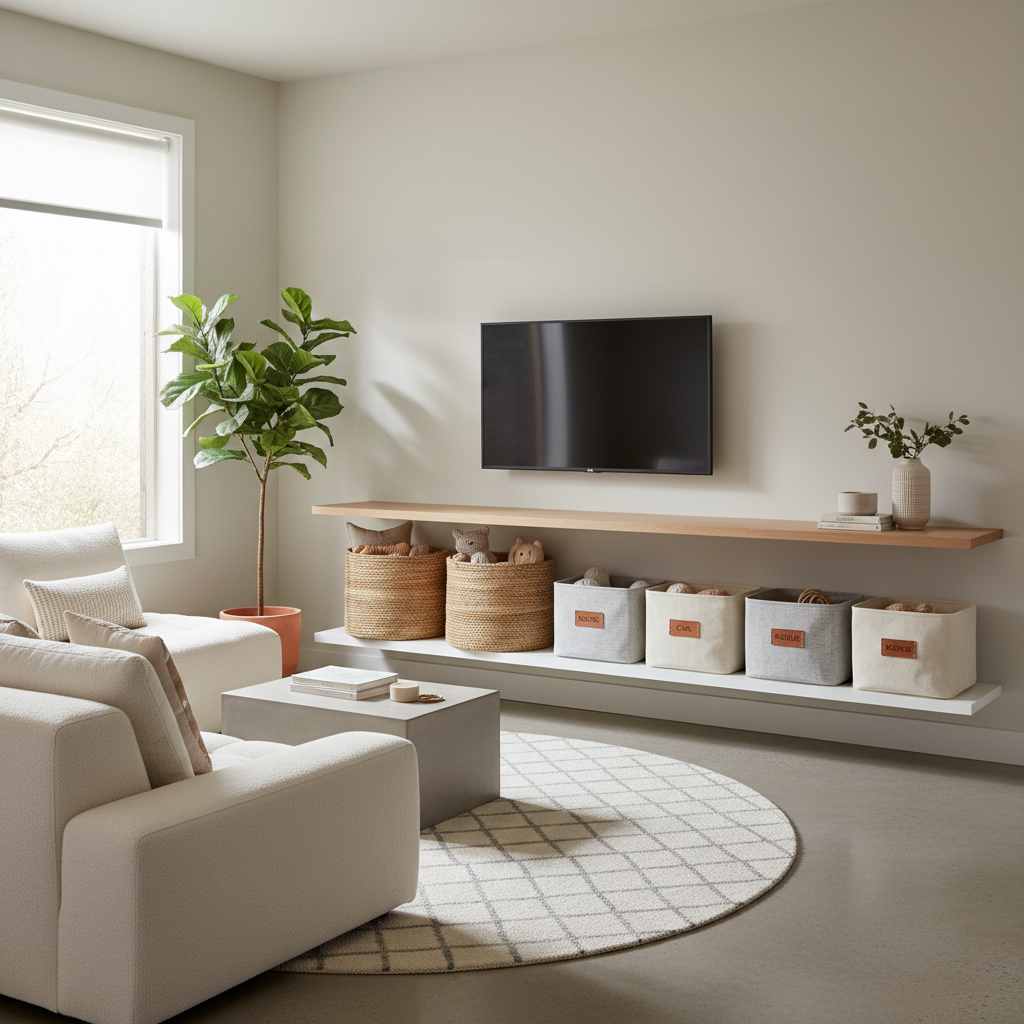
This guide focuses on choices that typically matter most in tight spaces, what to avoid, and how to build a system you can maintain even on busy weekdays. No fancy custom built-ins required, unless you want them.
Start with the real constraint: space, time, and “reset speed”
Before buying containers, decide what success looks like. In many homes, the win is not “everything hidden,” it’s “I can clear the floor in 3 minutes.” That’s the difference between a room you can live in and a room you constantly apologize for.
- Space constraint: your storage footprint can’t compete with seating and walkways.
- Time constraint: if cleanup takes more than 5–10 minutes, it often won’t stick.
- Reset speed: the system must support fast, repeatable tidy-ups without perfect sorting.
According to American Academy of Pediatrics (AAP), safe sleep and safe environments matter, and while they address a broad range of home safety topics, the practical takeaway for toy storage is simple: reduce trip hazards and keep heavy items stable, especially in shared family spaces.
A quick self-check: what kind of toy clutter do you have?
Different messes need different storage. Use this quick check to avoid buying “cute” bins that don’t match your problem.
- Many small pieces (LEGO, mini cars, doll accessories): you need contained, lidded storage and a rule for where pieces live.
- Bulky items (trucks, play kitchens, big stuffed animals): you need fewer, larger zones and a hard limit on volume.
- Daily rotation toys (favorites used every day): keep these at kid height with open access.
- Occasional toys (puzzles, seasonal kits): store higher up or out of the room.
- Paper and crafts (markers, coloring, sticker books): separate from “floor toys” to prevent cross-mess.
High-impact toy storage ideas that fit small living rooms
These options tend to work well when your living room also needs to feel like an adult space. Pick two or three that match your layout instead of trying to do all of them.
1) A “landing zone” basket that prevents toy creep
Put one attractive basket where toys naturally end up, usually near the sofa. The point is containment, not perfection. When playtime ends, everything goes into the basket, then you sort later if you want.
- Choose a basket with a wide opening and a stable base.
- Assign it to soft toys, board books, or mixed daily items.
- Keep it light enough to move for vacuuming.
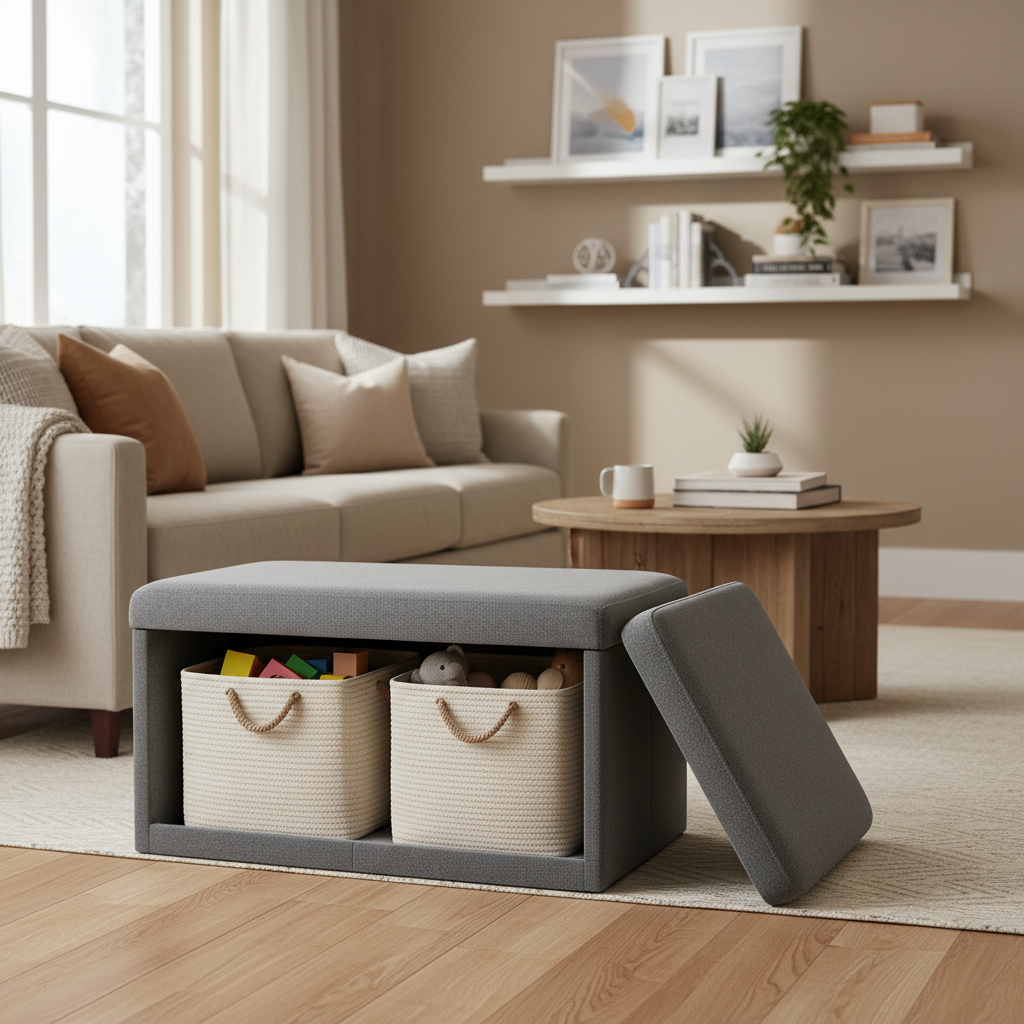
2) Storage ottoman or lift-top coffee table (with rules)
Hidden storage furniture is a classic for a reason, but it can become a black hole. Give it a category: “only big toys,” “only train set,” or “only throw blankets and two toy bins.”
- Safety note: lift-top lids and hinges can pinch fingers, so consider slow-close hinges and supervise younger kids.
- Prefer pieces with rounded corners for tight walkways.
3) Low, open shelf + matching bins (the “library” approach)
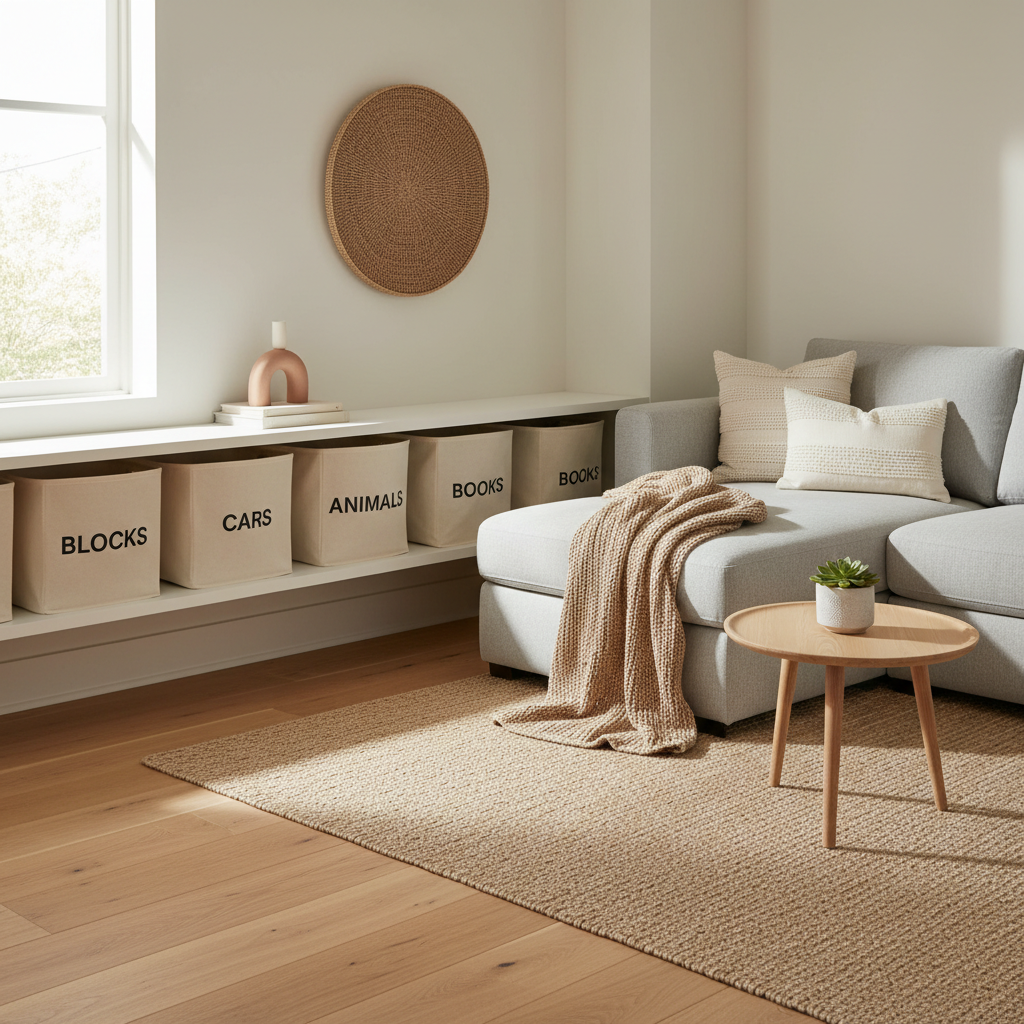
A short shelf (or cube organizer) anchors the system. It also gives you a visible limit: if bins don’t fit, something leaves. Use identical bins so the room looks calmer even when toys are everywhere.
- Label with pictures + words if kids are pre-readers.
- Reserve one bin for “misc” to keep sorting realistic.
- Anchor the shelf to the wall if it can tip.
4) Vertical storage: wall hooks, pegboards, and slim towers
When floor space is gone, go up. Wall hooks for dress-up items, a pegboard for craft tools, or a slim rolling cart for art supplies can keep your main area clear.
- Keep heavy items out of reach, store light items lower.
- Use soft baskets on hooks for easy grab-and-drop.
5) Under-sofa and behind-sofa storage (only if it slides easily)
Low-profile bins under a sofa can hold puzzles, tracks, or blocks. Behind-sofa consoles can hold baskets without taking away seating space. The key is friction, if it’s annoying to access, you won’t use it.
- Measure clearance before buying anything.
- Use bins with handles, avoid lids that pop off.
Pick the right solution: a simple comparison table
If you’re deciding what to try first, this table gives a quick way to match a product type to your situation.
| Option | Best for | Pros | Watch-outs |
|---|---|---|---|
| Large basket “landing zone” | Fast daily cleanup | Quick reset, looks decent | Can become mixed clutter |
| Low shelf + bins | Shared play in living room | Clear limits, easy for kids | Needs consistent bin sizes |
| Storage ottoman | Hidden storage in plain sight | Dual-purpose furniture | Overstuffing, pinch points |
| Wall hooks / pegboard | Dress-up, crafts, small tools | Uses vertical space | Visual clutter if unmanaged |
| Under-sofa bins | Occasional sets, puzzles | Uses dead space | Hard access if too tight |
A practical setup plan you can finish in a weekend
Most people don’t need a total overhaul, they need a few decisions and fewer “maybe” toys. Here’s a setup flow that tends to hold up in real life.
Step 1: Define two zones, not ten
- Active zone: what kids can reach and use daily.
- Closed zone: overflow, rotations, and grown-up living room items.
When both zones exist, you can keep the room functional without constant negotiations.
Step 2: Set a physical limit for each category
Decide “all blocks must fit in this bin” or “stuffies live in this basket.” The container is the boundary, not your willpower.
Step 3: Make cleanup easier than play-spread
- Open-top bins beat tiny lidded boxes for most daily toys.
- Store the most-used toys closest to where they get used.
- Keep a small “one-minute reset” bin for surprise guests.
Step 4: Add a rotation box (optional but powerful)
If you feel like you “need” more storage, you may actually need fewer toys in circulation. Put half into a labeled tote in a closet, swap every few weeks when interest fades.
Common mistakes that keep small living rooms messy
- Buying storage before decluttering: you end up storing clutter more efficiently, which still feels like clutter.
- Too many containers: more bins can mean more categories to maintain, and kids stop helping.
- All toys at kid height: it sounds kid-friendly, but it can overwhelm small rooms. Keep favorites accessible, store the rest higher.
- “Pretty but impractical” boxes: stiff lids, narrow openings, or heavy baskets quietly sabotage your routine.
- No home for in-between items: missing a misc bin or a landing zone is how toys end up on the dining table.
Key takeaways (the part you’ll actually remember)
- Design for reset speed, not magazine-level sorting.
- Use containers as limits, if it doesn’t fit, something rotates out or goes.
- Combine open storage + hidden storage so the room feels livable for everyone.
- Keep heavy furniture stable and store risky items safely, especially with toddlers.
Conclusion: make toy storage feel normal, not like a constant project
The best toy storage ideas for small living rooms are the ones you’ll repeat on a tired Tuesday, basket, bins, and a clear boundary for what stays out. Pick one landing zone and one structured shelf system, then give yourself permission to keep it simple.
If you want a low-effort next step, measure one wall or corner, choose a shelf that fits, and commit to matching bins. You’ll feel the difference the first time the floor clears in minutes.