
Cozy reading nook ideas for small bedrooms work best when you treat the nook like a “micro-zone”, a small setup with the right seat, light, and landing spot, not another piece of furniture fighting your floor plan.
If your bedroom feels too tight for a chair, you’re not alone, most small rooms fail because the nook gets planned last, after the bed and dresser claim everything. The good news is a reading corner doesn’t need much square footage, it needs the right geometry and a few comfort choices that don’t sprawl.
Below you’ll find realistic layouts, what to measure before you buy anything, and a few “small but high-impact” upgrades that make your nook feel intentional instead of improvised.
Start with the space you actually have (not the space you wish you had)
The fastest way to end up with a cramped, unused nook is eyeballing it. Measure first, then pick a layout that fits your daily routine: getting dressed, making the bed, opening drawers, and walking without bumping your shins.
Quick measuring checkpoints that matter more than people think:
- Clearance paths: keep a comfortable walkway where you step most, especially between bed and door.
- Drawer swing and door swing: if a dresser drawer hits your chair, the chair will “mysteriously” become a clothes rack.
- Light source location: an outlet and a nearby surface beat a “perfect corner” with no power every time.
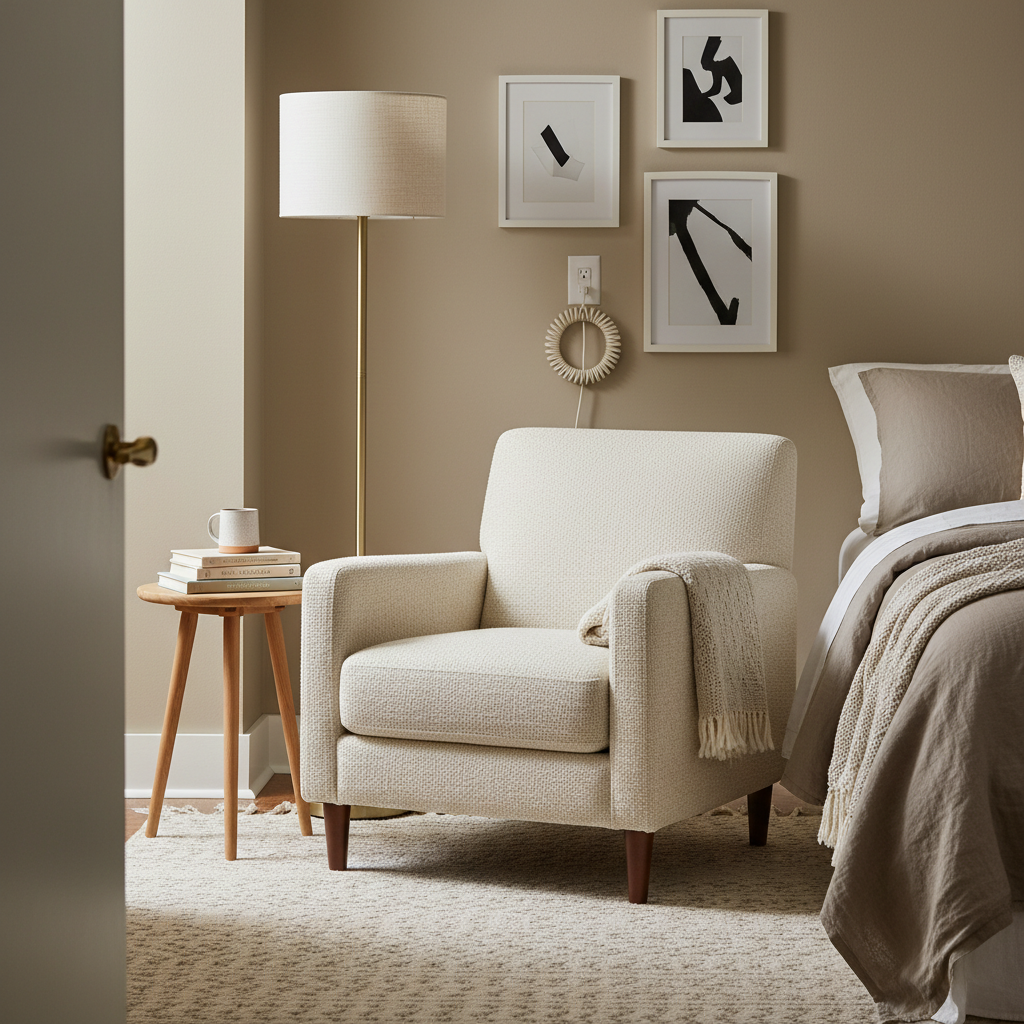
If you’re unsure where the nook belongs, look for “dead zones” that already feel awkward, the corner behind a door swing, the window edge where nothing fits, or the narrow strip at the foot of the bed. Those spots often become great reading zones with the right-scale pieces.
Choose a small-footprint seat that still feels relaxing
In small bedrooms, the seat is the make-or-break item. A big armchair looks inviting online, but in real life it can swallow the room. Aim for pieces that look light visually, with raised legs or a slim frame.
Seat options that usually fit better in tight layouts:
- Armless accent chair: easier to tuck into corners and rotate slightly toward light.
- Slipper chair: low profile, typically shorter depth, good for narrow spaces.
- Storage ottoman + back pillow: surprisingly comfortable when paired with a wall or window ledge.
- Window bench cushion: best when you already have a deep sill or built-in ledge.
- Floor cushion + bolster: works for casual readers, less ideal if you need back support.
Comfort note: “cozy” is not just softness, it’s support. If you read for more than 20 minutes at a time, look for a seat height that keeps knees near hip level, and add a lumbar pillow if the back feels flat.
Lighting: the underrated difference between cute and usable
Most nooks fail because lighting becomes an afterthought, and the space ends up either dim or harsh. According to Illuminating Engineering Society (IES), good task lighting supports visual comfort, and reading is a classic task-light use case.
Practical lighting combos that suit small rooms:
- Slim floor lamp beside the chair, especially if you rent and can’t hardwire.
- Plug-in wall sconce above shoulder height to save floor space, many styles mount with basic hardware.
- Clip-on reading light for a daybed, headboard, or shelf, helpful when outlets are limited.
Try to place the light slightly behind and to the side of your dominant hand to reduce shadows on the page. If you read on a tablet, choose a warmer bulb temperature so the corner doesn’t feel clinical at night.
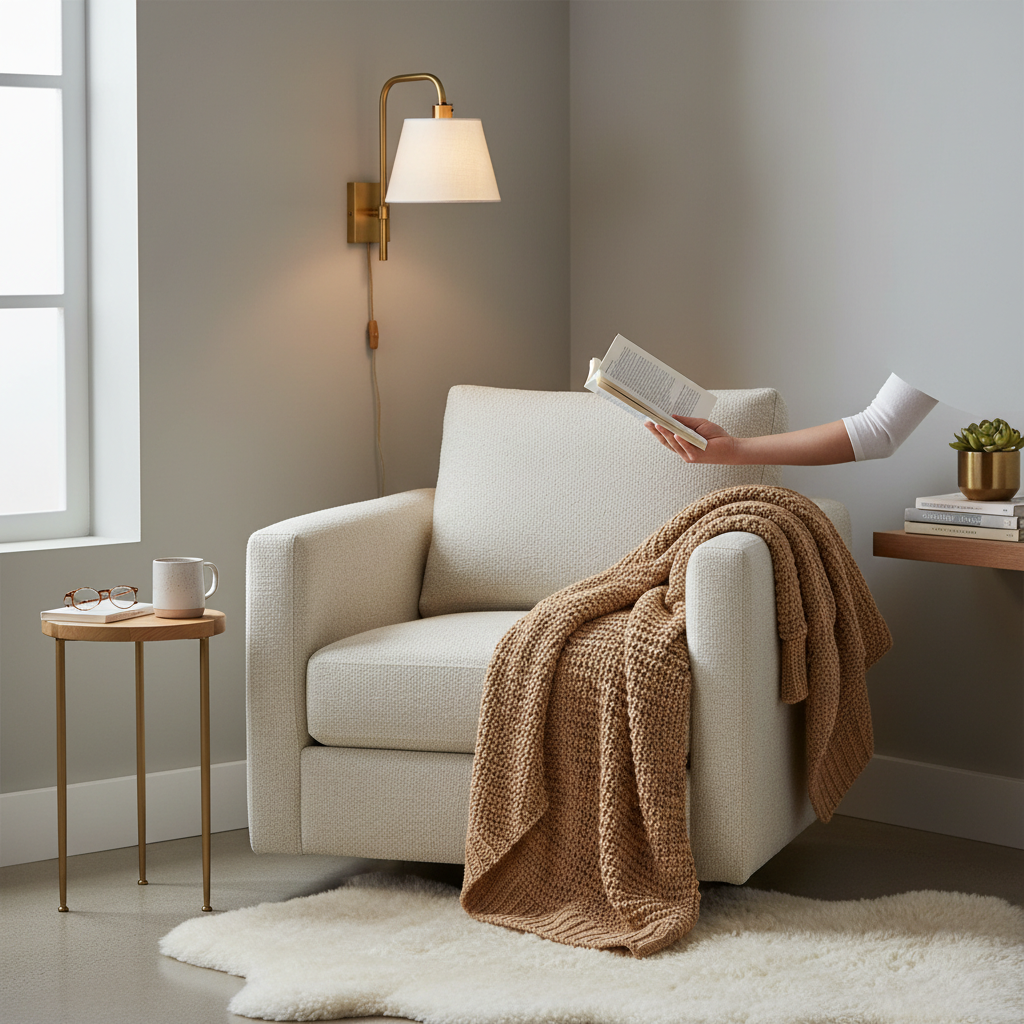
Key takeaway: in most small bedrooms, swapping a bulky lamp table for a wall-mounted or narrow-base light instantly frees up the nook without sacrificing comfort.
Add a “landing spot” and smart storage, without clutter
A reading nook needs one reliable place to set a drink, glasses, or your current book. Without it, things drift to the bed, then the nook stops getting used.
Low-space surfaces that pull their weight:
- C-shaped side table that slides under the chair or bed edge.
- Floating shelf at arm height, great for very narrow corners.
- Wall pocket or magazine rack for 2–5 books, so the corner stays curated.
For storage, go smaller than you think. A nook with a mini stack of “now reading” books often feels more inviting than a jammed bookcase that visually shrinks the room.
3 small-bedroom layouts that feel intentional
Here are three patterns that show up in real homes because they work with typical small-bedroom constraints.
1) The window-edge nook
Place a compact chair slightly angled toward the window, add a narrow table, then anchor with a soft curtain and a throw. Works best when the window area isn’t used for dresser access.
2) The foot-of-bed corner
If you have even a slim strip at the bed’s end, a slipper chair plus a wall sconce can create a clear “reading zone” without blocking drawers. This is one of the easiest cozy reading nook ideas for small bedrooms because it uses space that often sits empty.
3) The closet-adjacent nook
If you have a closet bump-out or a corner near closet doors, use an armless chair and keep the table wall-mounted so door clearance stays smooth.
Quick decision table: what to buy based on your constraints
When people ask what to shop for, the honest answer is “it depends”, but small bedrooms usually fall into a few predictable buckets.
| Constraint | What typically works | What to avoid |
|---|---|---|
| Very little floor space | Plug-in sconce + floating shelf + armless chair | Wide side tables, deep recliners |
| No nearby outlet | Battery lamp (quality varies) or reroute with a safe cord solution | Running cords across walkways |
| Need storage too | Storage ottoman or slim shelf with a small book rail | Overstuffed bookcases that dominate the corner |
| Renting (no drilling preferred) | Slim floor lamp + C-table + removable hooks for baskets | Hardwired fixtures, heavy wall units |
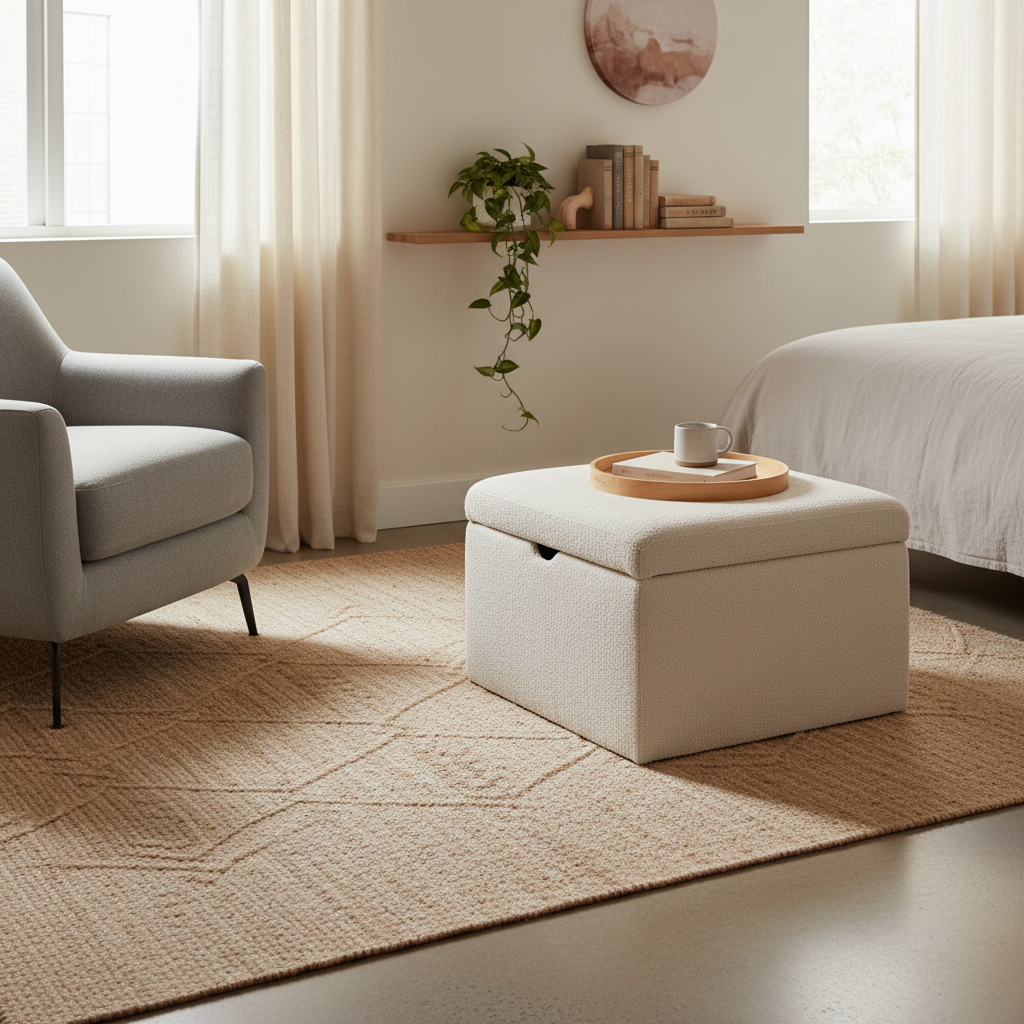
Make it feel “cozy” with layers, not more furniture
Cozy is usually texture and color temperature, not more stuff. If your nook feels cold or unfinished, add layers that don’t take up space.
- Throw blanket: one you’ll actually use, not just stage.
- Small pillow: choose lumbar size to support the lower back.
- Rug (even a small one): helps the nook read as a separate zone.
- One calming focal point: framed print, plant, or a small wall mirror to bounce light.
If your bedroom already has a lot happening visually, keep the nook palette close to the room’s main colors, then add one accent tone in a pillow or book cover stack.
Safety and comfort notes people skip (but shouldn’t)
A small bedroom reading corner has more trip hazards than a living room setup, mostly because walkways run tighter. According to U.S. Consumer Product Safety Commission (CPSC), home hazards often involve falls, so it’s worth being a little picky about cords and rug edges.
- Mind the cord path: avoid stretching cords across the main walking line, use cord covers if needed, and consider asking a professional if you’re unsure what’s safe in your home.
- Rug grip matters: a slipping rug feels minor until it isn’t.
- Vent clearance: don’t block HVAC returns or baseboard heaters with pillows and throws.
And if back pain shows up after reading, it may be worth adjusting seat depth, adding a footrest, or choosing a firmer cushion, comfort is personal, and your body will tell you quickly what works.
Key points to remember before you set up your nook
- Measure clearance around doors and drawers, not just the empty corner.
- Pick the light first if outlets are limited, it drives the rest of the layout.
- Use one landing spot to keep the bed from becoming your side table.
- Layer softness with textiles, not bulky furniture.
When you choose cozy reading nook ideas for small bedrooms that match how you move through the room, the nook stops feeling like a compromise and starts feeling like a tiny daily reward. Pick one corner, measure it, then build the nook around light, a supportive seat, and a simple surface, you can refine the styling after you use it for a week.
If you want a quick next step, sketch your room on paper, mark door swings and drawer pulls, then test a “nook footprint” with painter’s tape, it’s a small action that prevents most regret buys.