
Best stackable storage bins for pantry searches usually mean one thing, your shelves look “fine” until you try to find anything fast, and suddenly every bag, box, and half-used ingredient becomes a mini avalanche.
Stackable bins help because they make vertical space usable, keep categories together, and reduce the constant reshuffling that happens when items don’t have a “home.” The catch is that the wrong bin shape or material can actually make a pantry harder to use, especially when you stack too high or pick lids you hate opening.
This guide narrows the choices the way an experienced organizer would, what matters, what’s mostly marketing, and how to pick bins that fit your pantry depth, your habits, and the kinds of food you actually buy.
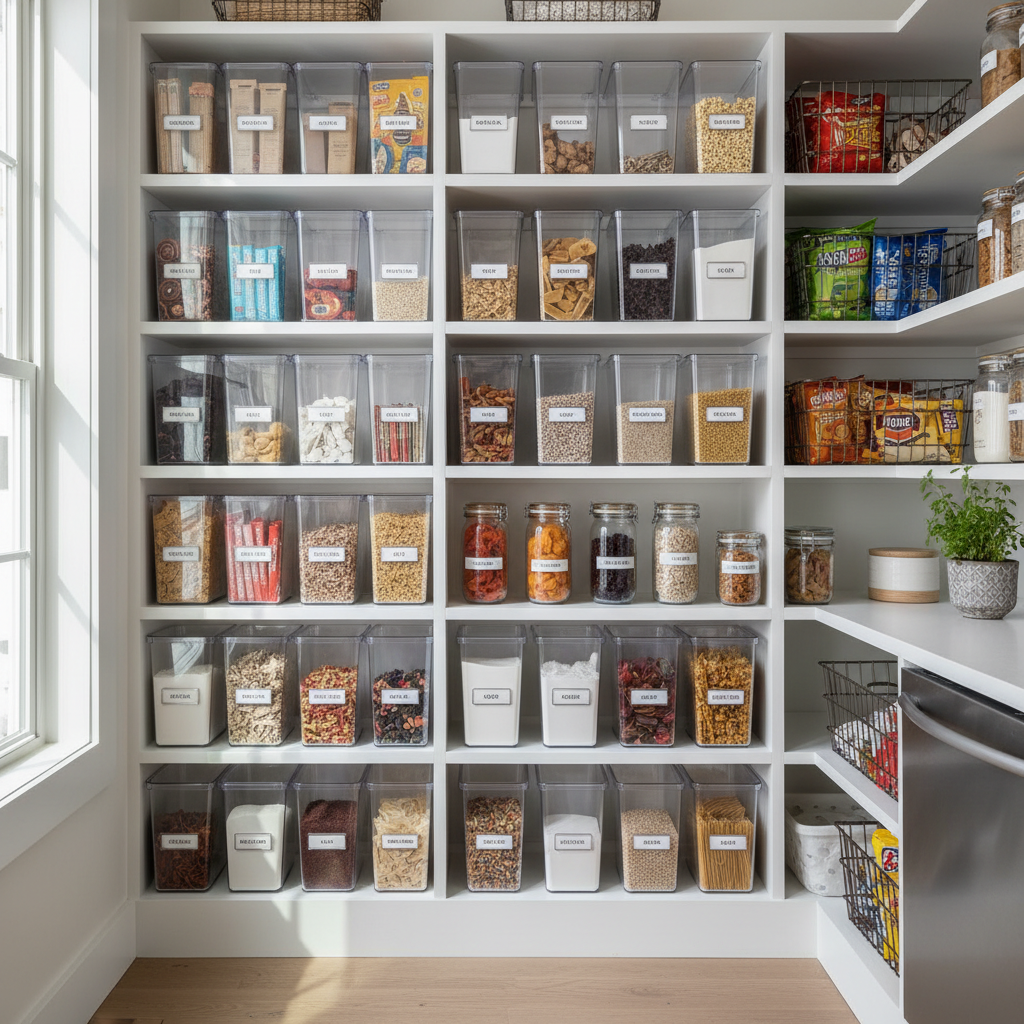
What makes a stackable pantry bin “good” in real life
A bin can look perfect online and still annoy you daily. In most homes, the best stackable setup balances three things, access, stability, and space efficiency.
- Footprint that matches your shelf depth: Deep shelves love deeper bins, shallow shelves need shorter bins so you don’t waste the back half.
- Side walls that are straight (not overly tapered): Heavy tapering steals interior volume and makes stacks wobblier.
- Handles you can actually grab: Cutout handles are fine, but open handles tend to feel easier when bins are full.
- Stacking style: Some bins nest inside each other, others stack on a rim, and some lock with lids. The “right” one depends on how often you pull a bin out.
- Clarity vs. hiding visual noise: Clear bins help you see inventory, opaque bins look calmer but can increase overbuying if you forget what’s inside.
According to USDA Food Safety and Inspection Service (FSIS), keeping food stored properly and cleanly helps reduce contamination risk, so bins that are easy to wipe and don’t trap crumbs in seams tend to work better long-term.
Quick decision checklist: which bin style fits your pantry?
If you only take one thing from this article, use this quick self-check before you click “add to cart.” It saves you from buying a popular bin that doesn’t match your routine.
- You snack-grab daily (kids or roommates): Open-top or easy-grip handled bins, stack only 1–2 high for quick access.
- You bulk-buy (warehouse clubs): Deeper, heavier-duty bins, consider lids only for overflow storage, not daily use.
- Your pantry shelves are tall: Taller bins with a strong rim, but avoid stacks that block sightlines.
- Your shelves are narrow: Shorter bins with straight sides, keep stacks low so you can see inside.
- You’re fighting pests or humidity: Pair bins with sealed canisters for flour, rice, cereal, and sugar, bins alone rarely “seal.”
And a small reality check, if a lid feels annoying on day one, you probably won’t use it on day thirty.
Materials and shapes: clear plastic, wire, fabric, and what to avoid
When people ask for the best stackable storage bins for pantry, they often mean clear plastic. That’s popular for a reason, but there are tradeoffs worth being honest about.
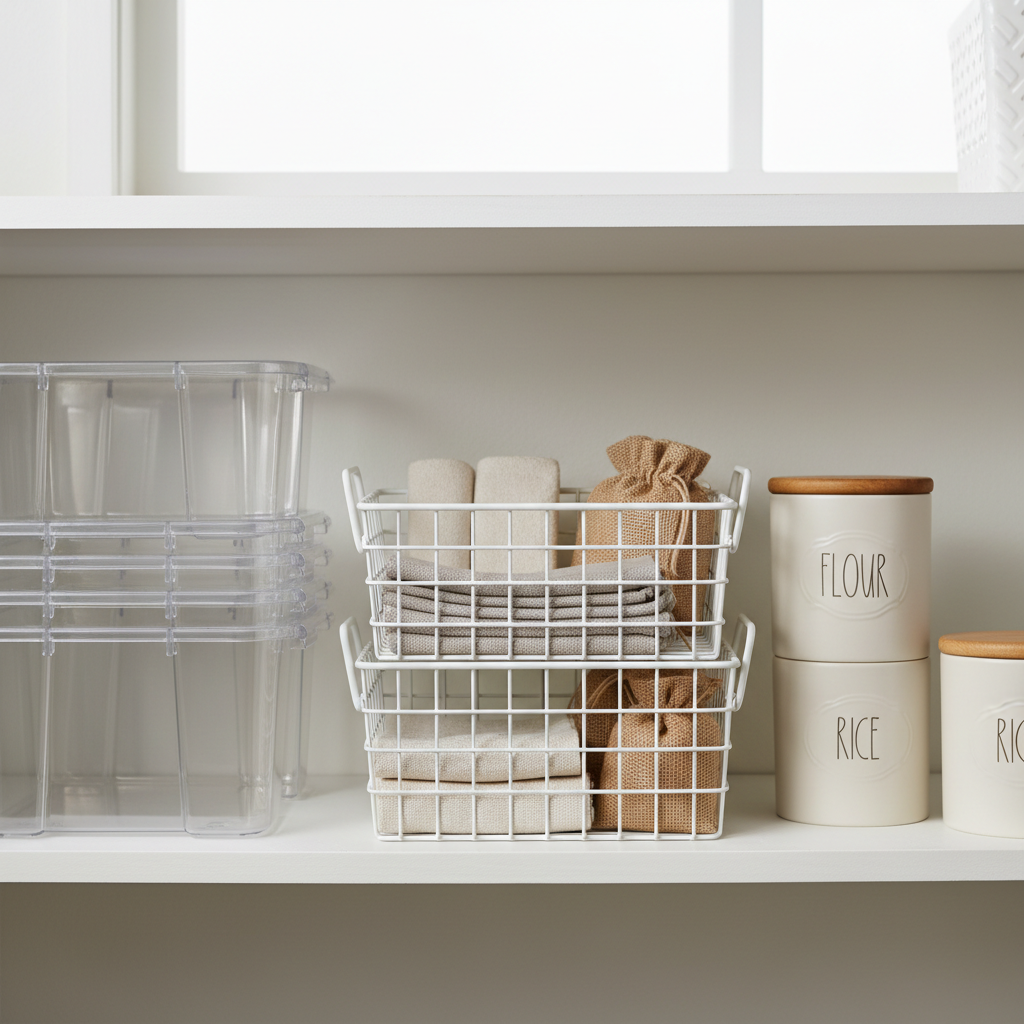
Clear plastic (PET or acrylic-style)
- Best for: snacks, packets, baking add-ins, bars, lunch items, small boxes.
- Why it works: visibility reduces duplicate purchases, wipe-clean surfaces handle crumbs.
- Watch for: brittle plastics that crack at the corners, and bins with thick rims that waste interior space.
Wire bins
- Best for: produce that needs airflow (in some pantries), onions/garlic in cooler climates, or items you want to “see” without plastic.
- Why it works: breathability and easy grab-and-go.
- Watch for: snagging chip bags and tearing packaging, plus dust settling on items.
Fabric bins
- Best for: paper goods, napkins, lightweight backup supplies.
- Why it works: hides clutter and looks tidy.
- Watch for: harder cleaning if spills happen, and they’re rarely truly stack-stable unless reinforced.
If your pantry gets warm, don’t store open dry goods in bins and assume it’s “sealed.” Many situations still call for airtight containers inside bins, especially for flour and grains.
Best stackable storage bins for pantry: size and use-case table
Instead of naming “one winner,” it’s more practical to match bin sizes to what you store. This table gives a shopping short-list you can measure against your shelf dimensions.
| Bin type | Typical size range | Best for | Stacking tip |
|---|---|---|---|
| Small handled bin | 10–12 in wide | Packets, bars, spice refills | Stack 1–2 high, keep “daily reach” zones |
| Medium clear bin | 12–14 in wide | Snacks, baking mixes, boxed items | Use labels on the front rim, not the lid |
| Deep bin for bulk | 14–16 in deep | Chips, cereal boxes, family packs | Avoid tall stacks if you need kids to access |
| Low-profile bin | 3–5 in tall | Tea, seasoning packets, pouches | Great for “shelf within a shelf” stacking |
| Lidded stack bin | Varies | Overflow, backstock, rarely used items | Label lid + front, keep heavier items low |
For most U.S. pantries, a mix of two to three sizes beats buying one uniform set, because packaging varies wildly and uniformity often creates dead space.
How to set up stackable bins in a pantry (a simple, workable process)
This is the part people rush, then wonder why it falls apart. You don’t need perfection, you need repeatable rules.
1) Measure two things, not five
- Shelf depth: choose bins that leave a little finger space so you can pull them out without scraping.
- Shelf height between shelves: decide your max stack height, in many pantries that’s 2 bins high, sometimes 3 for lighter categories.
2) Sort by “how you use it,” not grocery aisle logic
- Morning: coffee/tea, breakfast bars, cereal add-ins
- Lunch: snacks, chips, grab-and-go
- Dinner: pasta, sauces, quick sides
- Baking: flour alternatives, chocolate chips, sprinkles, extracts
This is where the best stackable storage bins for pantry really shine, categories stay intact even when someone else “helps” put groceries away.
3) Stack with gravity in mind
- Heaviest items on the bottom bin, lighter on top.
- Avoid stacking glass containers in pull-out bins if the bin will get yanked quickly.
- Keep the most-used bin in a stack as the top bin, so you’re not unstacking daily.
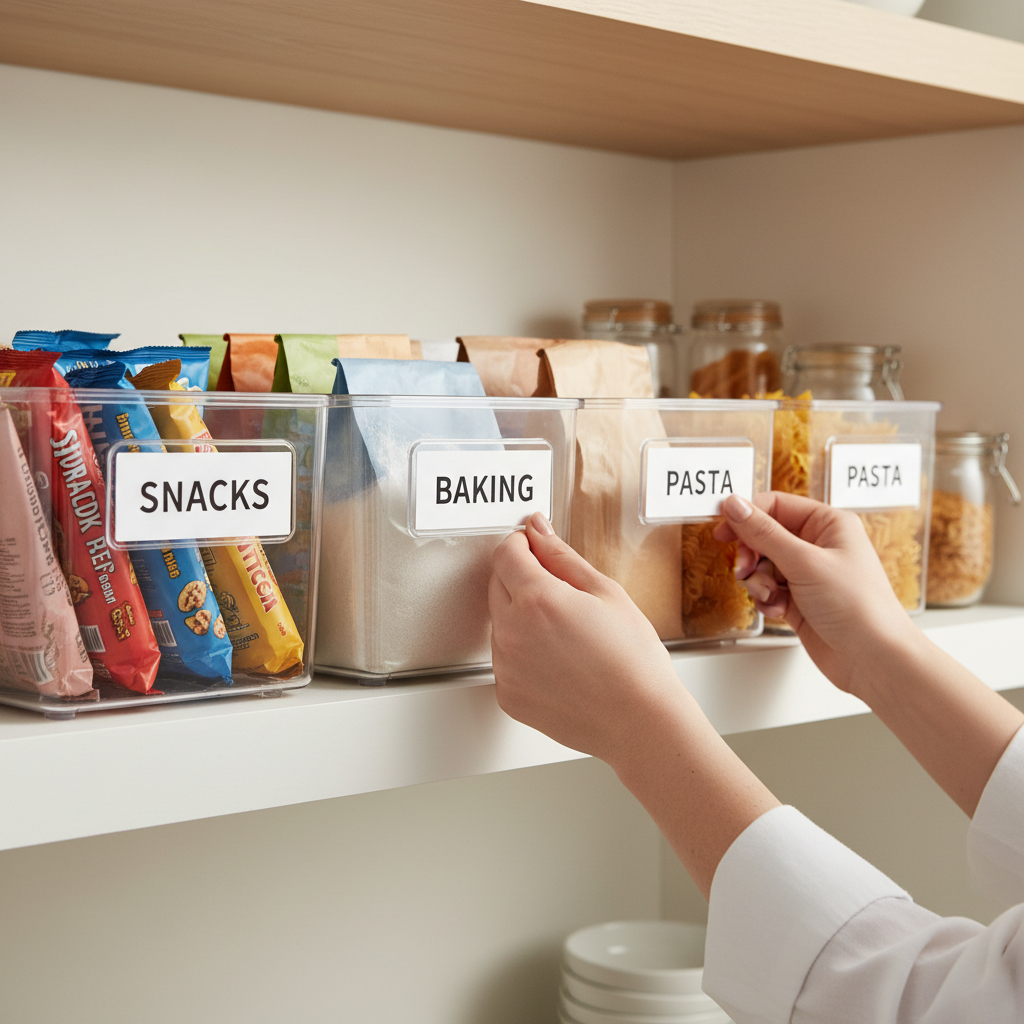
4) Label like you’re tired
- Front labels beat lid labels for stacked bins.
- Use plain category names, “Snacks,” “Baking,” “Pasta,” not “Fun Food.”
- If multiple people shop, add a tiny note like “1 backup max” to control overstock.
Common mistakes that make pantry bins feel pointless
Most “pantry bin fails” are not about the bins, they’re about friction. These are the patterns that show up again and again.
- Buying tall bins for short shelves: you lose stack options and end up with awkward wasted space.
- Stacking too high: the lower bin becomes storage you avoid, and expired items hide there.
- Using bins as “misc” buckets: if a category isn’t clear, it becomes a junk drawer with handles.
- Ignoring the back row: deep shelves need pull-out bins or turntables, otherwise the back becomes a museum.
- Assuming bins replace airtight storage: crumbs, humidity, and pests still happen, especially with open bags.
According to FDA guidance on food storage, keeping food in clean, appropriately closed containers helps protect it from contamination. In a pantry, that often means pairing bins for organization with sealed containers for sensitive dry goods.
Practical buying tips before you choose a set
Shopping for pantry organizers is where people overspend fast. Here are a few grounded filters that keep purchases reasonable.
- Pick your “workhorse” bin first: one medium handled bin size that fits your shelf depth, then add one small and one deep size.
- Prioritize comfort: handles that pinch, lids that stick, or bins that scratch easily tend to get abandoned.
- Check stack compatibility: even within one brand, different lines sometimes don’t stack cleanly together.
- Start with a test batch: buy 2–4 bins, live with them for a week, then scale up.
- Don’t chase “Instagram clarity”: a pantry that stays usable beats a pantry that looks staged for a day.
If you’re comparing options, focus less on “BPA-free” as a marketing headline and more on whether the plastic feels sturdy, the edges are smooth, and the bin cleans easily. For specific material safety concerns, it’s reasonable to review manufacturer documentation or ask a qualified professional.
Conclusion: a pantry setup you can keep up with
The best stackable storage bins for pantry are the ones that match your shelf dimensions and your daily habits, not the ones that look best in a product photo. If you want a quick win, measure your shelf depth, pick one comfortable handled bin size, then build categories around how you actually cook and snack.
Key takeaways:
- Use two to three bin sizes for better space use and fewer awkward gaps.
- Stack low for daily items, save lidded stacks for overflow.
- Label the front so categories stay obvious even when bins stack.
If you’re ready to act, start by fixing one shelf, snacks or breakfast, and let that “working section” set the pattern for the rest of the pantry.