
The best memory foam topper for rv and camper beds is the one that fits your exact mattress size, matches your sleep style, and doesn’t trap heat in a small space, not just the one with the biggest discount.
RV and camper beds can be tricky because they’re often short-queen, odd-width, or cut-corner shapes, plus the platform underneath can feel extra firm. A topper can fix a lot, but only if you choose thickness, firmness, and cover materials with your real setup in mind.
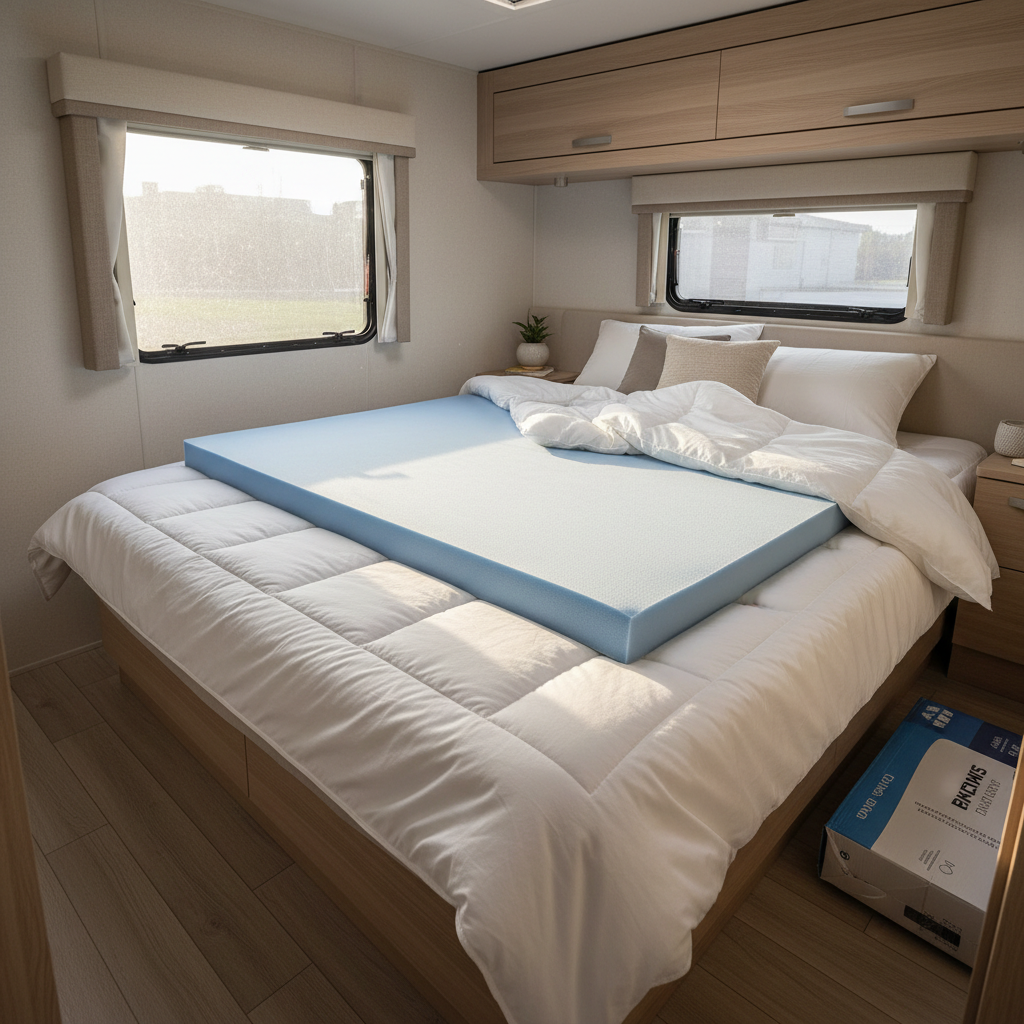
One more thing people overlook, RV sleeping comfort is not only about “soft vs firm.” Temperature, moisture, and even how the bed folds or converts to a dinette matter, and those details change what “best” means.
What makes RV and camper beds feel worse than home
If your back feels fine at home but cranky in the rig, you’re not imagining it. RV mattresses and bed systems tend to amplify a few comfort problems.
- Thinner, lower-quality stock mattresses: Many OEM RV mattresses use basic foams that compress fast and don’t distribute weight well.
- Hard platforms and slats: Some RV beds sit on plywood or sparse supports, so pressure points show up at hips and shoulders.
- Odd sizes and corner cuts: A topper that “kind of fits” can bunch, slide, or leave gaps where your body ends up.
- Heat buildup in a small cabin: Memory foam can sleep warm, and RV airflow is often limited, especially at night.
- Motion and vibration: Travel can slightly shift bedding, so anti-slip bottoms and good covers matter more than at home.
Quick checklist: how to pick the right topper for your rig
Before you shop, get clear on your constraints. This saves you from returning a giant foam slab you can’t easily pack back into a box.
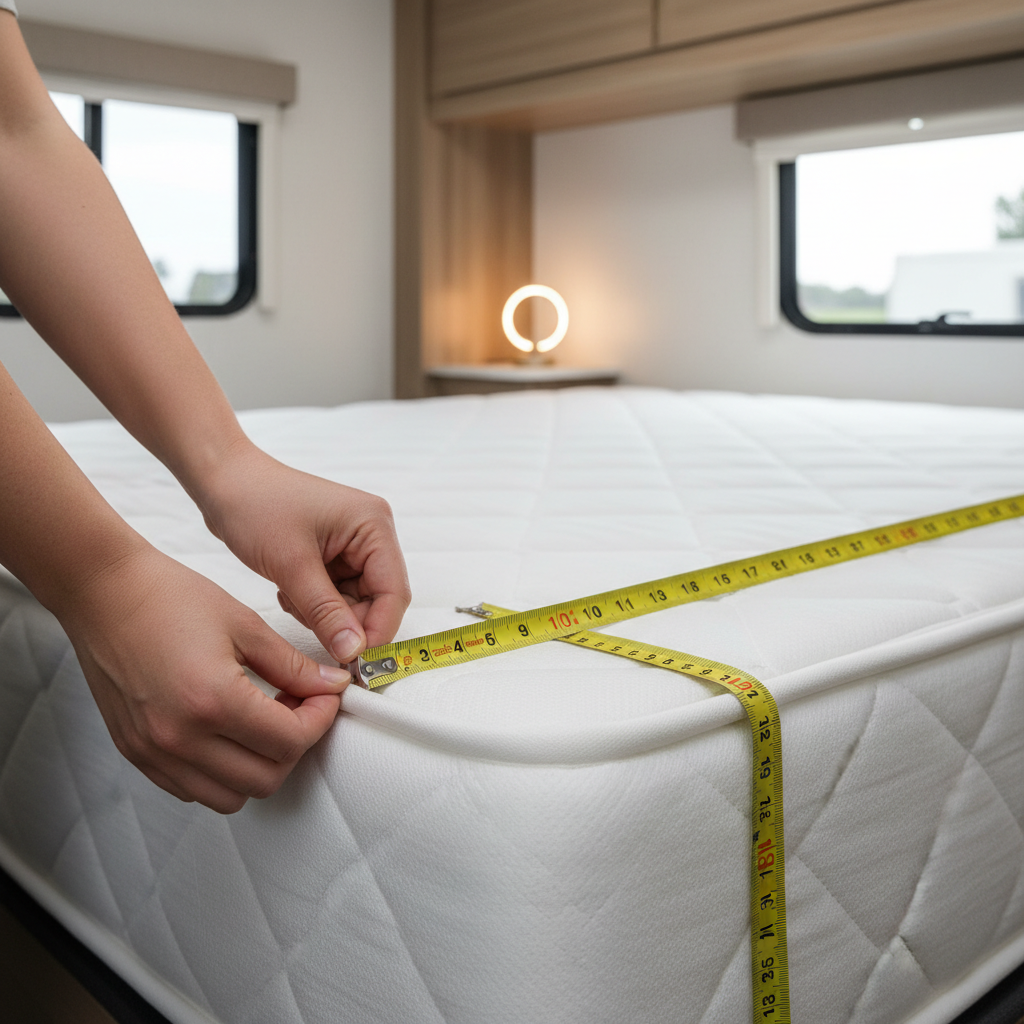
- Measure the mattress, not the label: Confirm length, width, and any radius corners. RV “queen” often equals short queen.
- Decide your pain point: Pressure relief, firmness boost, cooling, or fixing a sagging middle all point to different specs.
- Check headroom: In a cabover or bunk, adding 3 inches might make the space feel cramped.
- Think about bedding fit: Your fitted sheets may not accommodate thicker setups.
- Smell sensitivity: If you’re sensitive to odor, prioritize low-VOC certifications and plan time to air it out.
According to CertiPUR-US..., certified foams are tested for certain substances and emissions, which can be a practical filter if you’re worried about off-gassing in a smaller RV interior.
Topper types that work best in RVs (and when to skip them)
“Memory foam” covers a few constructions. In RV and camper beds, the build matters as much as the brand name.
Traditional memory foam
Great if you want that classic slow-melting feel and strong pressure relief. It can run warm, though, especially in humid climates or when the rig stays closed up.
Gel-infused memory foam
Often marketed as cooler. In real use, it may help some, but airflow, cover fabric, and room temp usually matter more than gel alone.
Copper or graphite-infused memory foam
These infusions are commonly positioned as cooling or odor-reducing. Many campers like them, but results vary by sleeper and the topper’s overall density.
Memory foam with a cooling cover
This is underrated for RV use. A breathable, washable cover can help with moisture and that “sticky” foam feel. It also protects foam from campground dust and pet hair.
When memory foam isn’t the right call
- If you already sleep hot and don’t run A/C at night, a latex or wool topper might feel cooler (and pricier).
- If the mattress is deeply sagging, a topper may mask the issue briefly but won’t truly fix support.
- If you must convert the bed daily (dinette/sofa), thick memory foam can be annoying to fold and store.
Recommended specs for RV comfort: thickness, density, and firmness
If you want the fastest route to “this feels like a real bed,” specs get you there quicker than reviews alone.
- Thickness:
- 2 inch for mild pressure relief, better for bunks, cabovers, or tight headroom.
- 3 inch for most adults on RV main beds, usually the sweet spot for comfort.
- 4 inch if the base mattress is very firm and you have space, but heat and sheet fit become bigger issues.
- Density (foam weight/quality indicator):
- Roughly 3 lb foam can feel nice initially, but may wear faster for full-timers.
- Around 4 lb is a common balance for durability and comfort.
- 5 lb can be more supportive and durable, but it may feel warmer and heavier to handle.
- Firmness feel (since brands rate this differently):
- Side sleepers usually prefer softer to reduce shoulder and hip pressure.
- Back sleepers often like medium for contour without “hammocking.”
- Stomach sleepers typically need firmer, or they can arch their lower back.
Comparison table: match your situation to the right topper
This is the practical part, pick the row that sounds like your night.
| Common RV sleep issue | Topper spec to try | Why it helps | Watch-outs |
|---|---|---|---|
| Hip/shoulder pressure on a firm mattress | 3" memory foam, medium feel | Contours and spreads load | May sleep warmer in summer |
| Lower-back pain from sagging center | 2–3" medium-firm, higher density | Adds support and slows sink | Deep sag may still need a new mattress |
| Overheating at night | 2–3" gel/graphite foam + cooling cover | Better surface feel and breathability | Infusions aren’t magic without airflow |
| Bunk or cabover feels cramped | 2" topper, slim breathable cover | Comfort gain without losing space | Not enough for very firm beds |
| Topper slides around | Non-slip bottom or corner straps | Keeps alignment through the night | Straps can fight tight RV corners |
How to fit and set up a topper in an RV (so it stays put)
The install is where many people get frustrated, especially with short queens and cut corners. A few small choices make the setup calmer.
Step-by-step setup
- Unbox and let it expand: Most memory foam needs time to regain shape. If possible, ventilate the RV and keep windows open.
- Use a topper cover: A zip cover helps reduce shifting and keeps foam cleaner.
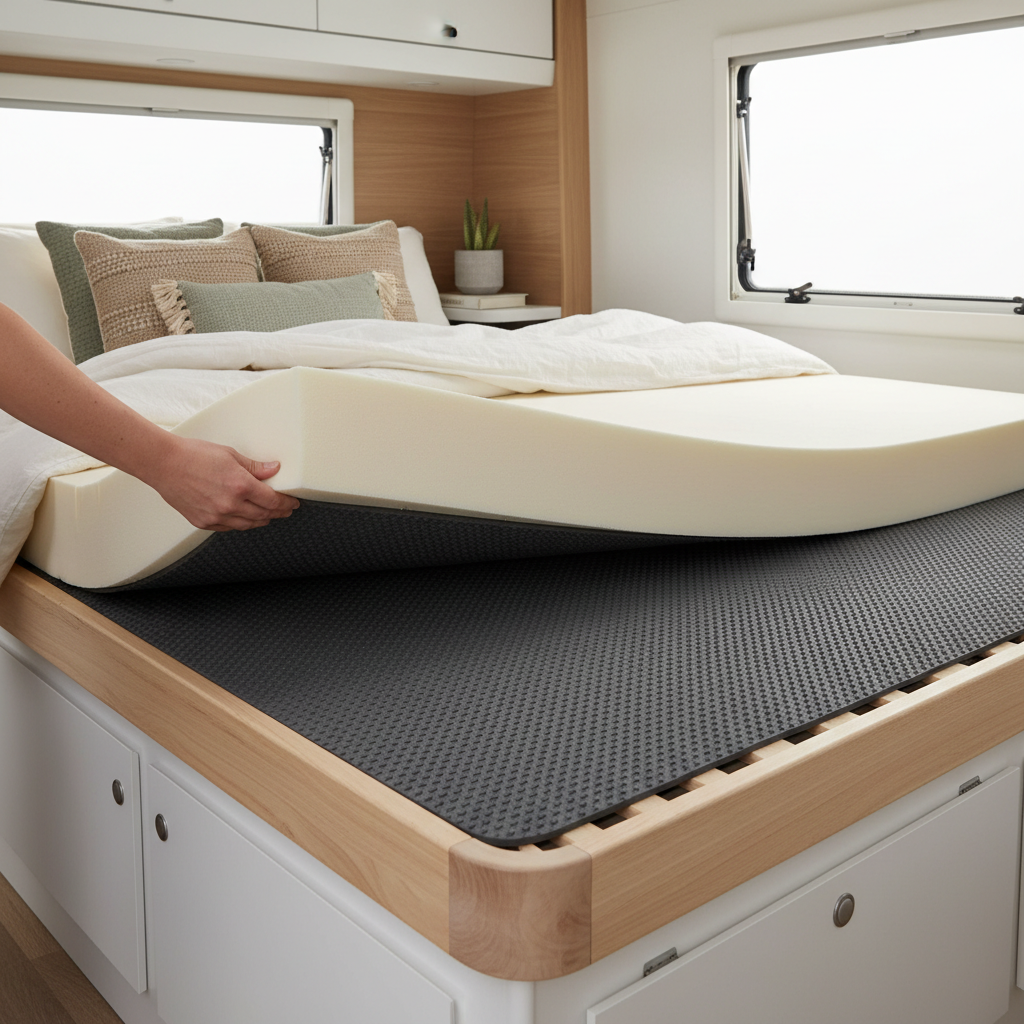
- Add grip: A thin rug pad or non-slip mat under the topper can help on vinyl or slick mattress fabrics.
- Fix the sheet problem: Deep-pocket fitted sheets or sheet straps reduce bunching, especially on 3–4 inch toppers.
- Corner-cut mattresses: If your bed has a radius corner, consider an RV-specific topper size, or trim carefully only if the manufacturer allows it.
According to EPA..., improving ventilation is a practical way to reduce indoor contaminant buildup, which is extra relevant when you’re airing out foam in a smaller enclosed space.
Common mistakes to avoid (they waste money fast)
A topper can feel like an easy fix, but a few missteps show up on night one.
- Buying “RV queen” without measuring: Many returns come from this alone.
- Going too thick by default: A 4" topper can be wonderful, or it can turn your bed into a heat trap and make it hard to sit up.
- Ignoring base support: If the platform flexes or sags, add a bunkie board or improve slats before blaming the foam.
- Expecting cooling claims to override cabin temp: If your RV stays warm overnight, prioritize airflow, breathable bedding, and a lighter comforter.
- No plan for storage: If you convert the bed daily, choose a thinner topper or a foldable style.
When it’s time to replace the mattress (not just add foam)
If you keep chasing comfort with layers and still wake up sore, the underlying mattress may be the real culprit.
- You feel a clear dip or ridge that your hand can measure.
- Your spine feels “bent” when you lie on your back, even with a topper.
- You’re stacking toppers and pads and it still doesn’t feel stable.
If pain persists or worsens, especially numbness or shooting pain, it may be smart to talk with a healthcare professional, since sleep discomfort can have multiple causes beyond the bed.
Key takeaways and a simple buying plan
If you want a quick path forward, focus on fit and specs, then worry about brand.
- Most RV sleepers do well with a 3" medium memory foam topper, as long as heat isn’t your main issue.
- If you sleep hot, prioritize a breathable cover and realistic ventilation, then consider gel or graphite foam.
- If your mattress sags, choose medium-firm and higher density, and consider improving the base support too.
Pick your thickness, confirm your RV mattress measurements, and choose a return policy you’re comfortable with. That combination usually matters more than chasing a single “perfect” model.
FAQ
What thickness is best for a camper bed topper?
For many RV main beds, 3 inches is the most balanced choice. If you’re working with bunks or low headroom, 2 inches often feels more practical without making the space feel tight.
Is memory foam too hot for RV sleeping?
It can be, especially in warm climates or when the RV doesn’t get much airflow at night. A cooling cover, breathable sheets, and better ventilation usually make a bigger difference than foam “infusions” alone.
How do I know if I have a short queen mattress?
Measure the length. Many RV short queens are about 60 inches wide but shorter than a standard queen. Don’t rely on what the listing or previous owner called it.
Can I cut a memory foam topper to fit a rounded RV corner?
Some people do, but it’s worth checking the manufacturer guidance first, because cutting may void a warranty and can leave a rough edge. If you cut, use a straightedge and an electric carving knife for cleaner lines.
Will a topper fix back pain on an RV mattress?
It might help if your issue is pressure points or an overly firm surface. If the mattress has a pronounced sag or poor support, a topper may only reduce symptoms temporarily, and you may need to address the mattress or bed platform.
What density should I look for if I travel full-time?
Full-timers often lean toward mid-to-higher density foams for better durability. The tradeoff is weight and sometimes more heat retention, so pairing with a breathable cover can help.
How long should I air out a new topper in an RV?
It depends on the product and your sensitivity, but many people give it at least a day with windows open when possible. If odors linger or you have respiratory concerns, consider airing it out longer and consult a professional if symptoms show up.
If you’re trying to choose the best memory foam topper for rv and camper beds and you’d rather not guess, start by listing your exact mattress size, your sleep position, and whether heat is a problem in your rig, then narrow to two or three toppers that match those constraints and have an easy return process.