
how to decorate a small living room with pets usually comes down to one thing: you want it to look “put together” without constantly worrying about fur, scratches, odors, or something tipping over.
In a small space, every choice works harder, your sofa becomes a pet bed, your rug becomes a snack zone, and your “cute” styling can turn into clutter fast. The good news is you don’t need a full renovation or a no-pets-on-furniture rule to make it work.
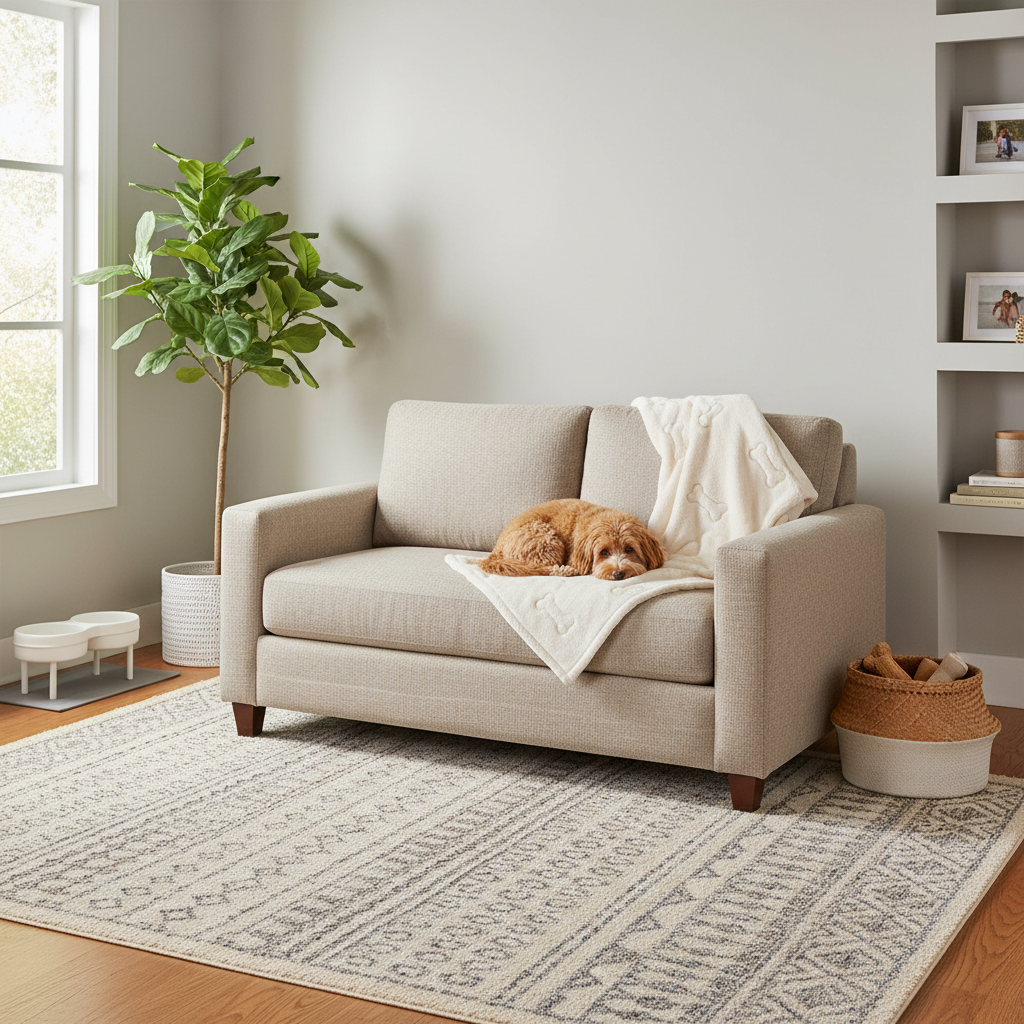
This guide focuses on decisions that hold up in real life: materials that clean easily, layouts that reduce chaos, and styling tricks that don’t scream “pet house.” You’ll also get a quick self-check and a practical plan you can follow in a weekend.
Start With the Non-Negotiables: Space, Pet Habits, and Your Reality
Before you buy anything new, take five minutes to name what you’re actually dealing with. A “small living room” with a calm senior cat needs different solutions than a high-energy puppy who launches off the couch daily.
- Pet profile: shedding level, scratch/chew habits, accident risk, nail length, energy level.
- Traffic pattern: where people and pets naturally walk, sprint, and stop.
- Your tolerance: how often you realistically clean, and what annoys you most (fur, smell, clutter, stains).
- Hard limits: renting rules, budget, whether you can drill into walls, whether you can replace flooring.
Many people skip this and over-index on “cute.” But when your choices match behavior, you spend less time correcting problems and more time enjoying the room.
Choose Furniture That Looks Good and Survives Real Pet Use
In most small living rooms, the sofa is the visual anchor and the biggest surface area for fur and stains. If you upgrade one thing, make it the seating.
What tends to work
- Performance fabric or tightly woven upholstery: often resists snagging and wipes down easier than loose weaves.
- Slipcovers you can wash: not glamorous, but incredibly practical, especially with dogs who love mud.
- Legs vs. skirt: raised sofas make it easier to vacuum fur tumbleweeds, but check if your pet hides toys under there.
- Closed storage ottoman: doubles as seating and hides toys in seconds.
Materials to think twice about
- Delicate linen blends: they can look amazing, but stain anxiety is real in a pet home.
- High-sheen leather: can scratch, and some pets slip on it, which may be uncomfortable.
- Rattan and open weave pieces: can be a tempting chew zone for some dogs.
According to the ASPCA, some common houseplants and household products can be toxic to pets, so if you’re adding new furniture finishes or treatments, it’s worth checking labels and using pet-appropriate options.
Rugs, Floors, and the “Small Room Trap” (Where Mess Becomes the Decor)
Small rooms amplify visual noise. A rug with the wrong pile height or pattern can make fur and crumbs look permanent, even when you just cleaned.
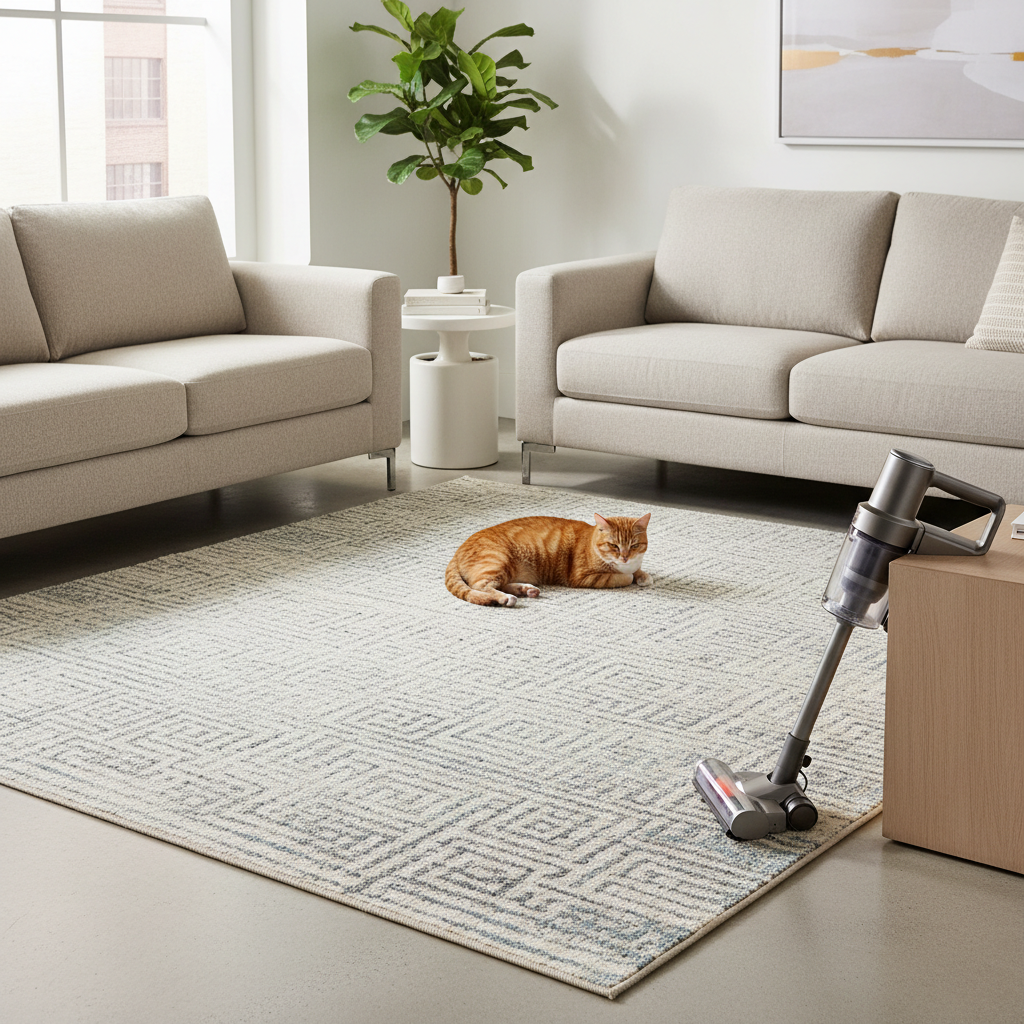
For many households, low-pile or flatweave rugs are the sweet spot: easier vacuuming, fewer trapped odors, and less snagging. If your pet has frequent accidents or you have a puppy in training, a washable rug can save your sanity.
- Pattern tip: gentle, mottled patterns hide fur better than solid colors, especially mid-tone neutrals.
- Edge tip: choose a rug size that tucks under front sofa legs so it doesn’t curl and trip pets.
- Grip tip: use a quality rug pad to prevent sliding, which can be a safety issue for older pets.
For floors, a simple rule works: pick surfaces you can clean quickly without special rituals. If you rent, layered solutions like rug pads and runners can reduce wear without permanent changes.
Layout: Make a Clear Path, Then Give Pets a “Yes Zone”
When people ask how to decorate a small living room with pets, what they often mean is “how do I stop the chaos.” Layout fixes a surprising amount of that.
- Keep a 24–36 inch walkway in the main path so pets don’t bulldoze side tables.
- Anchor one pet station near where you already sit: a bed, a crate with a cover, or a window perch.
- Use vertical space for cats: wall shelves or a tall cat tree in a corner can replace clutter on the floor.
- Reduce tiny surfaces (multiple small tables) and swap to one sturdier piece.
Say it out loud: pets will claim territory. If you design an intentional “yes zone,” they tend to bother your styling less, because they already have a spot that feels like theirs.
Pet-Proof Styling: What to Display, What to Skip
Decorating isn’t only about what you add, it’s also about what you stop adding. In tight rooms, less surface clutter reads cleaner, and it’s harder for tails and paws to cause damage.
Styling choices that usually survive
- Heavier objects (ceramic bowls, chunky candle holders) instead of lightweight decor that tips easily.
- Closed baskets for toys, wipes, and lint rollers, placed where you naturally reach for them.
- Framed wall art rather than leaning frames on consoles that a pet can bump.
- Throws as “sacrificial layers” on sofas and chairs, easy to wash and rotate.
Items to be cautious with
- Essential oil diffusers: some oils may be harmful for certain pets; it’s smart to ask a veterinarian if you’re unsure.
- Small decor on low tables: it often becomes chewable, throwable, or both.
- Stringy textiles (tassels, fringe): can attract chewing or clawing.
According to the American Kennel Club, many common household items can create avoidable hazards for dogs, so when you’re styling low shelves, treat it like you would a coffee table around toddlers: stable, minimal, and not toxic if mouthed.
A Quick Self-Check: Which “Pet + Small Room” Problem Are You Solving?
If you’re stuck, it helps to label the main issue. Pick the closest match, then act on that set of fixes instead of trying to change everything at once.
- Fur everywhere: fabrics and colors show hair, no easy cleaning routine.
- Scratches/snags: cat claws on sofa sides, dog nails on soft wood, doors with marks.
- Odor/stains: accidents, wet-dog smell, old rug padding.
- Clutter: toys and supplies have no home, surfaces fill up fast.
- Safety/anxiety: pet knocks things over, eats plants, chews cords.
Room-by-Room Actions: A Practical Weekend Plan
Here’s a simple way to execute without spiraling into a full redesign. The goal is a room that looks intentional on Monday morning.
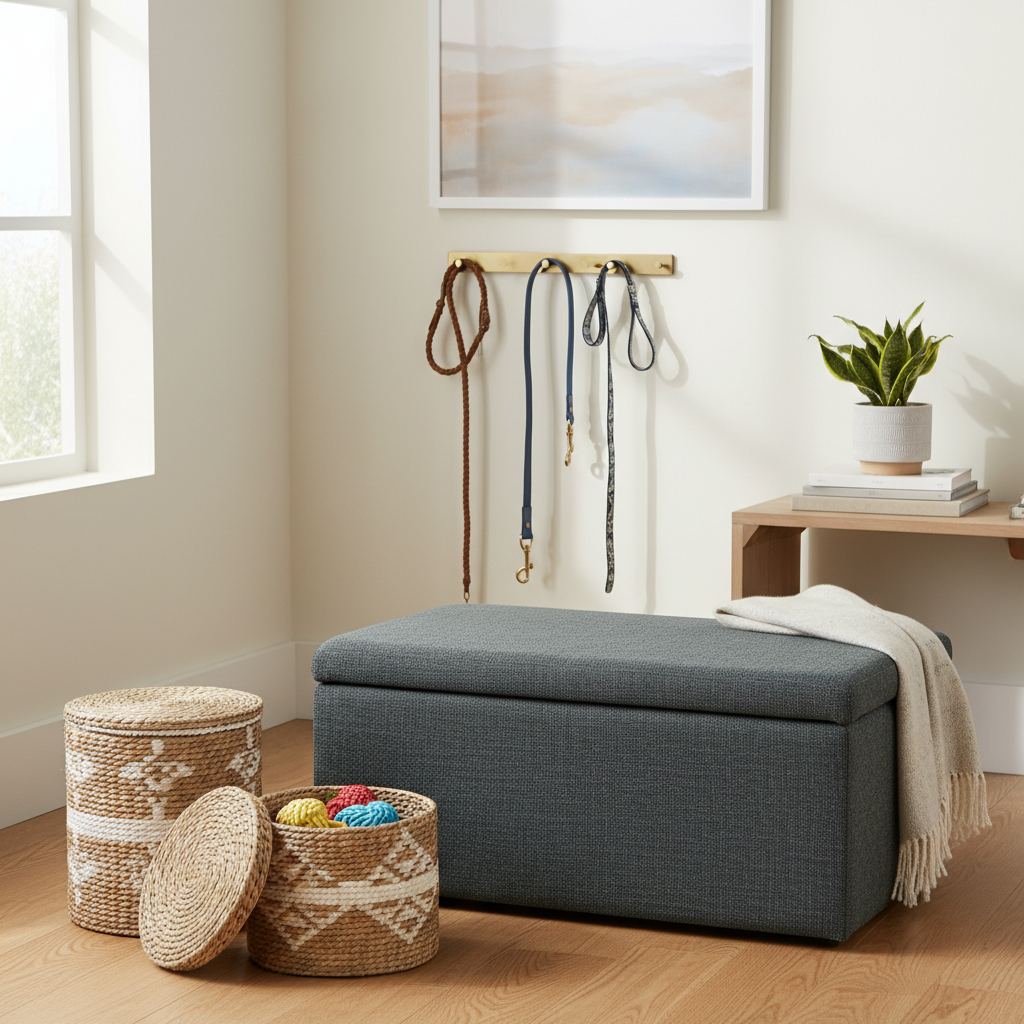
Step 1: Reset the “pet clutter” in 20 minutes
- Put a lidded basket where toys currently pile up.
- Add a small tray for daily items (treats, clicker, wipes) so they don’t spread.
- Move anything fragile below tail height to a closed cabinet or higher shelf.
Step 2: Protect the high-impact spots
- Cover sofa arms or corners with a throw, or use a washable cover panel.
- Add a clear floor mat or rug runner where nails scratch most.
- Bundle cords using cord covers, especially near lamps and TVs.
Step 3: Upgrade one surface, not five
- If stains are the pain point, prioritize a washable rug or new rug pad.
- If scratching is the pain point, prioritize a scratching post placed where scratching already happens.
- If the room feels chaotic, prioritize one storage ottoman or closed console.
Step 4: Make the room feel styled again
- Choose two calm colors and repeat them in pillows, throws, and one piece of art.
- Keep coffee table decor to 1–3 heavier items, with space left empty on purpose.
- Add one pet-friendly “nice touch,” like a good-looking bed cover that matches your palette.
Pet-Safe Cleaning and Air Quality: What Matters Most
If your living room is small, odor lingers longer, and “clean enough” often depends on airflow and soft surfaces more than anything else. You don’t need harsh chemicals, but you do need consistency.
- Vacuum frequency: smaller rooms often benefit from quick, frequent passes rather than marathon cleans.
- Washable layers: throws, slipcovers, and rug covers are easier than deep-cleaning upholstery.
- Ventilation: open windows when possible, and consider a HEPA air purifier if allergies are part of the story.
According to the U.S. Environmental Protection Agency, indoor air quality can be affected by particles and pollutants inside the home; if you’re sensitive to dander, improving filtration and ventilation can make the room feel fresher. If you’re considering fragranced sprays or cleaners, it’s safer to choose pet-appropriate products and check with a veterinarian when unsure.
Common Mistakes That Make Small Pet-Friendly Rooms Harder
- Buying a white rug to “brighten things up” without considering fur color and paw traffic.
- Hiding scratching posts in a back corner, then wondering why the sofa takes the hit.
- Too many small decor items on every surface, which reads messy fast and becomes a hazard.
- Using strong fragrance to mask odor instead of removing the source, which may bother pets.
If you remember one principle for how to decorate a small living room with pets, make it this: design for the mess you actually have, not the mess you wish you had.
When It’s Worth Getting Professional Help
Sometimes the problem isn’t style, it’s persistent odor, repeated marking, or damage that keeps happening. In those cases, decorating changes help, but they may not be enough on their own.
- Repeated accidents or marking: a veterinarian or certified trainer can help rule out medical or behavior causes.
- Cat scratching escalation: a behavior consult may be more effective than buying multiple new posts.
- Allergy concerns: consider discussing symptoms with a medical professional; home changes can support comfort but aren’t a medical plan.
Quick Reference Table: What to Choose for a Small Living Room With Pets
| Area | Safer Pick | Why It Helps |
|---|---|---|
| Sofa | Performance fabric or washable slipcover | Easier cleanup, less stress about fur and stains |
| Rug | Low-pile, patterned, washable if possible | Less snagging, hides hair, simpler maintenance |
| Coffee table | Rounded edges, heavier base | Fewer bumps, more stable around zoomies |
| Storage | Closed ottoman + lidded baskets | Toys disappear fast, room looks calmer |
| Styling | Wall art, fewer tabletop items | Less breakage risk, less visual clutter |
Key Takeaways (If You Only Do Three Things)
- Make cleaning easy: washable layers and low-pile rugs beat “delicate but pretty.”
- Control clutter at the source: one closed storage piece changes how the whole room feels.
- Give pets an intentional zone: it reduces damage to the rest of your decor.
If you want a living room that feels calm and still works for real pet life, pick one upgrade and one behavior-supporting change this week, then reassess. Small rooms reward small, smart moves.