
How to arrange succulents in open shelf decor comes down to one thing most people skip: you’re styling a shelf and keeping a plant alive, so the “prettiest” setup isn’t always the one that lasts.
Open shelving makes every corner visible, which is why succulents can look amazing there, but also why small mistakes read as clutter fast. A few mismatched pots, uneven heights, or one overwatered plant can throw off the whole wall.
This guide focuses on realistic shelf styling, how to choose plants and containers that behave well indoors, and a few easy “rules” that keep your shelves looking calm without feeling staged.
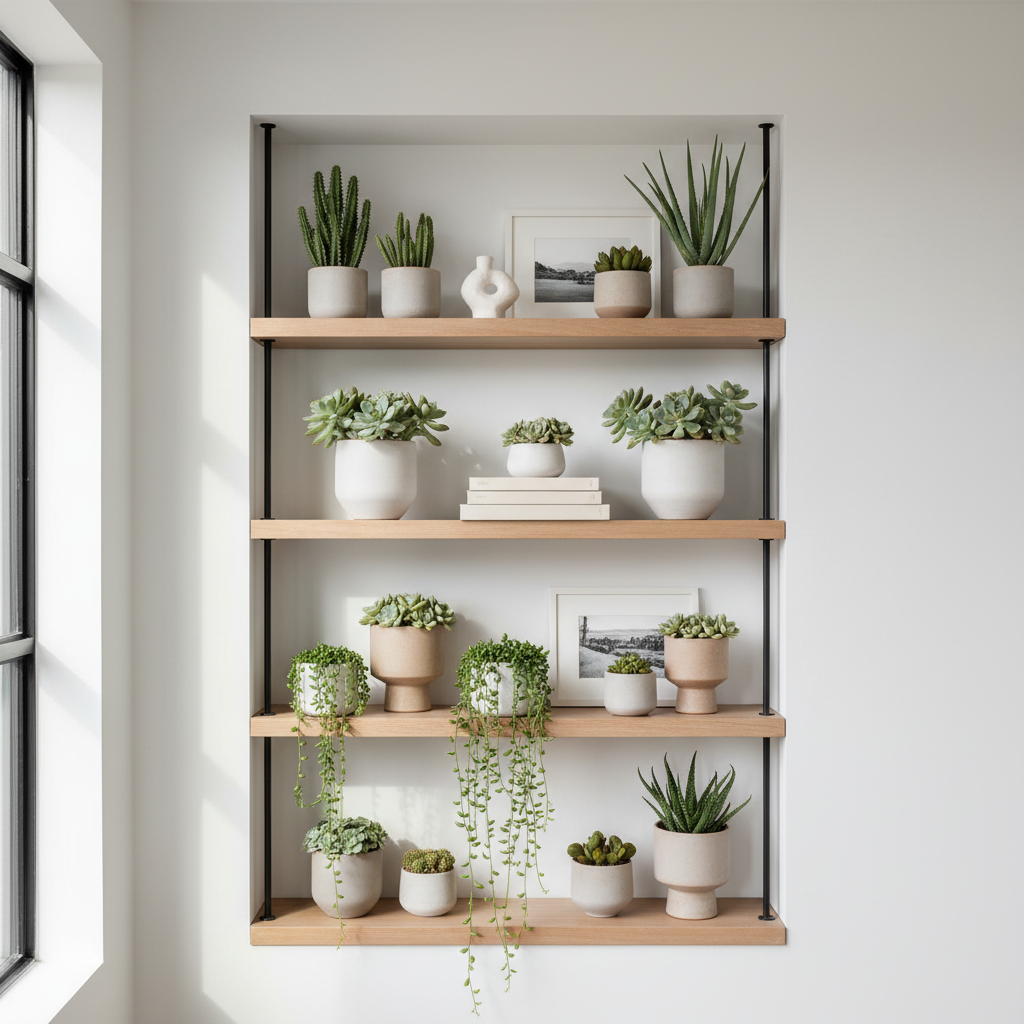
Start with the shelf: light, depth, and what “open” really means
Before you pick plants, look at the shelf like a micro-climate. Succulents tolerate a lot, but most issues on shelves come from not enough light and airflow that traps moisture.
- Light direction: Shelves near a bright window (often south or west facing in many U.S. homes) tend to work better. Deeper shelves can block light from reaching the back row.
- Heat and drafts: A shelf right above a vent or radiator dries pots unevenly. Plants may look fine for a month, then start dropping leaves or wrinkling.
- Water tolerance: If you know you sometimes overwater, plan for extra drainage and fewer “tight clusters.”
According to the Royal Horticultural Society (RHS)... succulents generally prefer bright conditions and free-draining setups. That matches what you see in homes: shelves can work, but only when you treat them like a place for light-loving plants, not just decor.
Pick succulents that behave well indoors (and mix them on purpose)
Not all succulents look good on shelves long-term. Some stretch toward light quickly, some drop lower leaves when bumped, and some need stronger sun than most indoor shelves provide.
Indoor-friendly options many people have luck with
- Haworthia (often stays compact, tolerates moderate light)
- Gasteria (slow-growing, shelf-friendly rosettes)
- Jade plant (Crassula ovata, can handle indoor light if it’s bright)
- Snake plant (not a “true” succulent to everyone, but a similar care vibe, strong shelf reliability)
Plants that can be gorgeous but easier to “mess up” on shelves
- Echeveria (often needs brighter light to avoid stretching)
- String of pearls (beautiful trailing, but sensitive to overwatering and low light)
- Aloe (can outgrow shelves and lean toward windows)
If your goal is a clean look, choose fewer varieties and repeat them. Repetition reads “designed,” even when the arrangement stays simple.
Containers matter more than you think: scale, drainage, and visual weight
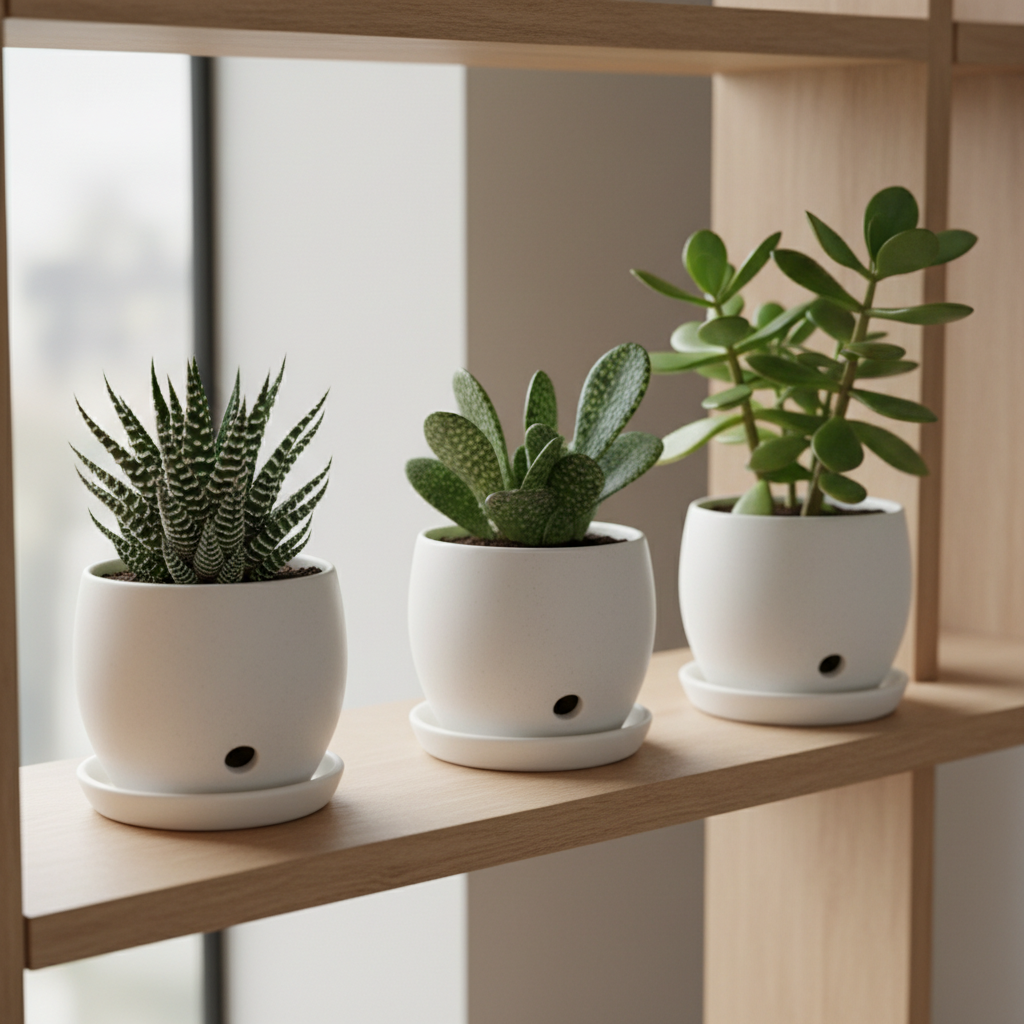
When people search how to arrange succulents in open shelf decor, they usually expect a styling trick, but the container choice is the real cheat code. A shelf arrangement fails when pots are the wrong scale or when drainage is ignored “because it’s indoors.”
- Drainage: Ideally use pots with drainage holes plus a saucer. If you must use cachepots (no holes), keep plants in a nursery pot inside and remove to water.
- Scale rule: On most shelves, a few medium pots read calmer than many tiny ones. Tiny pots often become visual noise.
- Visual weight: Dark, glossy, or heavily textured planters feel “heavier.” Use them intentionally as anchors, not sprinkled everywhere.
Quick way to avoid clutter: pick one material family (matte ceramic, terracotta, concrete-look) and stay there, then vary only height and shape.
Three shelf layouts that look intentional (and don’t block light)
You don’t need a complex formula, you need a layout you can repeat across shelves. Here are three arrangements that usually photograph well and still keep plants happy.
1) The “triangle” cluster (best for one shelf section)
- Place one taller plant or taller pot slightly off-center.
- Add two smaller pots to form a loose triangle.
- Leave at least a hand-width of breathing space around the cluster.
2) The “bookend” layout (best for long shelves)
- Anchor each end with a medium-to-large pot or a heavier planter.
- Keep the middle lighter: one trailing plant or a single low rosette.
- Stop before filling every gap, empty space is part of the design.
3) The “one hero + supporting cast” (best for mixed decor)
- Choose one standout succulent (size, color, or pot) as the hero.
- Add one or two quieter plants in matching pots.
- Use a non-plant object as a spacer (small bowl, candle, framed photo).
Any of these can work on a budget shelf or a custom built-in, what changes is the spacing. Deeper shelves tolerate bigger groupings, shallow shelves usually need fewer items.
A quick self-check: does your shelf setup look styled or messy?
If your shelf still feels “off,” it’s often one of these issues. This list helps you diagnose fast before you buy more plants.
- Everything is the same height: add one tall element or use a riser under a pot.
- Too many small items: swap three tiny pots for one medium pot.
- Pots fight each other: reduce finishes, keep a tighter color palette.
- Plants look weak or stretched: light may be too low, move them closer to a brighter spot or consider a grow light.
- Soil looks messy: top-dress with small stones, or use cleaner potting mix and wipe the rim.
Practical step-by-step: style the shelf without harming the plants
If you want a repeatable process, use this order. It keeps you from styling yourself into a corner where watering becomes impossible.
- Clear the shelf and wipe it down, especially if it’s near a kitchen where grease and dust build up.
- Place the largest items first (bigger pots, books, baskets). These create structure.
- Add succulents next, with a bias toward the brightest part of the shelf, usually the front edge or the side closest to the window.
- Reserve space for maintenance, you want to lift a pot out without knocking three items over.
- Finish with one “connector” detail, like a small tray under two pots to visually group them.
When you’re done, stand back and check the shelf as a whole, not pot-by-pot. If your eye bounces everywhere, remove one item.
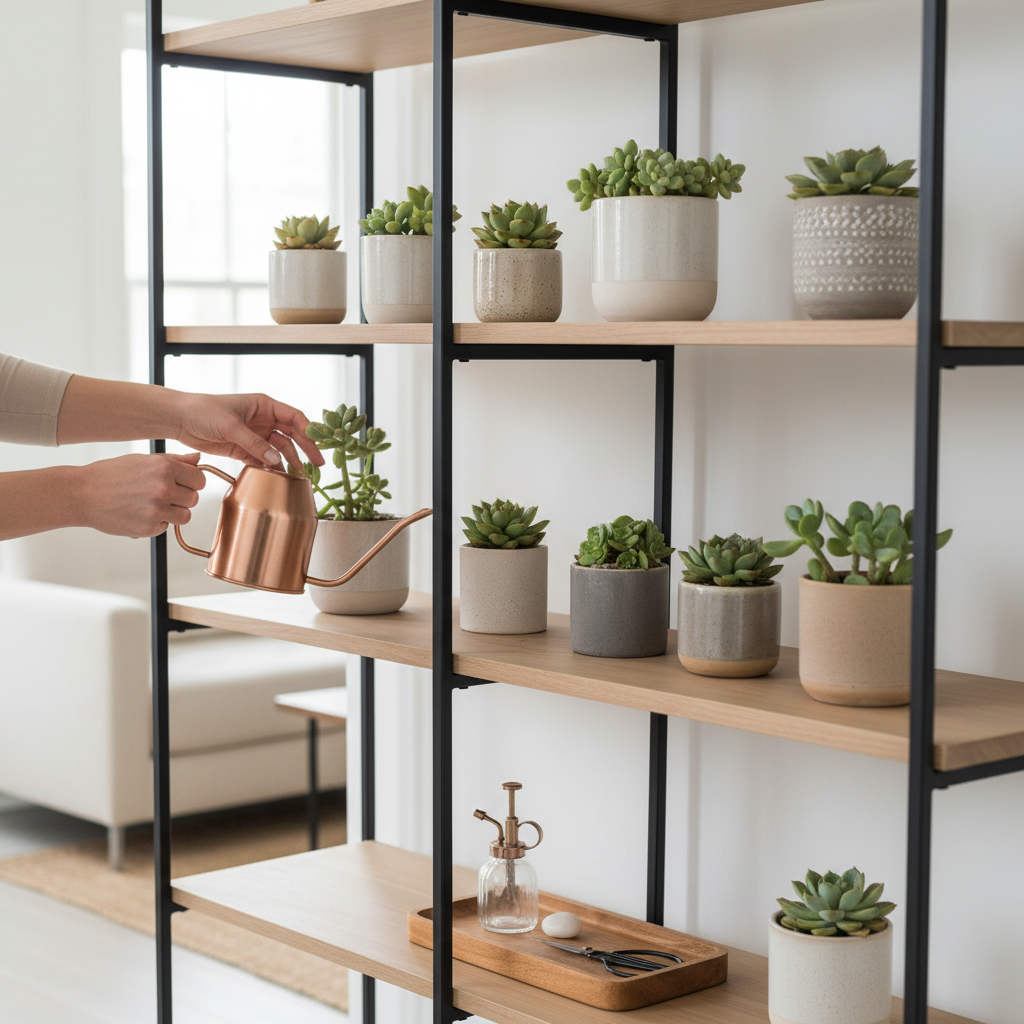
Care-friendly styling: watering, rotation, and avoiding shelf damage
The biggest hidden downside of open shelf plants is maintenance. If watering feels annoying, you’ll delay it, then overcorrect, then plants decline. Design for the routine you’ll actually follow.
- Watering method: Many people prefer to water succulents at the sink and let them drain, then return them to the shelf. This reduces surprise puddles on wood.
- Rotation: Turn pots every week or two so growth stays even. If you don’t rotate, plants may lean, and the shelf starts to look lopsided.
- Surface protection: Use saucers, felt pads, or a tray. On sealed wood, trapped moisture can still leave rings.
According to the Missouri Botanical Garden... many succulents prefer thorough watering followed by drying out, rather than frequent sips. In shelf decor terms, that usually means fewer watering sessions, but each one needs good drainage and a plan to catch drips.
Common mistakes (that make shelves look “busy” or plants look sad)
- Using only tiny rosettes everywhere: it reads like a collection, not decor, unless you intentionally group them on a tray.
- Overfilling each shelf: open shelves need negative space, plants included.
- Ignoring growth: that “perfect” 2-inch succulent may be 6 inches wide later, plan spacing with the next season in mind.
- Decor blocking light: tall vases in front of plants can shade them all day.
- No system for watering: if you dread moving things, you’ll eventually keep watering in place and risk damage.
A simple planning table you can copy for any shelf
If you’re rearranging more than one shelf, a quick plan keeps the look consistent without turning it into a weekend-long puzzle.
| Goal | What to place | Works best when | Watch out for |
|---|---|---|---|
| Clean, minimal look | 2–3 medium pots in matching finishes | Light is strong, shelf isn’t very deep | Too much sameness, add one height change |
| Cozy, collected look | Tray with small pots + one book stack | You like variety but want boundaries | Overcrowding, keep tray contained |
| Statement shelf | One larger pot + one trailing plant | There’s space to let the trailing plant hang | Trailing plant shading others, keep it to one side |
| Low-maintenance reality | Hardy types (haworthia, gasteria) + saucers | Light is moderate, schedule is inconsistent | Overwatering in no-drain containers |
Key takeaways you can apply today
- Design around light first, then aesthetics, shelves punish low-light choices.
- Repeat pots and plant types to make any arrangement feel intentional.
- Leave space for watering, if upkeep is annoying, the decor won’t last.
- One tall element per shelf section usually fixes “flat” styling fast.
Conclusion: make it look good, then make it easy to keep alive
The nicest open shelves with plants don’t look full, they look edited. If you remember that how to arrange succulents in open shelf decor is really about balancing visual rhythm with basic plant needs, your setup stays attractive longer than the first photo.
Pick one shelf to start, swap in pots with drainage, and build a simple repeating layout. Once that shelf feels stable and easy to water, copying it to the rest of your shelving becomes surprisingly quick.
FAQ
How many succulents should I put on one open shelf?
In many homes, 2–5 plants per shelf is a comfortable range, depending on shelf length and what else you display. If you already have books and framed photos, fewer plants usually looks more intentional.
What’s the easiest layout for beginners?
A triangle cluster is hard to mess up: one taller pot, two smaller ones, and space around the group. It reads like “styling” without requiring a lot of objects.
Can I arrange succulents on shelves without drainage holes?
You can, but it’s a higher-risk setup. A common workaround is keeping the plant in a nursery pot inside a decorative cachepot, then removing it to water and drain fully before putting it back.
Why do my shelf succulents keep stretching and leaning?
That often points to low light. Try moving them closer to the brightest edge of the shelf, rotating weekly, or adding a grow light if natural light is limited.
How do I keep open shelves from looking cluttered with lots of small succulents?
Contain the small items on a tray, and limit the number of finishes. Even a simple tray creates a visual boundary so the collection reads organized, not scattered.
Should I mix succulents with books and decor pieces?
Usually yes, as long as you leave watering access and avoid shading plants with tall objects. A small book stack can also work as a riser to vary height.
What’s a safe way to water succulents on wood shelves?
Many people water at the sink, let pots drain, then return them to saucers or a lined tray. If you notice water rings or warping, consider consulting a furniture professional about sealing options for your shelf material.
If you’re rearranging shelves and want a more “done” look without constant tweaking, consider standardizing your pots and adding one or two shelf-safe trays or risers, it’s often the simplest way to make succulents feel like part of the decor instead of extra stuff.