
Pantry organization labels ideas usually fail for one boring reason: the labels look cute on day one, then life happens, containers change, and the system stops making sense. The goal for 2026 is less “Pinterest pantry,” more “I can find cumin in five seconds.”
Labels are doing two jobs at once, they help you find things fast, and they help you put things back in the right spot. When either job breaks, clutter creeps in, duplicates pile up, and you start buying a third bag of rice by accident.
This guide walks through label styles that work in real kitchens, how to choose materials that match your containers, and a simple labeling framework you can keep even if you reorganize later.
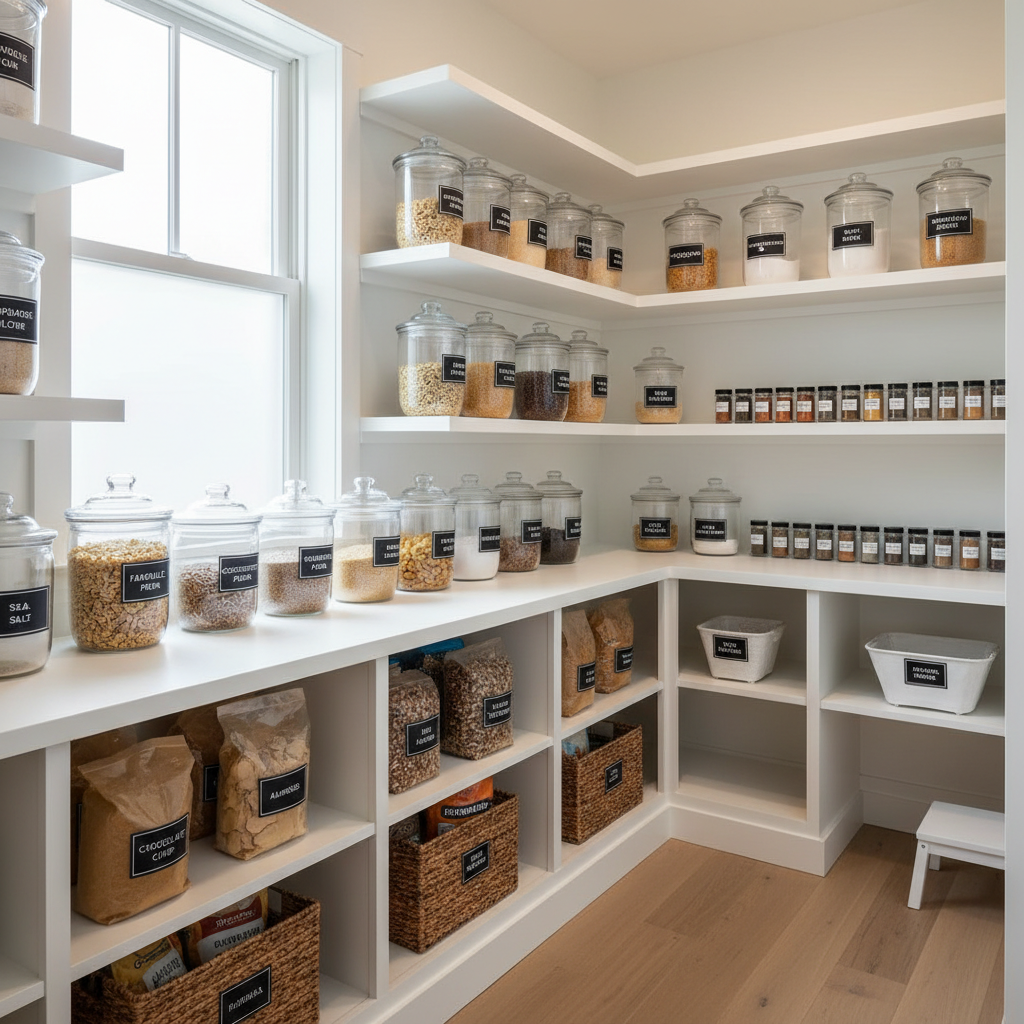
Why pantry labels stop working (and how to avoid it)
Most pantries don’t “get messy,” they drift. A label system works when it matches how you shop, cook, and restock, not when it matches a template.
- Container churn: you switch from jars to bins, buy a different brand, or move to stackable containers, and label sizes no longer fit.
- Too-specific naming: “Organic brown basmati rice” looks precise, but you’ll eventually buy jasmine rice and ignore the label.
- Low-contrast design: light gray script on a clear jar looks nice, then disappears under pantry lighting.
- Mixed use zones: “Baking” overlaps with “Breakfast” in many homes, flour ends up in three places, labels don’t resolve that.
- Sticky failures: humid kitchens, textured containers, or frequent washing cause peeling, curling, and smudging.
According to FDA, food should be stored in ways that reduce contamination risk, and in many cases that means using clean, food-safe containers and keeping items dry and sealed. Labels support this by making rotation and identification easier, but only if they stay readable.
A quick self-check: what kind of pantry do you actually have?
Before you print anything, identify your pantry type. This saves you from rebuilding the system every season.
- High-cook pantry: lots of ingredients, frequent refills, spices and staples need fast scanning.
- Snack-heavy pantry: bins for bars, chips, lunch items, labels need to work at kid eye-level.
- Bulk buyer pantry: large bags, decanting into big containers, date labels and “refill” tags matter.
- Small-space pantry: fewer zones, vertical stacking, labels must be visible from the front edge.
- Mixed storage: some items decanted, some in original packaging, your labels must cover both formats.
If you nodded at more than two types, keep labels flexible and category-first, you can still be neat without being overly detailed.
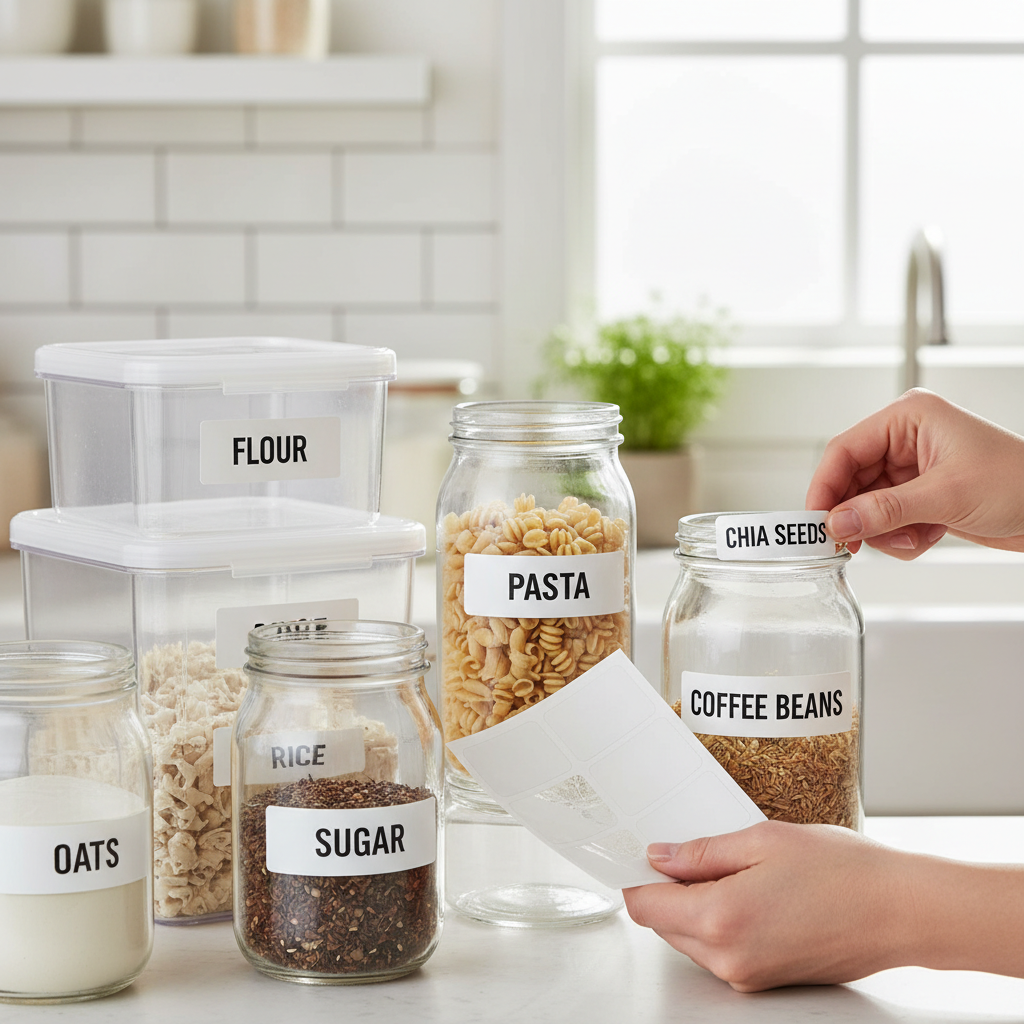
Label format ideas that hold up in 2026 kitchens
Trends come and go, but readability and consistency win. These pantry organization labels ideas stay practical even if your shelves change.
1) Category-first labels (best for most homes)
Use bigger category names, then keep specifics optional. Example: “RICE” instead of “Basmati Rice.” If you keep multiple kinds, add small secondary lines like “WHITE / BROWN.”
2) “Use for” labels (surprisingly effective)
Some items are hard to categorize, label by use: “SMOOTHIES,” “LUNCHBOX,” “BAKING MIX-INS.” This reduces the mental friction when restocking.
3) Date + batch mini-labels (for decanted staples)
Keep the main label permanent, then add a tiny removable sticker for “Opened” or “Best by.” Not everyone needs this, but bulk buyers usually love it.
4) Bins with front-edge labels
For snacks and packets, label the bin, not each item. Front-edge labels read better than top labels, especially on higher shelves.
5) Short bilingual cues (when helpful)
If your household uses more than one language, add a second smaller word. Keep it short so labels stay scannable.
Choose label materials by container reality (not aesthetics)
Material choice is where “pretty” becomes “actually functional.” Think about washing, humidity, and whether you change contents often.
| Label type | Best for | Watch-outs |
|---|---|---|
| Waterproof vinyl stickers | Plastic bins, jars, high-use containers | Adhesive can struggle on textured surfaces |
| Dissolvable labels | People who change contents often | Not ideal if containers get splashed regularly |
| Chalkboard labels + chalk marker | Quick edits, rentals, testing a system | Can smear if rubbed, needs dry surface |
| Label tape (handheld label maker) | Fast, consistent text, high readability | Some tapes peel on curved glass over time |
| Hang tags (string/clip) | Wire baskets, bins you don’t want sticky residue on | Can swing and twist, readability varies |
If you wash containers often, waterproof vinyl plus a simple font beats delicate paper every time. If you rarely wash the outside, paper labels can still be fine, but keep them away from oil and steam zones.
A simple labeling system you can set up in one afternoon
You don’t need a total pantry reset to get results. You need a decision tree, then you label in batches.
Step 1: Define 6–10 zones (not 20)
- Breakfast
- Baking
- Grains + Pasta
- Canned + Jarred
- Snacks
- Spices + Seasoning
- Oils + Vinegar
- Backstock
Keep zones broad, it’s easier to maintain when you’re tired.
Step 2: Pick one label style and commit
One font, one color scheme, one placement rule. The most common placement rule that works: labels always face forward, centered, same height line across the shelf.
Step 3: Label containers you touch weekly
Start with flour, sugar, rice, oats, pasta, snacks, and any bin your household opens daily. This is where pantry organization labels ideas pay off fastest.
Step 4: Add “flex labels” for rotating items
Use dissolvable labels, chalk markers, or small removable stickers for seasonal stuff, holiday baking, party snacks, and limited-time bulk buys.
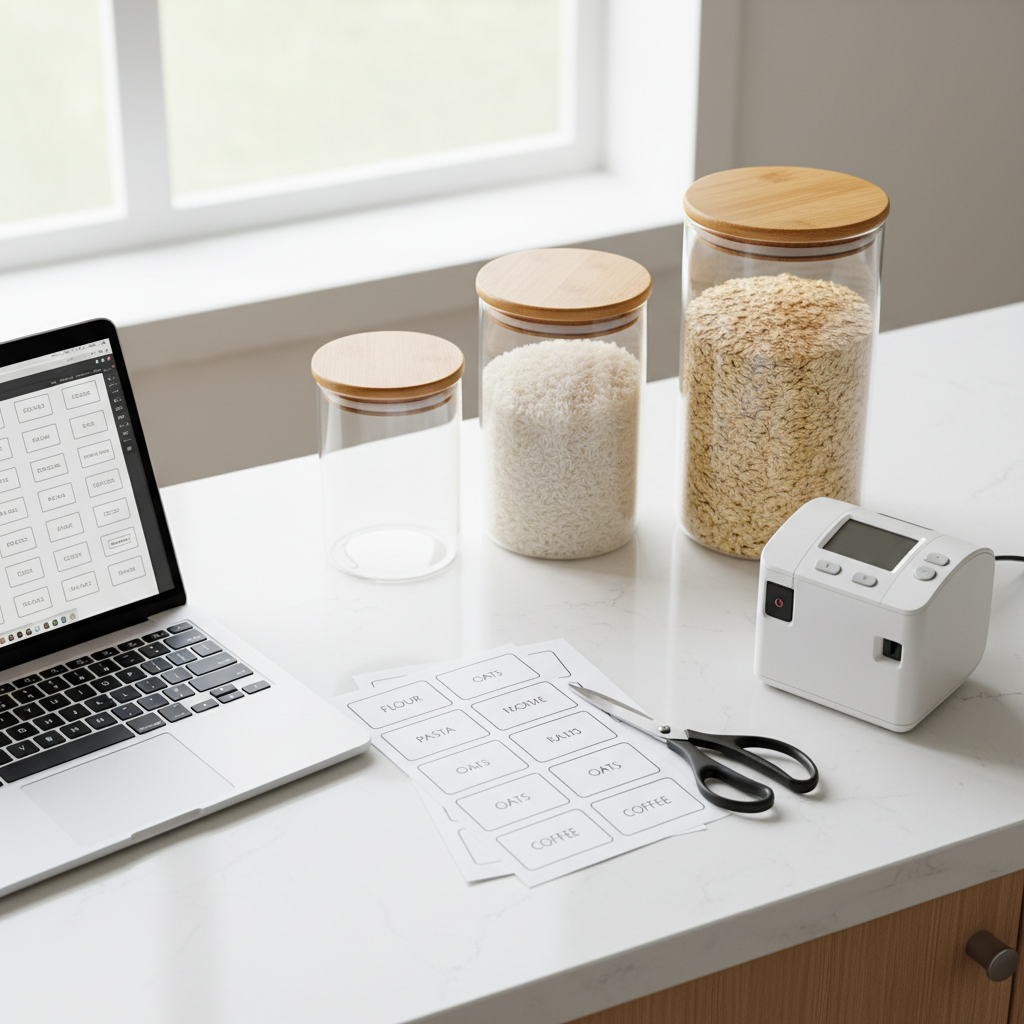
Common mistakes that make labels feel “high effort, low reward”
These are the pitfalls that waste time, even with beautiful templates.
- Labeling before measuring: curved jars, tapered containers, and bin lips change what size label looks clean.
- Making every label unique: your pantry is not a museum exhibit, repetition is the point.
- Ignoring shelf height: top labels disappear on high shelves, side labels disappear in tight spaces.
- Over-decanting: decant what you use often or what comes in messy bags, keep the rest in original packaging inside a labeled bin.
- Skipping a backstock rule: if extras sit everywhere, labels won’t stop duplicates.
Key takeaway: a good system reduces decisions. If labeling adds decisions, simplify names and reduce zones.
When it’s worth getting extra help (or at least a second opinion)
If your pantry includes allergy-related segregation, medically necessary diets, or you store bulk foods for long periods, consider a more structured approach with clearer date tracking and separation. In those situations, it can be smart to consult a qualified professional organizer, and for food safety questions, a local extension office or a food safety professional can be a helpful resource.
According to USDA Food Safety and Inspection Service (FSIS), proper storage and clear identification help reduce food waste and lower the chance of using expired items, especially when foods are transferred out of original packaging.
Conclusion: make labels boring, and your pantry gets easy
The most sustainable labels are not the most artistic, they’re the ones your household understands instantly. Pick a category-first system, choose materials that survive your kitchen, and label the high-traffic items before you worry about the rest.
If you want one action that pays off tonight, label three zones, then commit to one placement rule so everything reads the same when you glance at the shelf.
FAQ
What are the most practical pantry organization labels ideas for small pantries?
Front-edge bin labels and short category names usually work best, because you’re reading from one angle and often stacking vertically. Avoid top-only labels unless every container sits at eye level.
Should I label the container or the shelf?
Most homes do better labeling containers and bins, since items move. Shelf labels can help for fixed zones, but they tend to fail when you rearrange or when family members “temporarily” shift things.
What label material holds up best in a kitchen?
Waterproof vinyl is a common go-to for everyday use, especially on smooth plastic or glass. If you frequently change contents, a removable or dissolvable option can be less frustrating.
How do I label pantry items if I don’t decant anything?
Use labeled bins like “PASTA,” “SNACKS,” “BAKING,” then drop the original packages inside. You still get the speed benefit without transferring foods.
How detailed should pantry labels be?
Usually less detailed than you think. If your household buys multiple varieties, add a small secondary note, but keep the primary label broad enough that it doesn’t become “wrong” next grocery trip.
Do I need to put dates on pantry containers?
It depends on how you shop and how fast you use staples. Bulk buying and long storage periods benefit from a small “opened” or “refill” date sticker, but many households can skip it and still stay organized.
What’s the quickest way to make pantry labels look consistent?
Use one font style, one label size per container type, and one placement rule. Consistency reads as “organized” even if your containers aren’t all identical.
If you’re rebuilding your pantry for 2026 and want a more hands-off path, it may help to start with a simple zone map and a small set of repeatable label names, then expand only after you live with it for a week.