
How to make a small room look bigger usually comes down to a few high-impact choices—light, color, layout, and what you allow to sit out in the open.
If your room feels tight, it’s rarely because you “need more furniture.” More often, the problem is visual noise: heavy pieces, dark corners, short sightlines, and too many small items breaking up the space. The good news is that many fixes cost little, and you can test them in a weekend.
This guide keeps it practical: what changes matter most, how to diagnose your room quickly, and a few common traps that make small spaces feel even smaller.
Start with the biggest visual blockers
When people ask how to make a small room look bigger, they often jump straight to paint colors. Paint helps, but the fastest gains come from removing what blocks your sightline and light.
- Too much furniture depth: Deep sofas, wide nightstands, chunky dressers swallow floor area and make paths feel cramped.
- Heavy “visual weight”: Dark, bulky pieces read as larger than they are, especially when multiple heavy items sit in the same line of sight.
- Low, broken sightlines: Lots of short items (bins, stools, small side tables) create a busy horizon that makes a room feel chopped up.
- Clutter at eye level: Open shelves packed with mixed items look like texture, not storage.
Quick win: Stand at the doorway and note what you see first. Whatever dominates that first view is your primary “space shrinker.”
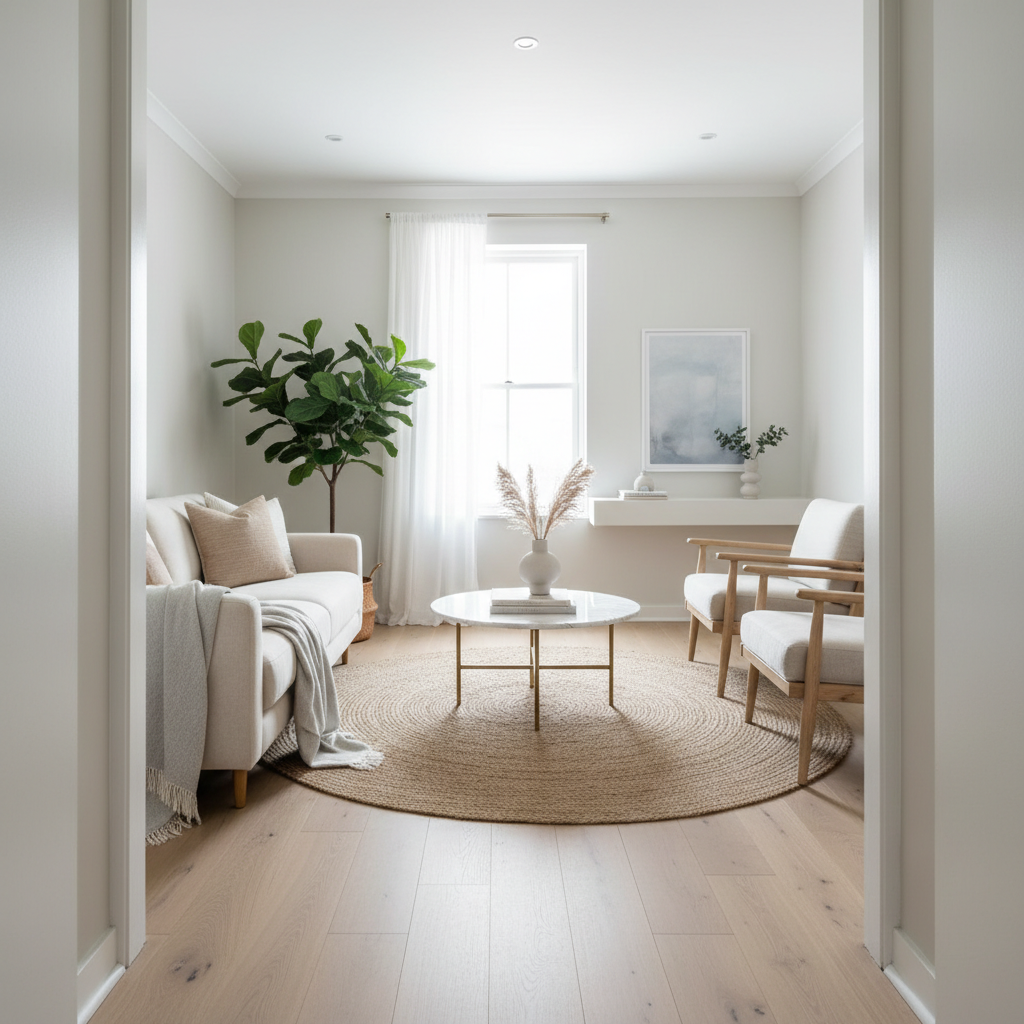
Use light like a tool, not an afterthought
Light is one of the most reliable ways to make a small room feel less boxed in. Many rooms have “enough” light, but it’s not placed to lift corners and walls.
According to the U.S. Department of Energy, using lighter colors and better lighting design can reduce the need for additional lighting and improve perceived brightness in a space.
- Layer your lighting: Aim for a mix of overhead light, a floor or table lamp, and a small accent light. One ceiling fixture usually creates shadows that visually shrink corners.
- Brighten the edges: Put at least one light source closer to a wall, not centered in the room. Lit walls feel farther away.
- Pick the right bulb: In many homes, 2700K–3000K reads warm and welcoming, while still bright enough for daily use. Higher color temps can feel harsh in small rooms, depending on finishes.
If you rent and can’t add wiring, focus on plug-in solutions: a tall floor lamp aimed upward plus a small lamp near the darkest corner often changes the whole mood.
Choose color and contrast with intention
Paint is not magic, but it’s a strong lever—especially when it reduces contrast and lets your eye travel smoothly.
- Keep walls and trim close in tone: High-contrast trim can outline the room like a box. A “same color, different sheen” approach often feels more expansive.
- Use one calm palette: Too many competing colors make the room feel busy. Try a base neutral plus one accent, then repeat that accent 2–3 times.
- Don’t fear darker accents: A small, controlled dark element (a frame, a lamp, a pillow) can add depth. The issue is large dark masses, not any dark color at all.
Key point: If you want the room to look bigger, reduce abrupt visual stops. Smooth transitions beat bold contrast in tight spaces.
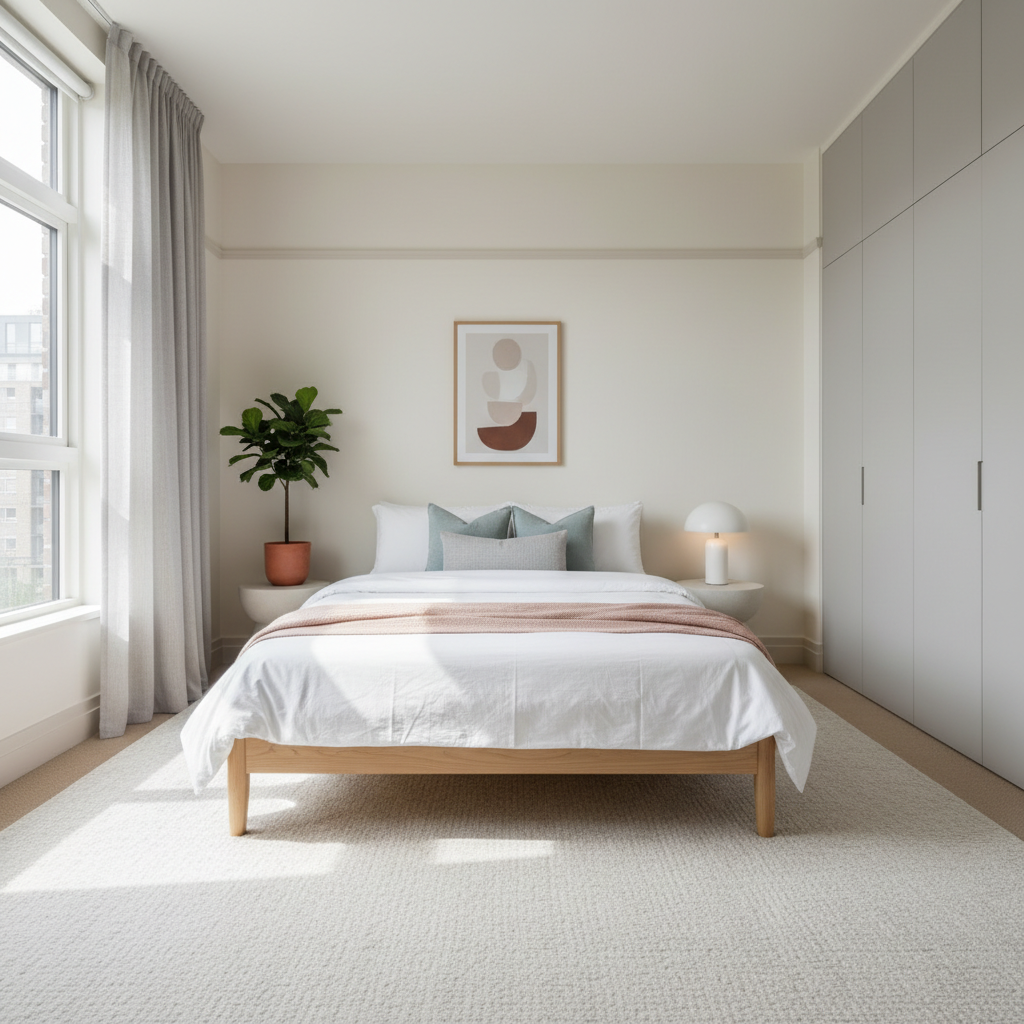
Furniture: scale, legs, and layout rules that actually work
If you’re stuck on how to make a small room look bigger, check furniture scale before you buy anything new. A few inches in depth can be the difference between “cozy” and “claustrophobic.”
What to prioritize
- Right-size depth: Look for slimmer profiles—apartment sofas, narrow dressers, wall-mounted nightstands.
- Show the floor: Furniture with legs (or wall-mounted pieces) exposes more flooring, which typically makes the room feel more open.
- One “anchor” piece beats five small ones: Many small items can make a room feel fragmented. A single, appropriately scaled rug or sofa can calm the space.
- Float if it improves flow: Not every piece must touch a wall. Sometimes pulling the sofa 3–6 inches off the wall creates breathing room and better circulation.
Layout checks you can do in 5 minutes
- Keep a clear path (often 24–36 inches works in many rooms, but adjust to your reality).
- Try to avoid “pinch points” near doorways and between seating.
- Make the first view from the entry feel simple: fewer objects, cleaner lines.
Mirrors and glass: use them where they help, not where they annoy
Mirrors can absolutely help a room feel larger, but only when they reflect something worth seeing—light, a window, a calm vignette—not a mess or a blank wall.
- Place mirrors opposite or near a window: This boosts perceived light and depth.
- Go bigger than you think: One larger mirror often works better than several small ones, which can feel busy.
- Consider glass or acrylic: A glass coffee table or acrylic side chair can reduce visual heaviness without sacrificing function.
If you hate seeing yourself constantly, place the mirror to reflect light and space, not your usual seated position. Small rooms should feel easy to live in, not like a fitting room.
Storage that makes the room feel calmer
Clutter is the silent killer of spaciousness. The trick isn’t “own nothing,” it’s reduce what’s visible and make daily items easy to put away.
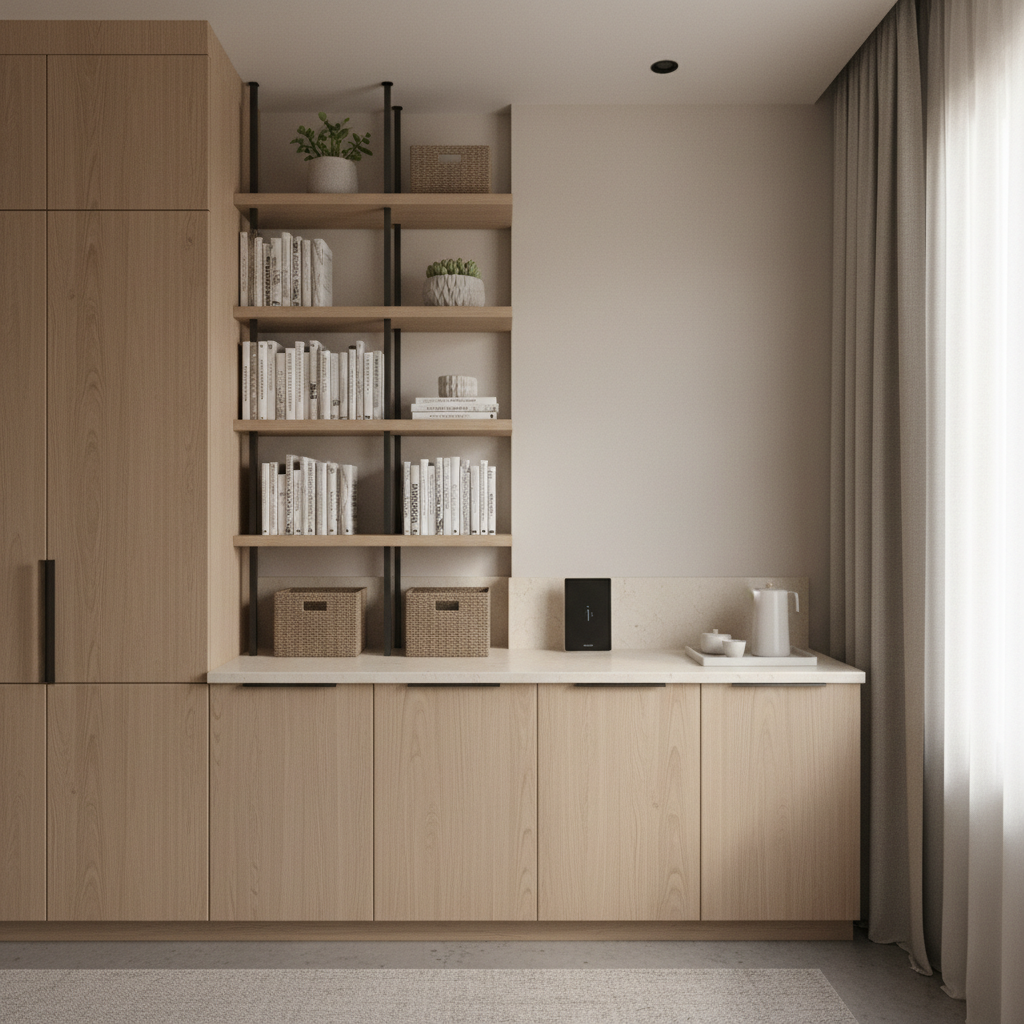
- Closed storage at eye level: Doors hide visual noise. Baskets help, but too many baskets still look like stuff.
- One drop zone: Give keys, mail, chargers one consistent home. Random piles make rooms feel smaller fast.
- Use vertical space: Tall bookcases, wall shelves, and over-door hooks can free floor space, as long as you don’t overfill them.
According to the National Association of Professional Organizers (NAPO), clutter can affect daily functioning and stress levels, which is why simpler visual environments often feel more livable.
A quick decision table: what to change first
If you’re deciding where to spend time (or money), this simple table helps prioritize changes that typically make the biggest visual impact.
| Problem you notice | What to try first | Why it helps |
|---|---|---|
| Room feels dark and “caved in” | Add a floor lamp + lighter window treatment | Brighter walls and corners feel farther away |
| Too many objects everywhere | Swap open storage for closed, hide daily clutter | Less visual noise makes the room read larger |
| Walkways feel tight | Reduce furniture depth, shift layout for flow | Clear paths improve function and perception |
| Room feels “boxy” | Lower contrast paint/trim, add a large mirror | Smoother edges and reflections add depth |
| Everything looks smaller than expected | Use fewer, slightly larger accents | Too many small pieces fragment the space |
Common mistakes that backfire
- Tiny rugs: A rug that only fits under a coffee table makes the seating area feel disconnected. Often, a larger rug creates a more unified, open look.
- Overdecorating walls: Gallery walls can work, but in many small rooms a few larger pieces look calmer than many small frames.
- Blocking windows: Heavy curtains or furniture in front of windows steals light and depth.
- Too many patterns at once: Pattern is fine, but stacking multiple bold patterns adds visual clutter quickly.
A simple weekend plan (so you actually do it)
If you want a straightforward way to apply how to make a small room look bigger without getting overwhelmed, follow this order and stop once the room feels “good enough.”
- Day 1, morning: Remove one bulky piece or swap it with a slimmer item from another room.
- Day 1, afternoon: Add one light source to a dark corner, then adjust bulb brightness and shade.
- Day 2, morning: Edit surfaces: clear one tabletop and one open shelf, move small items into closed storage.
- Day 2, afternoon: Reposition mirror to reflect a window or your brightest wall, then reassess.
Key takeaway: Small rooms look bigger when sightlines stay open, walls stay bright, and storage reduces visual noise. Pick two changes, do them well, and you’ll usually feel the difference immediately.
If you’re ready to act, start with one photo from your doorway, then make a single change and retake the photo. That simple before/after check keeps you honest and prevents “random shopping” from replacing real progress.