
How to add warmth to a minimalist room comes down to one idea: keep the clean lines, but layer in comfort through texture, light, and a few intentional “human” details.
If your space looks great in photos but feels a little stark when you actually live in it, you’re not alone, minimal rooms often drift into “showroom” territory because they’re missing softness, variation, and personal cues.
This guide stays practical, you’ll get a quick self-check, a simple room-by-room plan, and a few upgrades that add coziness without adding clutter or breaking the minimalist vibe.
Why minimalist rooms can feel cold (and what “warmth” really means)
Minimalism usually relies on restraint: fewer objects, fewer colors, fewer visual surprises. That’s calming, but it can also flatten the room’s sensory experience, especially at night.
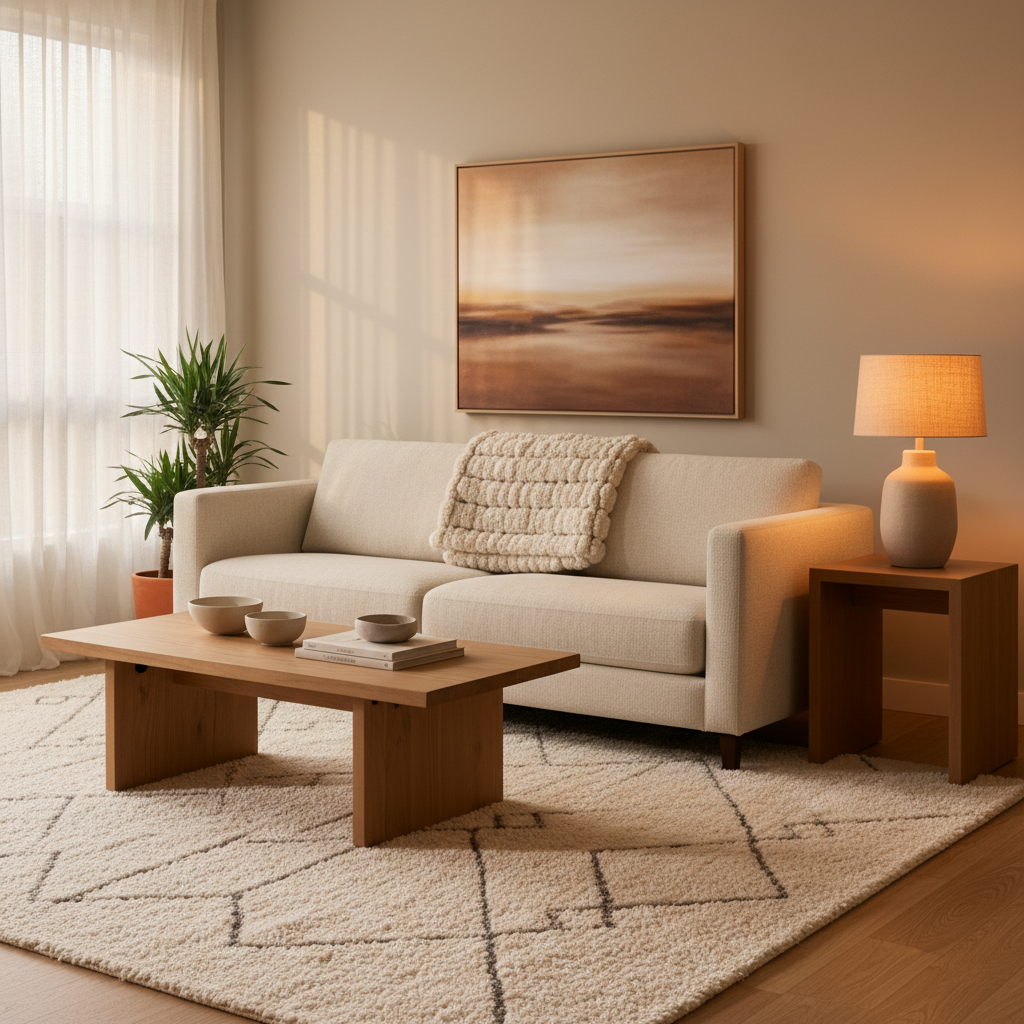
Warmth isn’t “add more stuff,” it’s the feeling that the room supports real life. In practice, warmth usually comes from three things: soft surfaces (texture), good light (layers, not just one overhead fixture), and natural variation (wood grain, imperfect ceramics, art that has a point of view).
According to the American Lighting Association, using layered lighting and choosing warmer color temperatures in living spaces often creates a more comfortable atmosphere, which is exactly what minimalist rooms tend to lack.
A quick self-check: what’s making your room feel sterile?
Before you shop, pinpoint the issue. Most minimalist rooms feel cold for one or two specific reasons, not ten.
- Everything is smooth: leather, lacquer, glass, flat-weave rugs, matte paint, no plushness.
- Only one light source: overhead lighting creates harsh shadows and a “waiting room” mood.
- Too much white + gray: the palette is clean, but there’s no undertone warmth.
- No contrast in scale: all furniture sits low, or everything has thin legs and sharp edges.
- Walls feel blank: not “minimal,” just unfinished.
- No natural elements: no wood, greenery, linen, stone, rattan, or anything with organic variation.
If two or more of these hit home, you don’t need a redesign, you need a few targeted moves.
The minimalist warmth formula: texture, tone, and light
If you’re wondering how to add warmth to a minimalist room without losing the clean look, this is the core: keep the palette simple, but make the surfaces rich.
1) Texture: add softness without adding “visual noise”
- Rug upgrade: swap a flat rug for wool, a thicker loop, or a subtle patterned weave.
- Throw and pillows: limit to 2–4 total, vary the materials (linen + bouclé + knit), stay in one color family.
- Window treatments: linen drapes instantly soften hard edges, even if they’re in a neutral tone.
2) Tone: small shifts beat big repaint projects
- Introduce warm neutrals: cream, oatmeal, camel, warm taupe, soft terracotta accents.
- Bring in wood: white oak, walnut, or even a single wood-toned frame can change the room’s temperature.
- Use black sparingly: black can look sharp and modern, but too much can read “cold” unless balanced with warm materials.
3) Light: stop relying on overhead lighting
- Layer your lighting: table lamp + floor lamp + optional wall sconce or plug-in picture light.
- Choose warm bulbs: many homes feel cozier around warm color temperatures, and it’s a surprisingly fast fix.
- Use dimmers: if you can, add dimmers or smart bulbs to control mood at night.
Room-by-room moves that actually work
Warmth shows up differently by room. A living room needs glow and softness, a bedroom needs calm and tactile comfort, a kitchen needs material contrast and better lighting.
Living room
- Anchor with a better rug: it’s the easiest way to soften a minimal seating area.
- One “warm hero” piece: a wood coffee table, an accent chair in a textured fabric, or a large textile wall hanging.
- Three-point lighting: aim for at least three light sources, not three bulbs in one fixture.
Bedroom
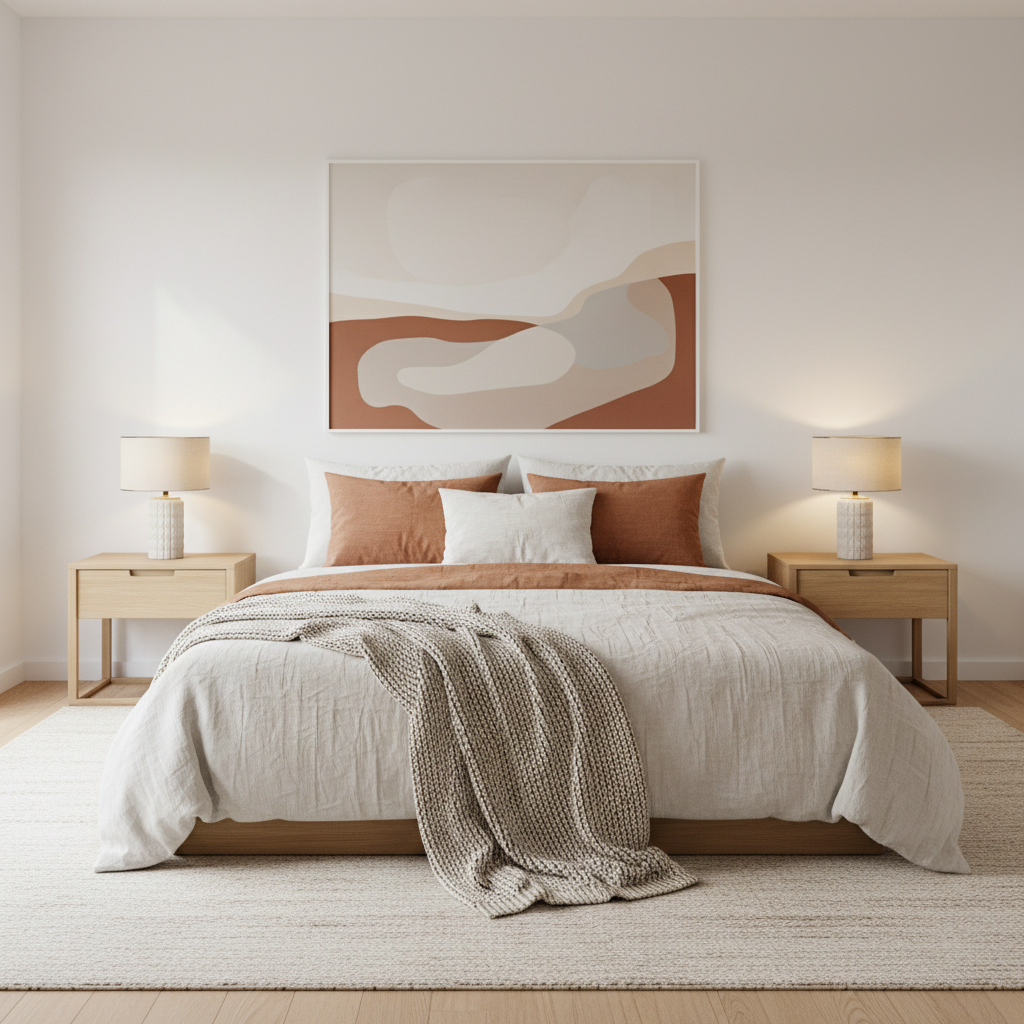
- Layer the bed: crisp sheets + duvet + one textured throw, keep it simple but tactile.
- Swap stark white: try warmer whites or off-whites for bedding and curtains.
- Bedside lamps matter: warm bulbs and soft shades make the room feel lived-in fast.
Kitchen and dining
- Add wood where you can: stools, a cutting board you leave out, a dining table, or a simple fruit bowl.
- Warm lighting over the table: pendants are functional, but also emotional, they set the tone for the room.
- Textile touchpoints: a runner, linen napkins, or even simple seat cushions.
Entryway
- One soft landing: a small rug and a catch-all tray prevents clutter from spreading.
- Mirror + warm light: helps both function and mood, especially in dark hallways.
A simple shopping plan (so you don’t overbuy)
Minimalist rooms get messy when you add random “cozy” items that don’t relate to each other. A plan keeps the edits clean.
| Goal | Buy/Change | Why it adds warmth | Minimalist-friendly rule |
|---|---|---|---|
| Soften the room | Wool rug or thicker weave | Adds texture and sound absorption | Choose a solid or subtle pattern |
| Fix harsh lighting | 1 table lamp + warm bulb | Creates a flattering, cozy glow | Match finishes (all brass or all black) |
| Reduce “blank wall” feel | One large art piece | Adds personality without clutter | Go bigger, not more |
| Bring in nature | Plant or branches in a vase | Organic shape breaks rigidity | One sculptural arrangement beats many small ones |
| Warm up neutrals | Swap pure white for cream | Changes the whole temperature of the palette | Keep the color count low |
Common mistakes that make minimalism feel worse
Some “cozy” trends backfire in minimalist spaces, mostly because they introduce visual clutter instead of warmth.
- Too many small decor items: ten candles feel busier than one good lamp and one solid tray.
- Mixing too many wood tones: variation can work, but if you’re stuck, limit it to 1–2 dominant wood finishes.
- Cool bulbs everywhere: even an expensive room can feel cold under the wrong lighting.
- Matching everything: a perfect set of identical pillows reads stiff; keep the palette tight, vary the texture.
- Ignoring acoustics: bare floors and hard surfaces can make a room feel “empty” even when it looks nice.
According to the U.S. Department of Energy, lighting choices affect both energy use and comfort, and in many homes the “comfort” part is what people notice first when they switch bulbs or add layers.
Practical 30-minute upgrades you can do today
When you need results quickly, focus on moves that change how the room feels at night and how it feels under your hands.
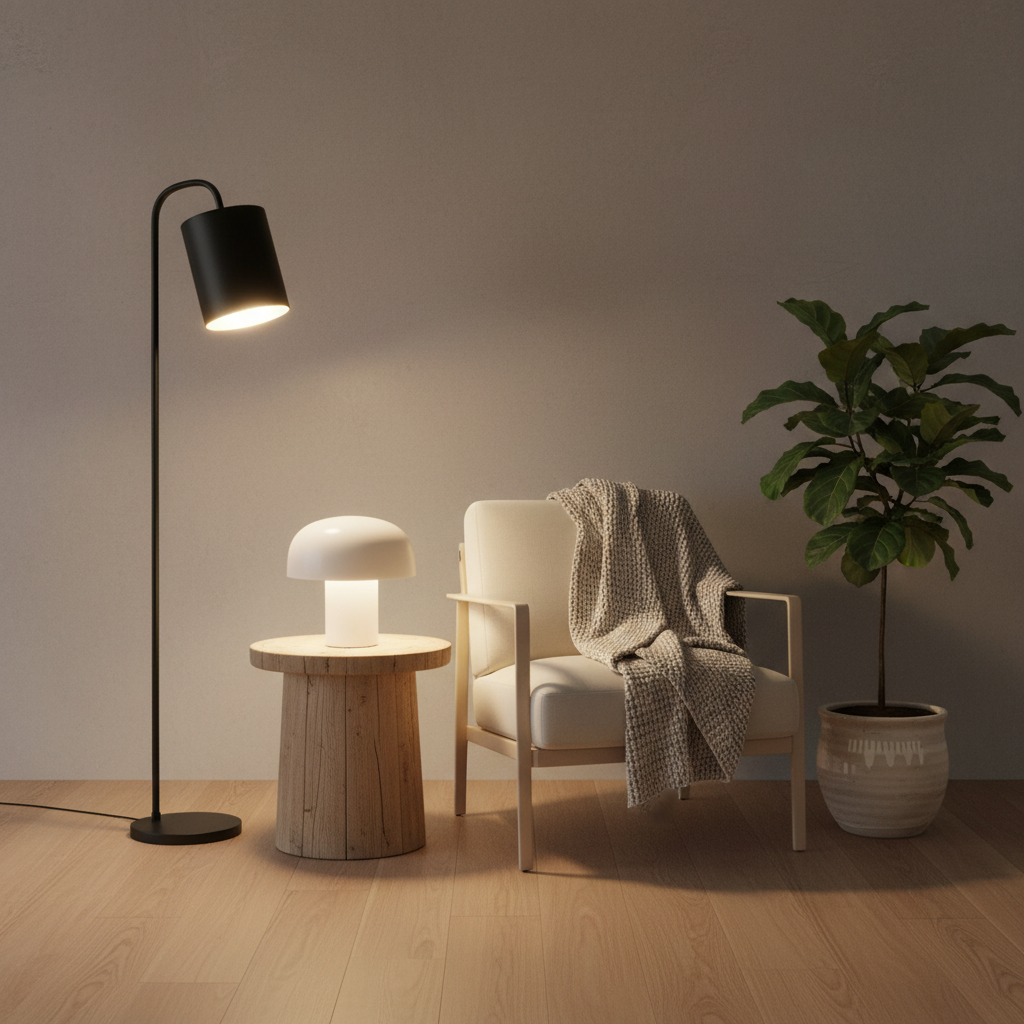
- Replace one bulb: switch the main lamp in your living room to a warmer bulb and see the difference immediately.
- Add one throw: pick a textured fabric and drape it casually, if it feels “styled,” it’s probably too perfect.
- Group surfaces: use a tray on the coffee table to make the few items you keep look intentional.
- Bring in something alive: a plant, fresh branches, or even a bowl of citrus can soften the room’s vibe.
- Move one piece of furniture: pulling seating slightly closer often makes the room feel more intimate.
Key takeaways: Warmth comes from layered lighting, touchable textures, and a slightly warmer neutral palette, not from filling shelves. If you keep your edits intentional, your room stays minimalist and starts feeling welcoming.
When it’s worth getting professional help
If you’ve tried the basics and the room still feels “off,” the issue may be layout, scale, or lighting design rather than decor. That’s when a designer or lighting specialist can save you money by preventing wrong purchases.
Also, if you’re changing hardwired fixtures, adding dimmers, or doing electrical work, it’s usually safer to consult a licensed electrician, your local code and setup can change what’s appropriate.
Conclusion: keep the minimal look, add the human layer
If you want a space that looks clean and still feels good at 9 p.m., treat warmth like a system, not a shopping list: fix lighting first, add texture second, and then bring in one or two personal pieces that make the room yours.
Your next move can be simple: tonight, turn off the overhead light, add one warm lamp, and notice what feels missing, that quick test often tells you exactly how to add warmth to a minimalist room without guessing.