
How to clean quartz countertops properly starts with a simple rule: use gentle cleaners, quick wipe-downs, and skip anything abrasive, because most “damage” comes from the wrong product, not the mess itself.
If you have cloudy streaks, sticky residue, or a stain that seems to “set,” you’re not alone. Quartz is tough, but the resin binders that make it low-maintenance also mean harsh chemicals and rough pads can leave a dull look that’s hard to reverse.
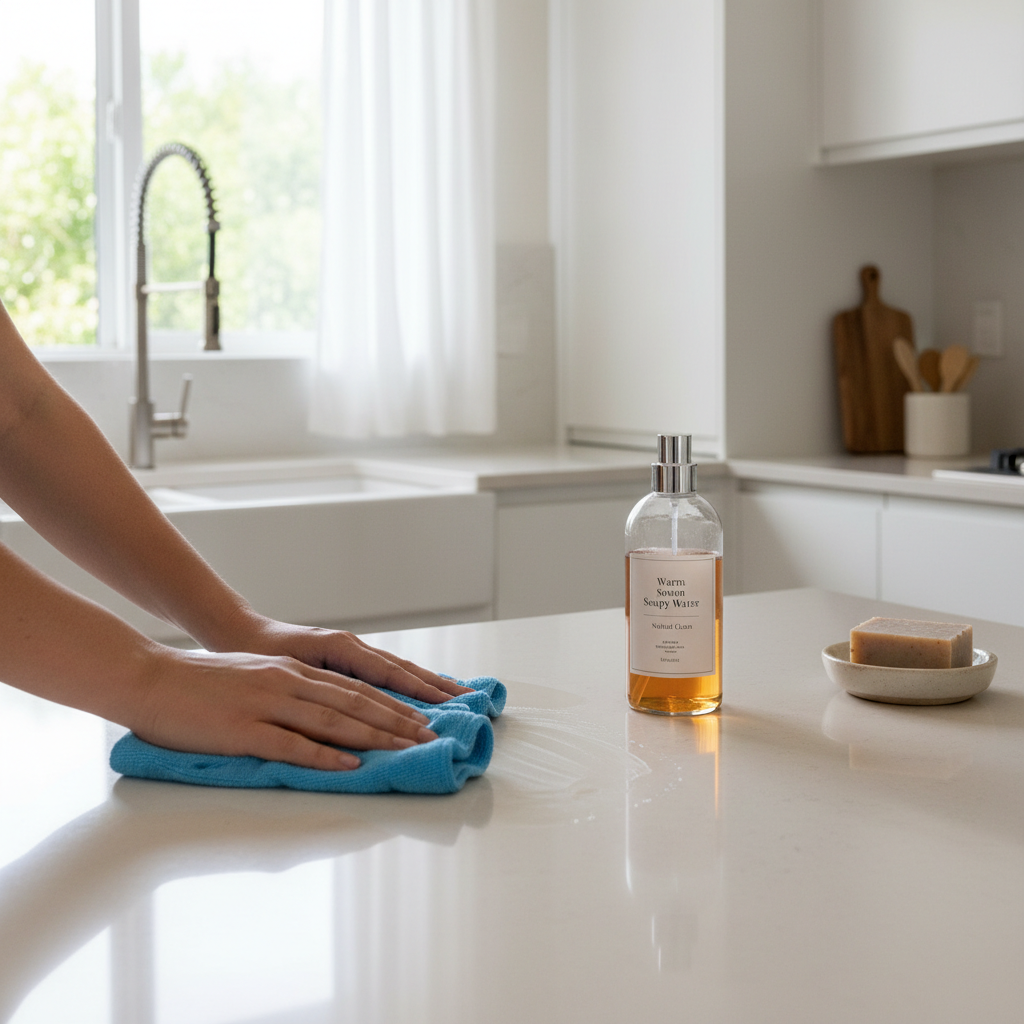
This guide focuses on what actually works in real kitchens: a fast daily routine, targeted stain removal by mess type, and a short list of products to avoid. I’ll also include a handy table so you can pick the right approach without guessing.
What quartz countertops are (and why cleaning can go wrong)
Quartz countertops are engineered stone, typically made from crushed quartz plus resins and pigments. That surface is nonporous, so it usually resists staining better than many natural stones, but it can still show film, residue, and etching-like dullness from the wrong chemicals.
Many cleaning problems are not “stains” at all, they’re buildup: dried soap, greasy cooking aerosol, hard-water minerals, or too much cleaner left behind.
According to the National Sanitation Foundation (NSF), cleaning and sanitizing are different steps, and surfaces used for food may need a sanitizer after cleaning, depending on risk and use. For most home situations, a good clean and rinse is the baseline, then sanitize when needed (like after raw meat prep).
Daily cleaning routine (the method that prevents streaks)
For everyday crumbs, smudges, and light grease, keep it boring. Quartz tends to look best when you remove soil and also remove cleaner residue.
Quick daily steps
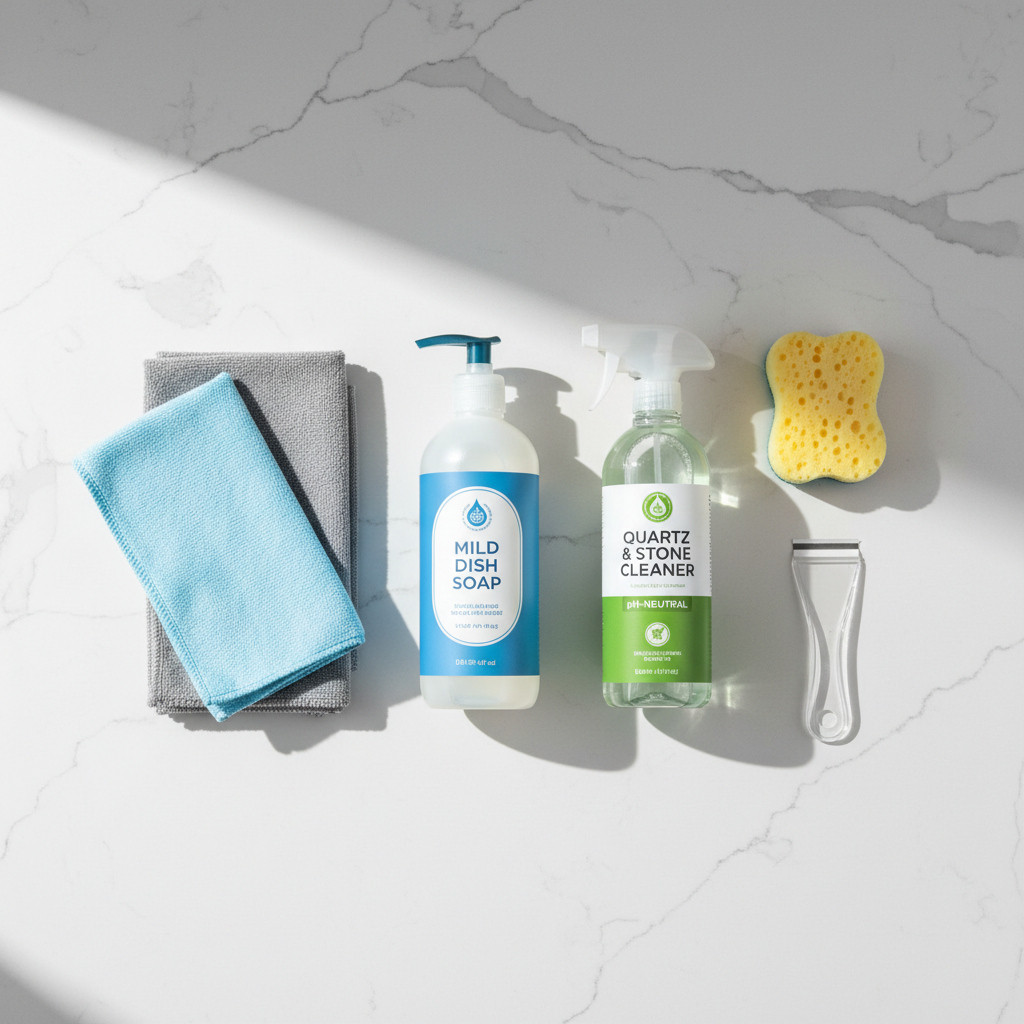
- Wipe loose debris with a dry microfiber cloth first (so you don’t grind grit into the finish).
- Use warm water + a few drops of mild dish soap on a soft cloth or non-scratch sponge.
- Wipe the surface, focusing on areas around the sink, cooktop, and coffee station.
- Rinse wipe: go over once more with clean water on a damp cloth.
- Dry with a fresh microfiber towel to prevent water spots and streaks.
If you like sprays, choose a pH-neutral, non-abrasive cleaner labeled safe for quartz, and still do a quick rinse wipe when you notice hazing.
Spot-cleaning: what to do based on the mess (table)
When something “won’t come off,” matching the method to the mess saves time and lowers the chance you scrub too hard.
| Mess type | What it looks/feels like | What to use | How to do it |
|---|---|---|---|
| Grease & cooking oil film | Sticky, dull patches near stove | Dish soap + warm water; microfiber | Wash, rinse wipe, dry; repeat once if needed |
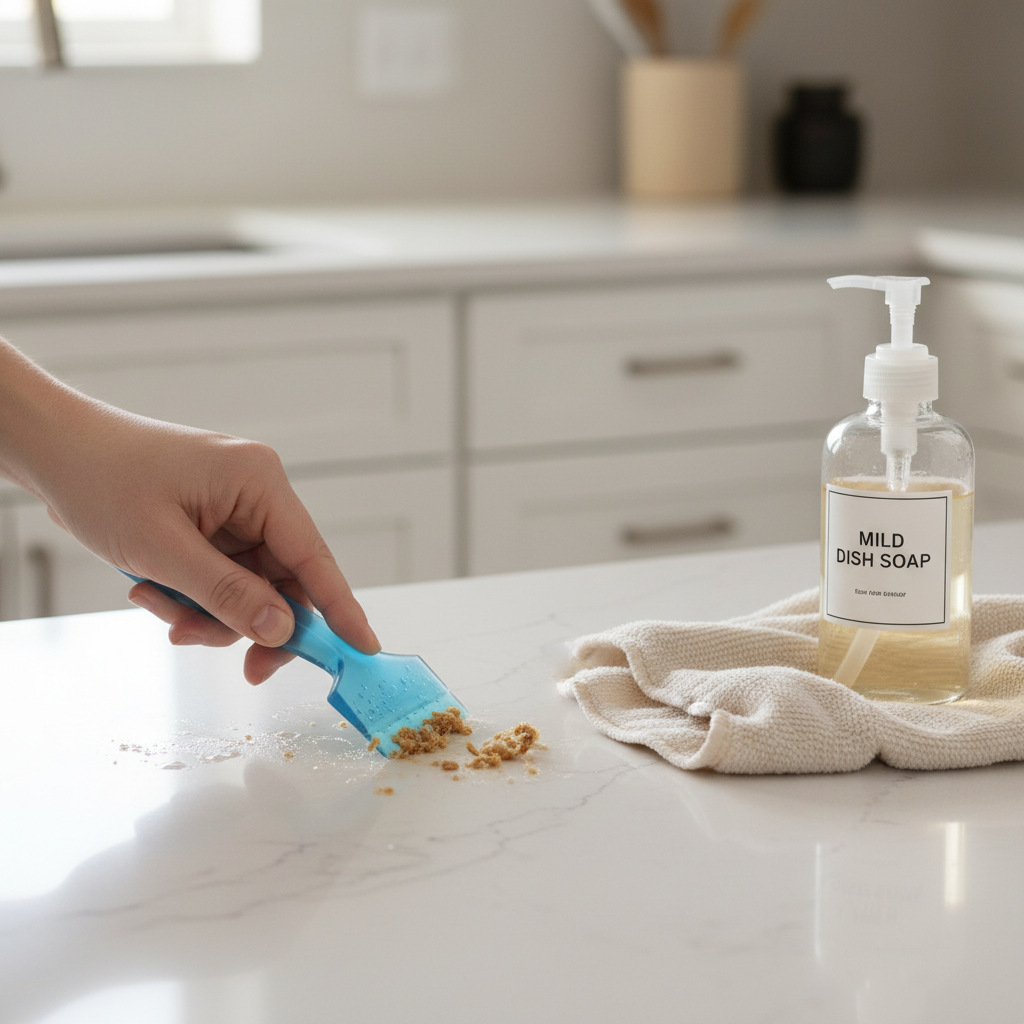
| Dried food, sauce, gum | Hard stuck-on spots | Plastic putty knife/scraper + soapy water | Soften with warm soapy wipe, gently scrape, then rinse and dry |
| Hard-water spots | Chalky rings near sink | Quartz-safe cleaner; light vinegar use only if manufacturer allows | Apply, dwell briefly, wipe, then rinse wipe and dry |
| Coffee/tea/wine tint | Light discoloration after a spill | Non-abrasive cleaner; sometimes isopropyl alcohol | Blot, clean, rinse wipe; avoid abrasive powders |
| Marker/ink | Lines or smears | Isopropyl alcohol on cloth | Test small area, wipe gently, rinse wipe, dry |
| Adhesive residue | Tacky patch from tape/labels | Isopropyl alcohol; quartz-safe degreaser | Hold dampened cloth on spot, lift residue, rinse wipe |
How to troubleshoot common quartz issues (cloudy, streaky, sticky)
Most complaints fall into three buckets. Identify yours, then fix the cause, not just the symptom.
1) Cloudy haze after cleaning
- Likely cause: cleaner residue, too much product, or not drying.
- Fix: wipe with warm water, then a second pass with clean water, then dry with microfiber.
- Tip: if you use disinfecting wipes often, follow with a water wipe to reduce film.
2) Streaks that show in sunlight
- Likely cause: hard water, oily film, or a dirty cloth.
- Fix: switch to fresh microfiber, wash with dish soap, rinse wipe, dry.
- Tip: avoid air-drying near the sink, it can leave minerals behind.
3) Sticky areas that “grab” your hand
- Likely cause: grease, sugary spills, or adhesive residue.
- Fix: dish soap wash for grease; isopropyl alcohol for adhesive; always rinse wipe after.
A simple self-check: are you cleaning quartz the safe way?
If you want a quick yes/no check, this covers most real-world setups.
- You use soft microfiber or a non-scratch sponge, not scouring pads.
- You can name your cleaner and it’s non-abrasive and typically pH-neutral.
- You do a rinse wipe when you notice haze.
- You scrape stuck food with a plastic tool, not a metal blade.
- You wipe spills soon, especially coffee, wine, turmeric, and oils.
- You use trivets and cutting boards so the surface avoids heat shock and knife marks.
If two or more items feel off, that’s often where the streaks and dull patches come from.
What to avoid on quartz (this is where people mess up)
Quartz is durable, but certain products can dull the finish, discolor resins, or leave stubborn film. When in doubt, check your slab brand’s care guide.
- Abrasive powders and gritty creams, they can micro-scratch and reduce shine.
- Scouring pads (even “light” ones) used repeatedly on the same spot.
- High-alkaline or high-acid cleaners that aren’t labeled safe for quartz.
- Paint stripper, oven cleaner, strong degreasers unless the manufacturer explicitly allows it.
- Bleach baths or soaking seams and edges, it can be risky for some installations.
- Magic eraser-style melamine used aggressively, it’s mild abrasive and can change sheen.
According to the EPA, cleaning products should be used as directed on the label, including contact time and ventilation. If you’re using a disinfectant, follow label directions and consider gloves if your skin reacts.
Deep-clean routine (weekly or when the kitchen gets heavy use)
If your counters cook a lot of meals, daily wiping alone can leave a slow-building film. A short “reset” once a week usually keeps quartz looking consistent.
Practical deep-clean steps
- Clear the counter and dry-dust with microfiber.
- Wash with warm water + dish soap, working in sections.
- Rinse wipe with clean water (this part matters more than people think).
- Dry fully, then inspect from an angle in bright light.
- If haze remains, use a quartz-approved cleaner sparingly, then rinse wipe again and dry.
Key point: deep-cleaning is less about stronger chemicals and more about removing residue completely.
When to call a pro or contact the manufacturer
Some issues look like “stains” but are actually finish changes, resin discoloration, or installation-related problems. If any of the below matches your situation, it’s smarter to pause and ask for guidance.
- A dull spot that appeared after a harsh product, and it won’t improve with rinsing and gentle cleaning.
- Discoloration near the cooktop that might be heat-related.
- Cracks, chips, or a seam that seems to be lifting.
- Persistent darkening along edges near the sink, which might indicate moisture intrusion under caulk or around seams.
In many cases, your fabricator or the quartz brand can tell you what’s safe for that exact finish. If you suspect chemical exposure, keep the product label and share it, it speeds up troubleshooting.
Conclusion: keep quartz looking “new” without overthinking it
How to clean quartz countertops properly isn’t about fancy products, it’s about a gentle daily wipe, a rinse pass to prevent film, and targeted spot-cleaning when something sticks.
If you want a simple next step, do this tonight: switch to a clean microfiber cloth, use warm soapy water, then rinse wipe and dry. If the surface looks clearer right away, you’ve already found the real culprit.
If you’d rather not guess which cleaners are safe for your specific quartz brand and finish, a quick message to your fabricator or the manufacturer support line can save you from trial-and-error and accidental dulling.