
how to organize underwear drawers usually comes down to one thing: making it easy to see what you own, so you stop digging through stretched-out piles every morning.
If your drawer “looks fine” until you open it twice, you’re not alone. Underwear is small, flexible, and easy to overbuy, which makes it one of the fastest categories to get chaotic.
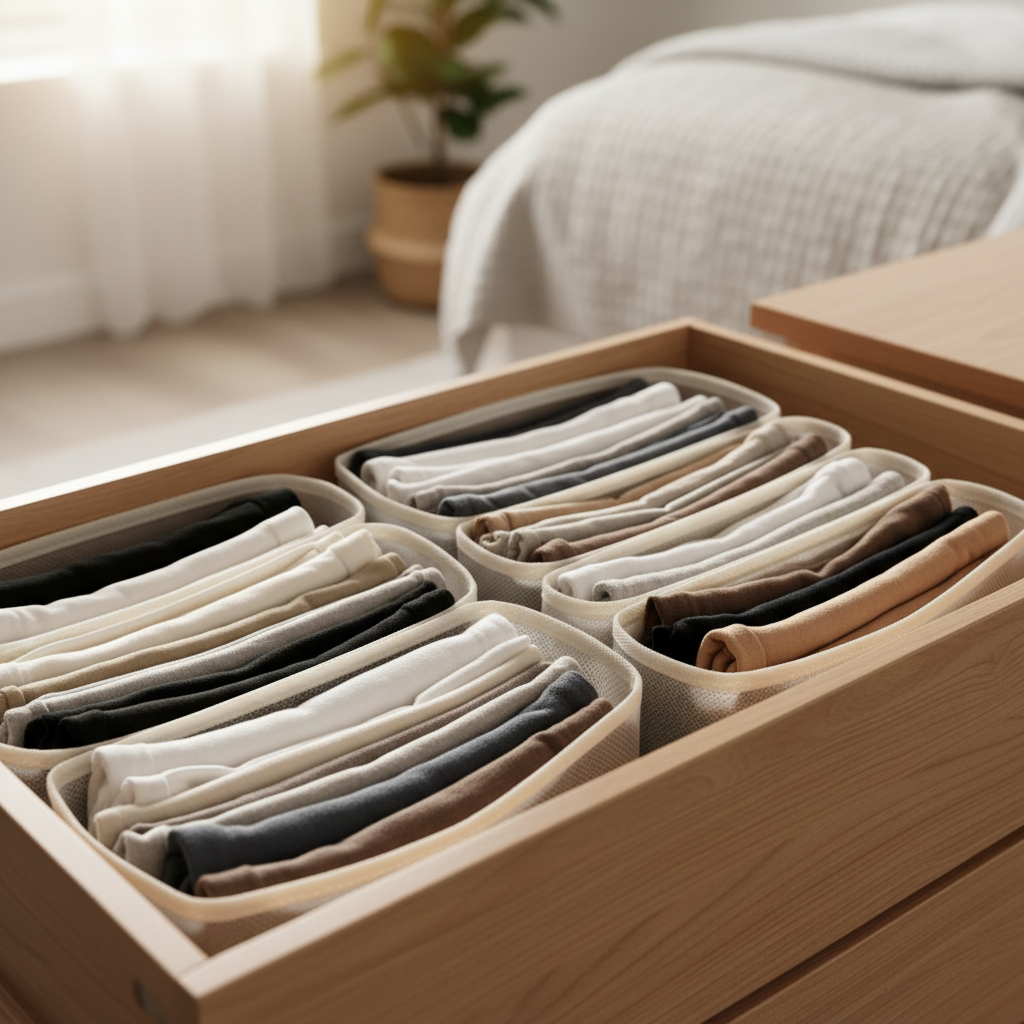
This guide keeps it practical: you’ll figure out what’s worth keeping, pick a folding method you can actually maintain, and set up a simple layout so the drawer stays tidy even on busy weeks.
Start with a quick reset (the part most people skip)
Before you buy organizers, pull everything out. Not halfway, not “I’ll do the back later.” The drawer needs a reset so you can see the real volume and stop organizing clutter.
Wipe the drawer base too. It sounds fussy, but lint and powder residue build up fast in this category, and a clean surface helps fabric stay fresher.
- Empty the drawer completely and shake out drawer liners if you use them.
- Group by type: everyday underwear, special-occasion, shapewear, period underwear, etc.
- Pair check: match sets if you store bras in the same area or drawer.
Declutter with a realistic “keep” rule (not perfection)
Most drawer mess is volume, not folding. If the drawer is packed to the brim, any system will collapse the moment you do laundry in a hurry.
A good rule: keep what you reach for, plus a small buffer. If you’re holding onto uncomfortable pairs “just in case,” they tend to become drawer filler.
A simple keep/toss checklist
- Keep if it fits comfortably, elastic still snaps back, fabric feels good on skin.
- Consider replacing if seams twist, waistband rolls, or it rides up constantly.
- Recycle or discard if it’s stained, threadbare, stretched out, or has lingering odor after washing.
According to FTC (Federal Trade Commission) guidance on textile labels, care instructions and fiber content matter for cleaning outcomes, so if items never feel fresh, it may be fabric-related rather than your routine.
Pick the right folding method for your drawer (use what you’ll maintain)
There’s no prize for the fanciest fold. The best method depends on drawer depth and whether you want “file” visibility or stacked speed.
| Method | Best for | Watch-outs |
|---|---|---|
| File fold (upright) | Seeing everything at a glance, avoiding rummaging | Needs dividers or snug rows so items don’t flop over |
| Flat stack | Deep drawers, minimal time, fewer categories | Bottom items get forgotten, stacks tip when overfilled |
| Roll (tight cylinder) | Small drawers, travel-like compactness | Can create wrinkles, easy to overpack and lose visibility |
If you’re trying to decide quickly, choose file folding for everyday underwear and keep specialty items stacked in a small side zone.
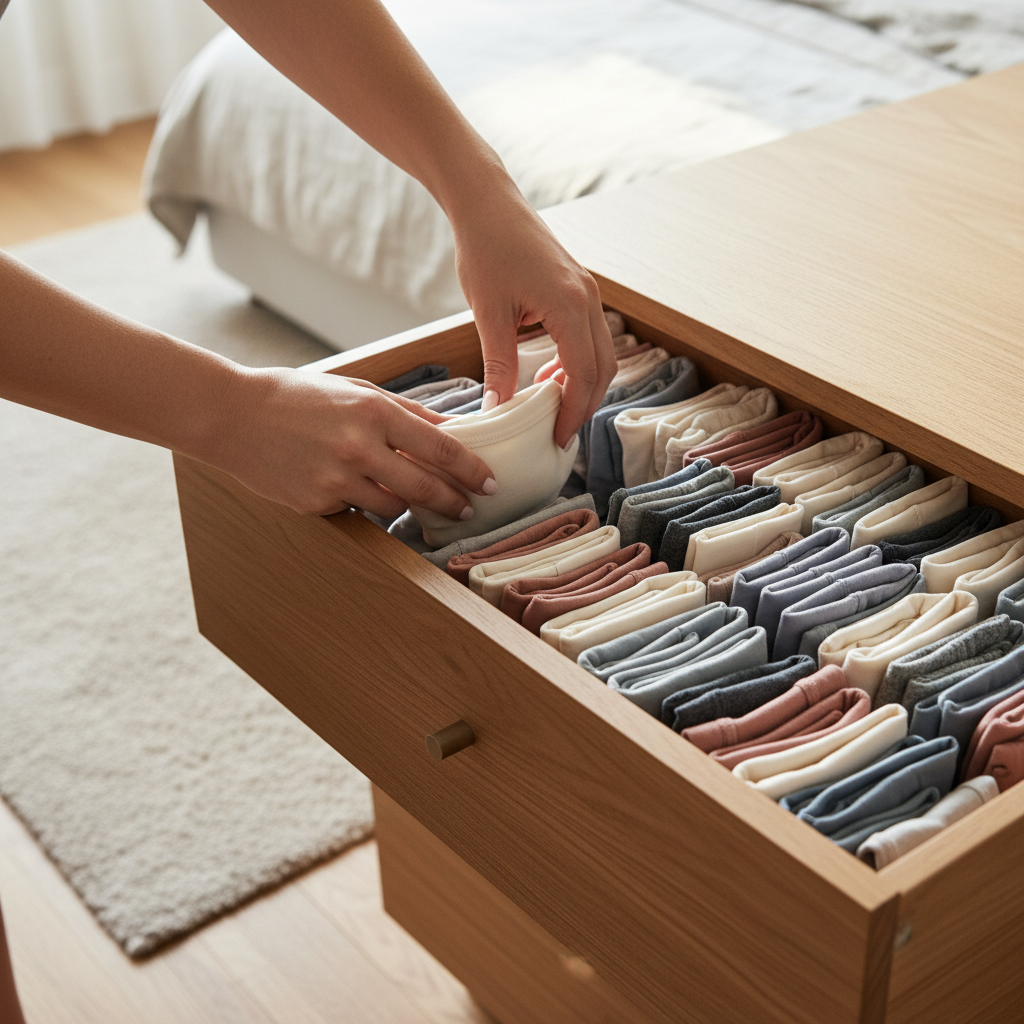
One practical tip: fold in batches right after laundry. Doing five at a time feels painless; doing fifty from a mountain feels impossible.
Create simple zones: make “grab and go” the default
Zoning matters more than micro-folding. When categories have a home, you stop making messy “temporary” piles.
- Front row: everyday favorites you wear weekly.
- Middle: secondary options, seasonal items, colors you rotate.
- Back corner: special-occasion pieces, shapewear, backups.
If you share a drawer with a partner, split it left/right. The drawer stays calmer when each person has a defined boundary.
Use dividers and containers that match the drawer (not the other way around)
If you’re learning how to organize underwear drawers and keep them that way, the right organizer prevents the “everything slides to the center” problem.
What tends to work well
- Adjustable drawer dividers for file folding rows, especially in wide drawers.
- Low-profile bins for categories like shapewear, hosiery, or period underwear.
- Small open boxes for socks if they share the same drawer, so categories don’t blend.
Skip tall containers in shallow drawers. They waste vertical space and encourage overstuffing, which is how neat systems fail quietly.
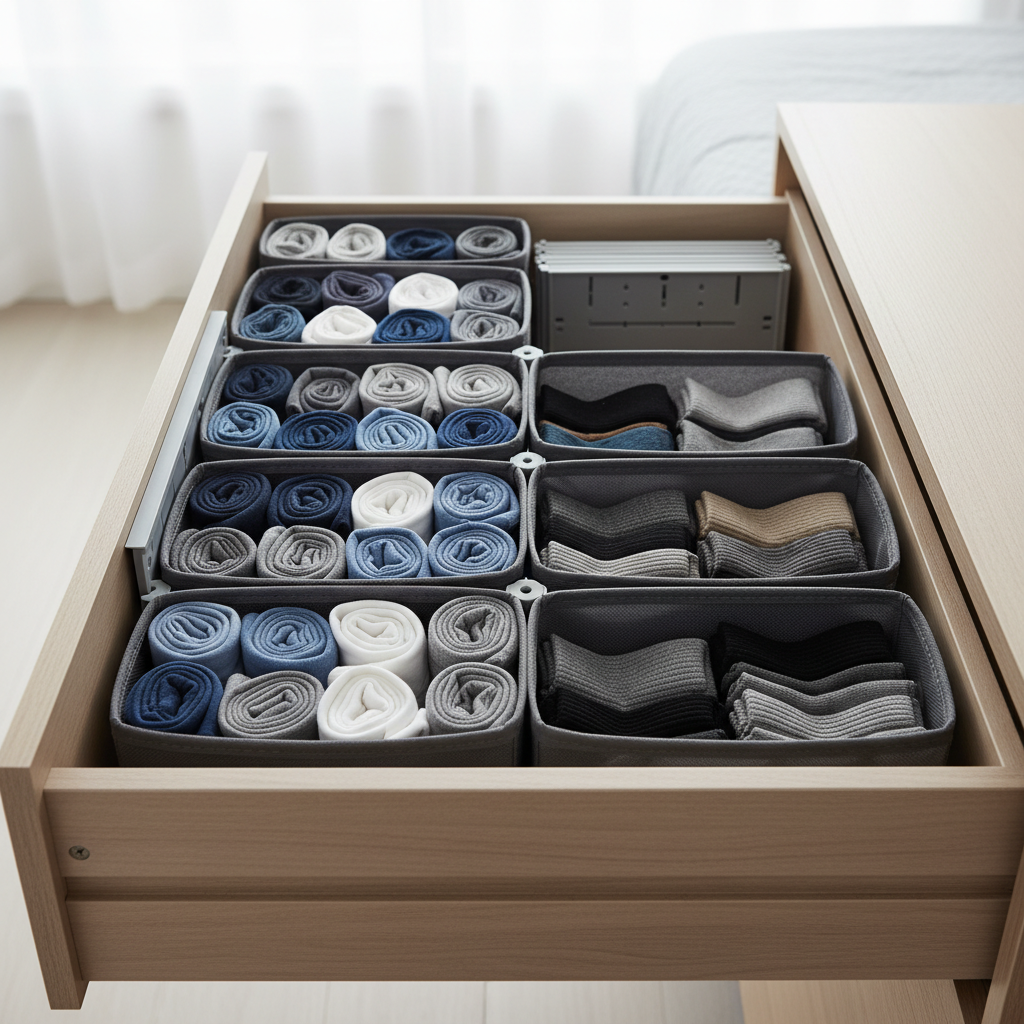
Measure the interior of the drawer before buying anything. It’s boring, but it prevents the classic “two inches too wide” organizer regret.
A 10-minute maintenance routine that actually sticks
The goal is not a photo-ready drawer every day, it’s a drawer that doesn’t punish you for being busy.
- Weekly reset (2 minutes): straighten rows, toss anything that migrated to the wrong zone.
- Laundry moment (5 minutes): fold only the everyday category, drop specialty pieces into their bin without overthinking.
- Monthly check (3 minutes): remove anything uncomfortable you avoided all month.
And if your drawer keeps exploding, take that as feedback: it’s usually too much inventory or too many categories, not a lack of discipline.
Common mistakes that make drawers messy again
- Overstuffing “because it fits”: the drawer closes, but friction ruins your folds and creates lumps.
- Mixing categories: underwear, socks, and bras in one open pile means you’ll rummage, which destroys order fast.
- Organizers with lids: they look tidy but add steps, so people stop using them.
- Keeping uncomfortable backups: they take space and never get chosen, so they become clutter.
If you’re sensitive to fragrances, be careful with scented liners. Skin irritation is possible for some people, and if that’s a concern, it’s worth asking a healthcare professional what to avoid.
Conclusion: a neat drawer is mostly about visibility and limits
Once you treat the drawer like a small “store shelf” instead of a storage bin, organizing stays simple. Cut volume a bit, give each category a zone, and pick a folding method you can repeat when you’re tired.
Action steps for today: empty the drawer, keep only what you’d happily wear this week, then set up two zones: everyday in front, everything else in a bin or back row.
FAQ
How do I organize underwear drawers if I have very little space?
Use file folding and limit categories. A single narrow row for everyday pairs plus a small bin for specialty items usually works better than stacking everything flat.
What’s the easiest folding method to maintain long-term?
Flat stacking is quickest, but file folding tends to stay neater because you can pull one item without disturbing the rest. If you hate refolding, combine them: file fold favorites, stack backups.
How many pairs of underwear should I keep?
It depends on laundry frequency and lifestyle, but a helpful benchmark is enough for 1–2 weeks plus a few extras. If you’re washing weekly, keeping a month’s worth often creates clutter.
Do I need drawer dividers to keep things neat?
Not always, but dividers make a big difference for file folding and wide drawers. If items fall over or drift, that’s a sign you’ll benefit from some structure.
How do I organize underwear drawers with bras and socks together?
Create hard boundaries: bras in one section (or separate drawer if possible), underwear in another, socks in a small bin. Mixing them loosely is what triggers rummaging.
What should I do with old underwear I’m replacing?
If it’s still in good condition, some textile donation programs may accept it, but many don’t for hygiene reasons. When in doubt, repurpose as cleaning rags or discard responsibly.
How can I keep the drawer smelling fresh without irritating my skin?
Ventilation and clean fabric matter more than strong scents. If you’re prone to irritation, skip fragranced sachets and use mild detergents; for recurring skin concerns, consider asking a clinician.
If you need a more set-and-forget approach, choosing a small set of adjustable dividers and one low bin usually covers most underwear drawer layouts without turning your dresser into a storage project.