
Minimalist apartment ideas for beginners work best when you stop chasing a “perfect look” and focus on daily friction, the stuff that makes your home feel busy, hard to clean, or oddly stressful to be in.
If you feel like you’re always tidying but never “done,” minimalism is less about owning nothing and more about making decisions once, then letting your space support those decisions. That’s why beginners usually get better results from simple rules and repeatable systems than from a big decluttering marathon.
This guide walks you through practical moves, what to buy versus what to skip, plus a few layout tricks that make small apartments feel calmer without turning your place into an empty showroom.
Start with a “friction audit” (not a purge)
Before you donate a single item, look for the spots that create mess on autopilot. Beginners often over-declutter the wrong categories, then the clutter returns because the routine never changed.
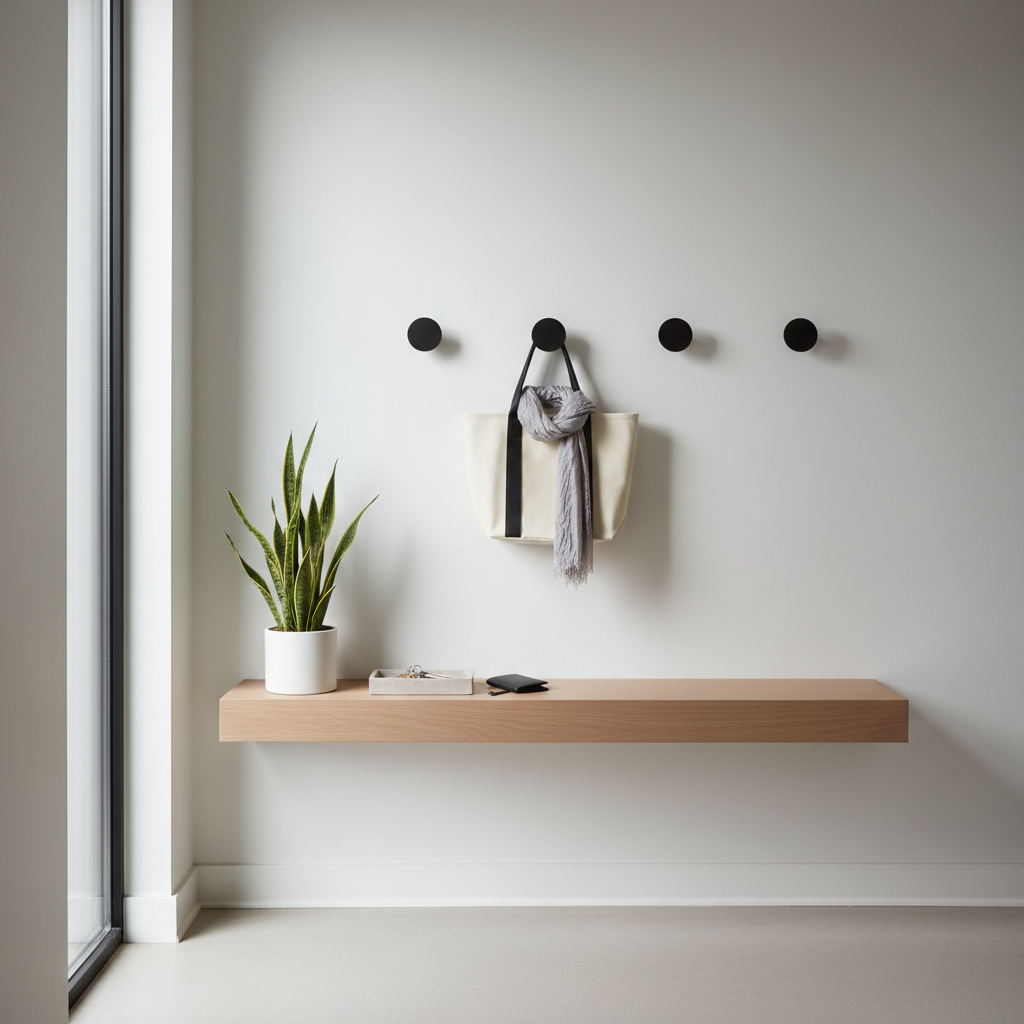
Common friction zones in apartments tend to be the entryway, the kitchen counter, the “chair that becomes a closet,” and the bathroom sink area.
- Entryway: shoes, mail, bags, keys.
- Kitchen: gadgets you rarely use, food packaging, random mugs.
- Living area: cords, remotes, throw blankets with no home.
- Bedroom: laundry piles, nightstand clutter, “maybe” clothes.
Pick one zone, set a tiny goal like “clear the top surface,” then decide where each repeat item should live. Minimalism sticks when every high-frequency item has a low-effort home.
A quick self-check: what kind of beginner are you?
Not everyone needs the same minimalist apartment ideas for beginners. Your pain point matters, because the fix changes.
- You’re visually overwhelmed: too many colors and small objects in sight, even if it’s “organized.”
- You’re storage-limited: small closets, odd layouts, no pantry, not much built-in space.
- You’re decision-fatigued: you keep moving items around because nothing feels “right.”
- You’re busy: the real issue is cleaning time, not aesthetics.
If you’re mostly visual, prioritize surfaces and sightlines. If you’re storage-limited, you’ll get more mileage from furniture choices and containers. If you’re busy, lean into fewer categories and easy resets.
Design basics that make minimalism feel warm, not sterile
Minimalism in real apartments usually looks better when it’s consistent, not when it’s empty. Think “edited” rather than “bare.”
Use a simple color plan
A beginner-friendly approach is a neutral base (white, off-white, warm gray, beige) plus one accent color, repeated a few times. This reduces visual noise fast, without forcing you to replace everything.
Pick one main material direction
Light wood, black metal, or warm brass, choose one and repeat it. When your finishes agree, the room feels intentional even with budget pieces.
Let light do some of the work
According to U.S. Department of Energy, using daylighting strategies can reduce the need for electric lighting in many situations, which also helps spaces feel more open and comfortable. In apartments, that can be as simple as lighter curtains, fewer items blocking windows, and a lamp plan that avoids harsh overhead glare.
Minimalist apartment setup: do this room by room
Here’s the version that tends to work for beginners: define what each room is for, then remove anything that competes with that purpose.
Entryway (even if it’s just a corner)
- One landing spot: tray or bowl for keys and cards.
- One shoe rule: everyday pair stays out, everything else goes away.
- One bag hook: if bags live on the floor, clutter will follow.
Living room
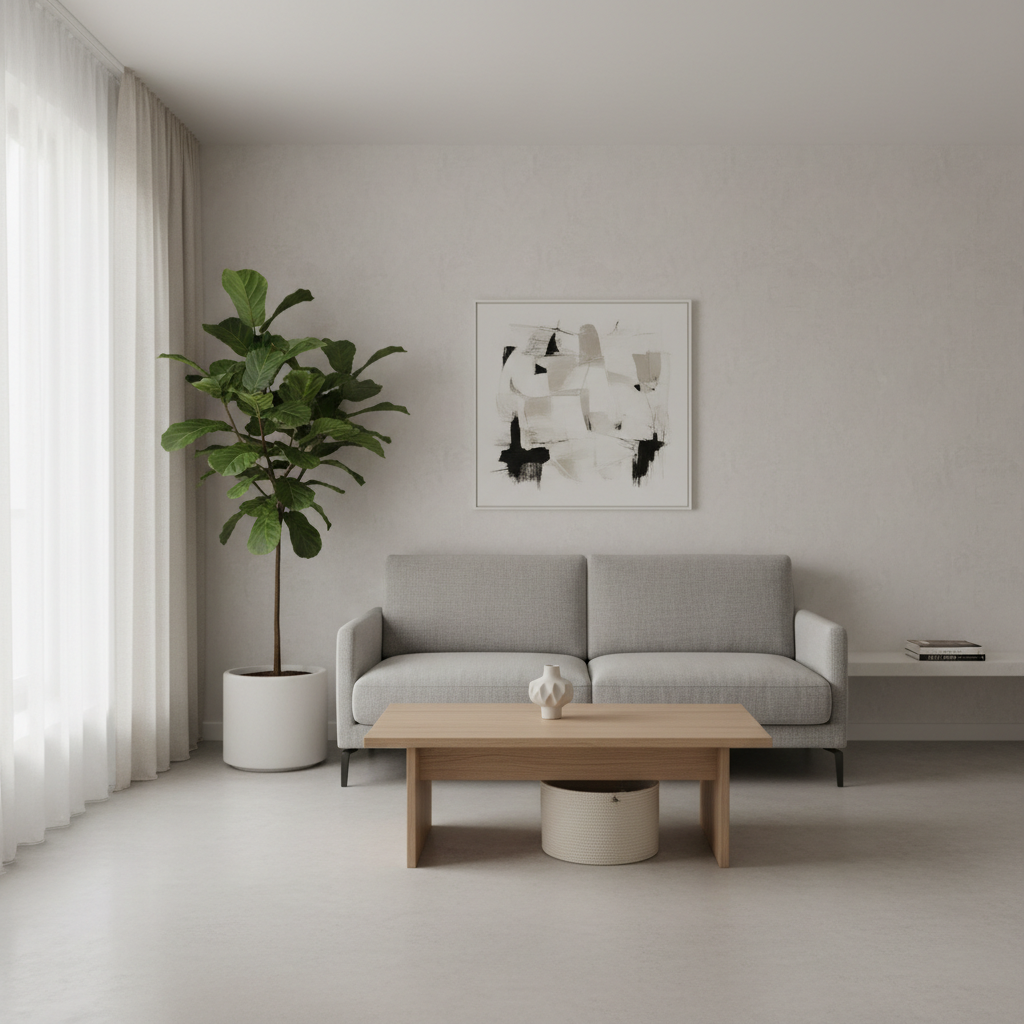
- Clear one surface: coffee table or media console, keep it mostly open.
- Contain the small stuff: one lidded box or basket for remotes, chargers.
- One statement item: a plant, a single art print, or a floor lamp, not all three at once.
Kitchen
- Counter rule: keep only daily-use items out, usually that’s coffee, soap, and maybe a cutting board.
- Duplicate check: extra spatulas, random cups, “free” water bottles, these add up.
- Meal prep reality: keep the tools you actually use, not the fantasy version of you.
Bedroom
- Nightstand reset: lamp, book, water, that’s plenty.
- Closet spacing: leave breathing room, tight packing hides what you own.
- Laundry path: hamper where clothes actually drop, not where it “should” go.
Bathroom
- Sink clear: store backups under the sink, keep only daily items out.
- One-bin grouping: skincare in one container, hair tools in another.
What to buy (and what to skip): a beginner-friendly table
Minimalism is not a shopping list, but a few “helper” items can prevent clutter from coming back. The trick is buying for a specific problem, not for vibes.
| Need | Buy/Use | Skip (usually) | Why it matters |
|---|---|---|---|
| Entryway drop zone | Small tray + 2-3 hooks | Big multi-cubby organizer | Small systems stay “full” and get used |
| Living room visual calm | Lidded basket or storage ottoman | Open bins for tiny items | Lids reduce visual noise fast |
| Kitchen counter clutter | Drawer dividers + one catchall bin | More countertop organizers | You want less on surfaces, not nicer clutter |
| Closet overflow | Matching slim hangers | Extra shelves before decluttering | Uniform hangers show volume and create space |
| Cable chaos | Cable clips + one charger station | Multiple charging spots | One home for cords reduces daily mess |
A 30-minute reset routine you can actually keep
The most reliable minimalist apartment ideas for beginners are the ones that survive a busy week. A simple reset beats occasional “perfect” cleaning.
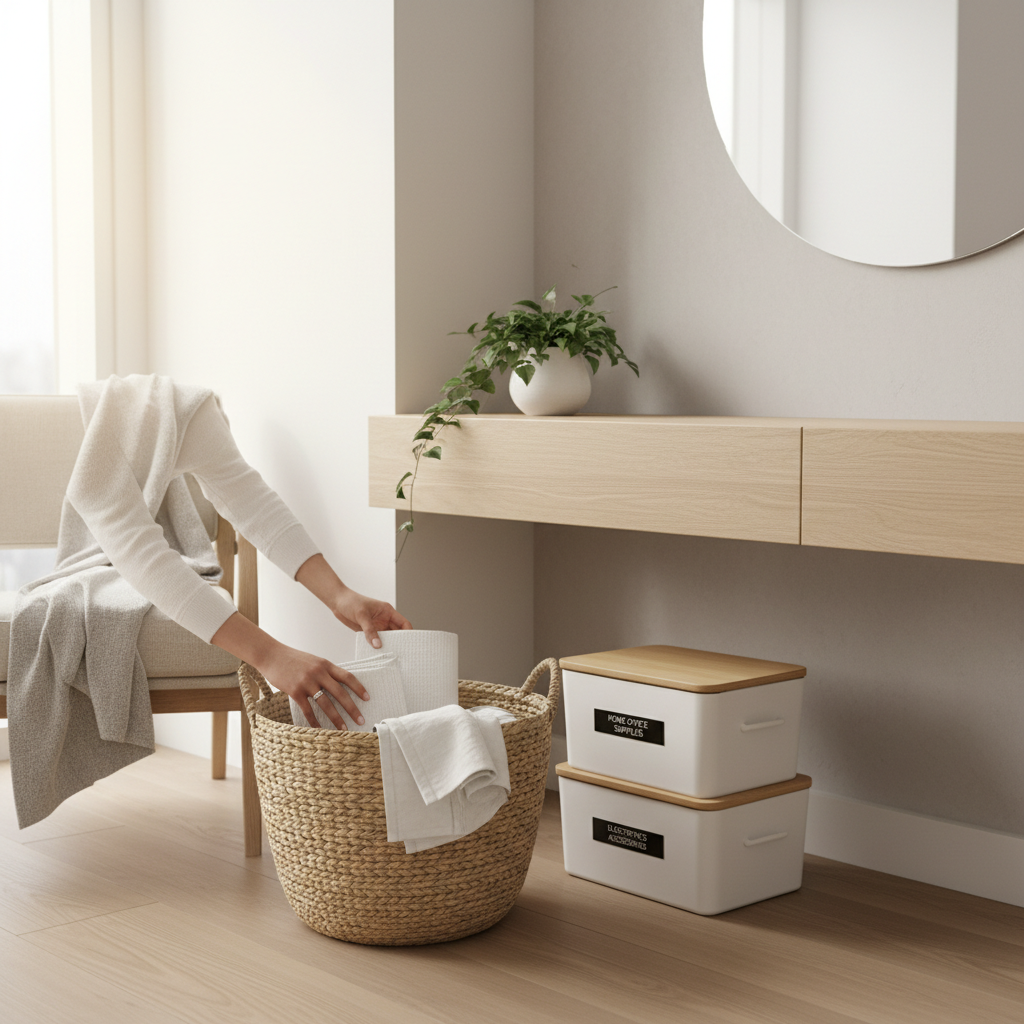
- 10 minutes: clear surfaces, put back high-frequency items first.
- 10 minutes: “one-bag sweep,” grab obvious trash and recycling.
- 5 minutes: laundry into hamper, start a load if you’re able.
- 5 minutes: quick floor pass in high-traffic areas.
Key point: if your reset takes longer than 30 minutes, your system is probably too complicated or you have too many “homeless” items.
Common mistakes that make minimalism feel impossible
A few patterns show up again and again, and they’re why people quit even though the idea sounded good.
- Buying containers before editing: you end up organizing clutter, not reducing it.
- Overdoing the “uniform look”: replacing everything at once gets expensive and stressful.
- Keeping aspirational items: the bread maker you never use is still taking rent.
- No rules for incoming stuff: gifts, freebies, and packages quietly rebuild the mess.
Try one simple boundary: one in, one out for clothes or mugs, and a weekly “incoming” sorting moment for mail and packages.
When to get extra help (and what “help” can mean)
If clutter connects to anxiety, grief, ADHD, or a major life change, the right support might be more than a cleaning weekend. According to American Psychological Association, home environment and stress can influence each other, so it can be reasonable to seek support if the situation feels stuck.
In practice, “help” could mean a professional organizer for systems, a therapist for emotional drivers, or a trusted friend to co-decide. If you have mobility or safety concerns, or if heavy lifting is involved, it’s safer to consult a professional.
Conclusion: keep it simple, then keep it consistent
Minimalist apartment ideas for beginners pay off when you pick a few high-impact rules, clear the friction zones, and stop trying to do everything at once. Start with one surface and one container, build a 30-minute reset, then adjust as your space tells you what still feels annoying.
If you want a clean next step, choose one room today, remove ten items you don’t use, and give the remaining “repeat offenders” a real home you can reach with one hand.