
diy woven basket planter for indoor plants is one of the easiest ways to make a basic nursery pot look styled, while still keeping watering and cleanup manageable. If you have plants you love but hate the plastic pot vibe, a woven basket cover can fix the look fast.
The catch is moisture: baskets and water do not naturally get along. A good build is less about weaving skills and more about choosing the right liner, getting the fit right, and planning how you will water without soaking the basket.
This guide walks through materials that work, a couple build methods (quick sleeve vs. more finished insert), and a few habits that keep your floors and baskets in good shape. You will also get a simple sizing table, a checklist to diagnose common problems, and a short FAQ for the usual “what if my basket gets wet” questions.
Why a woven basket planter works indoors (and where people go wrong)
A basket planter cover brings texture, hides cheap pots, and can soften harsh corners in a room. It also makes plant groupings look more intentional, especially if you repeat the same weave tone across different plant sizes.
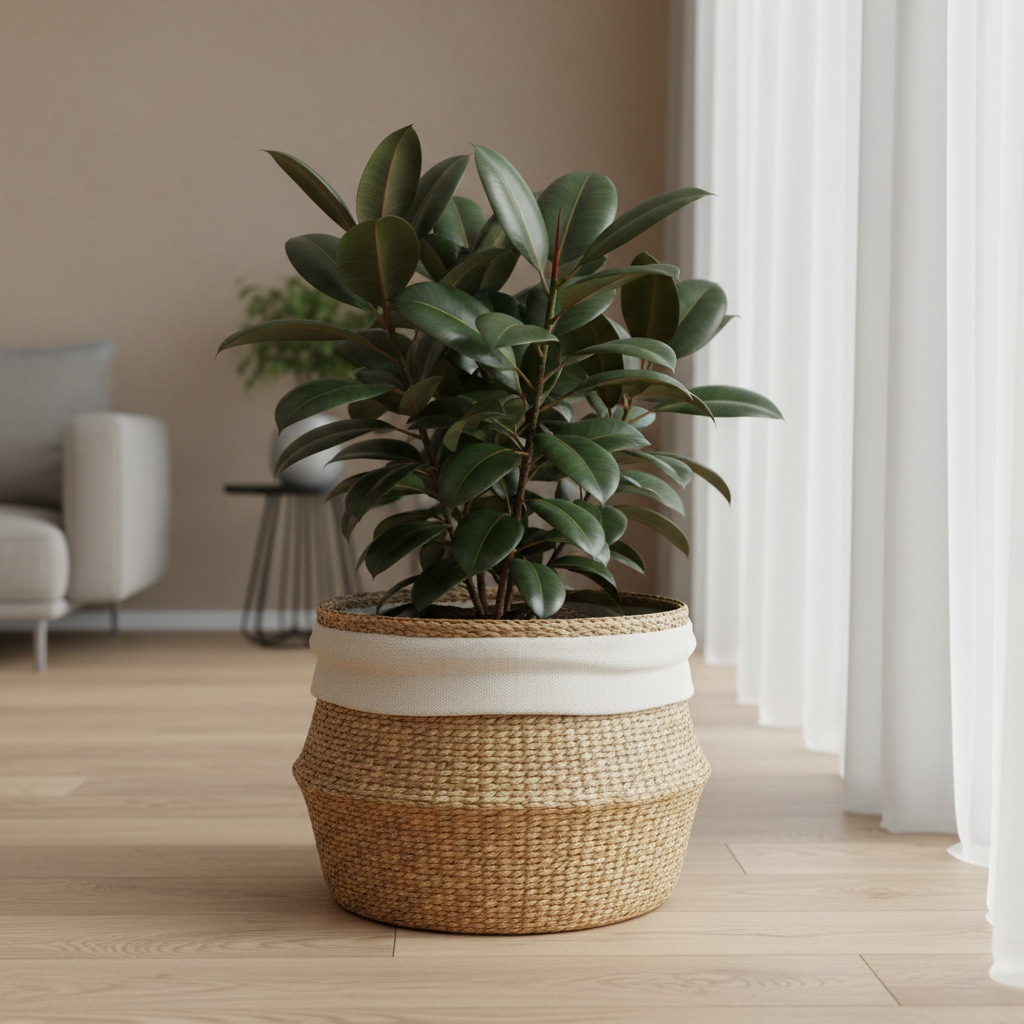
Where many people get stuck is assuming the basket is the planter. Most baskets are not meant to hold wet soil directly, so they can warp, grow mildew, or stain floors if water sits in the bottom. The “nice basket turned funky” problem usually comes down to one of these:
- No liner, or a liner that leaks at folds and seams
- No saucer strategy, so runoff has nowhere to go
- Wrong fit, the pot sits too low or wobbles and rubs the weave
- Overwatering, even a perfect liner struggles if water pools for hours
According to the U.S. Environmental Protection Agency (EPA), controlling moisture is a key step to preventing indoor mold growth. That advice is broad, but it applies here in a very practical way: keep baskets dry, and you avoid most smell and mildew issues.
Materials you actually need (with smart substitutes)
You can build a good-looking basket planter without specialty tools. The best material choices depend on how you like to water: carry plants to the sink, water in place, or bottom-water in a tray.
Core items
- Woven basket (seagrass, rattan, water hyacinth, or similar). Pick one with a stable base.
- Indoor nursery pot (plastic is fine) with drainage holes.
- Waterproof liner: heavy-duty trash bag, clear plastic drop cloth, vinyl table cover, or a purpose-made plant pot liner.
- Saucer or catch tray that fits under the pot inside the basket, or a low-profile tray that fits under the whole basket.
Optional upgrades that make life easier
- Felt pad for the basket bottom (helps protect floors and reduces sliding)
- Plastic riser or upside-down nursery pot (lifts the plant if the basket is too deep)
- Binder clips or small upholstery tacks (to keep liner folded neatly)
- Spray sealer for the basket exterior, used lightly and with ventilation
If you are sensitive to odors or have pets that chew plastic, choose thicker liner material and keep edges tucked down. And if you plan to seal the basket, follow label directions and ventilate well, products vary a lot.
Quick sizing: basket-to-pot fit rules that prevent wobble and leaks
Fit is the difference between “looks custom” and “looks like a pot dropped into a tote.” The goal is a pot that sits stable, with enough room for a liner and a saucer without bulging the weave.
| Nursery pot size (top diameter) | Suggested basket inner diameter | Depth tip |
|---|---|---|
| 6 in | 7–8 in | Basket should be 1–3 in deeper than pot |
| 8 in | 9–10 in | Add a riser if pot sits too low |
| 10 in | 11–12 in | Plan space for a saucer inside |
| 12 in | 13–14 in | Choose a basket with a reinforced base |
Key point: if the basket is only “barely bigger” than the pot, you will fight the liner every time you take the plant out to water. A little breathing room saves hassle.
Build method #1: the simple liner sleeve (fast, low commitment)
This is the approach most people want because it takes 10–15 minutes, uses cheap materials, and you can redo it if you change baskets later.
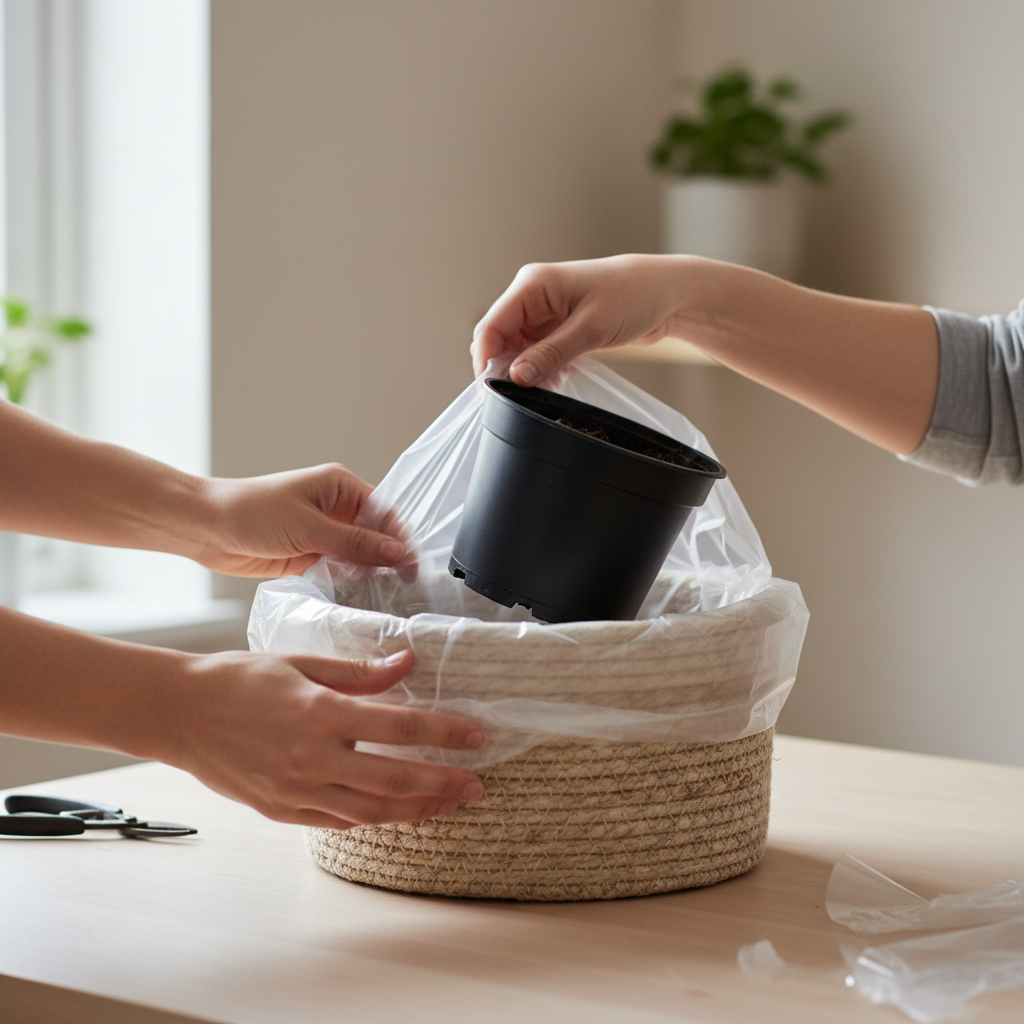
Steps
- Place your saucer inside the basket first, centered and flat.
- Cut liner material into a circle plus extra height, you want it to rise 2–3 inches above the saucer edge.
- Press the liner down into the basket, smoothing big wrinkles so water cannot hide in deep folds.
- Set the pot on the saucer, then fold liner edges down between pot and basket wall.
- If the liner wants to creep up, use a couple binder clips on the outer rim, then tuck the liner under the rim so clips are not visible.
For watering, lift the pot out, water in the sink, let it drain, then return it to the basket. That one habit keeps the liner from becoming a stagnant puddle zone.
Build method #2: a cleaner “insert” that looks more finished
If you dislike the look of plastic peeking out, an insert gives you a more intentional finish. You are still protecting the basket, you are just hiding the protection better.
Two common options
- Fabric liner + waterproof backing: a simple cotton canvas liner on the visible side, with vinyl or plastic behind it. Looks good, but you must keep the waterproof layer intact.
- Rigid inner pot: a slightly smaller cachepot or lightweight plastic container inside the basket. This is tidy and durable, but sizing can be tricky.
Practical steps for an insert
- Measure basket inner diameter and inner height, then choose an insert container 0.5–1 inch smaller in diameter.
- Put a saucer inside the insert, not directly on the basket base.
- Use a thin felt pad under the insert if the basket weave is rough, it reduces abrasion and noise.
- Keep the top edge of the insert slightly below the basket rim, so it disappears visually.
This method costs a bit more, but it is forgiving if someone waters a little too much, because the rigid insert is less likely to collapse into messy folds.
Self-check: what type of basket planter problem do you have?
If your setup already exists and something feels off, diagnose before you start buying new baskets. Most fixes are small.
- Basket smells musty: liner traps water, or pot returns to basket before draining fully.
- Bottom feels damp: no saucer inside, or water overflowed the saucer during watering.
- Plant sits too low: basket too deep, add a riser or flipped nursery pot under the saucer.
- Basket warping: repeated soaking, switch to sink-watering and consider a rigid insert.
- White crust on liner or saucer: mineral deposits from tap water, wipe and rinse regularly.
Quick rule: if you cannot remove the pot easily, the system will annoy you, and you will eventually water in place “just this once,” which is when the basket takes damage.
Watering and maintenance: keep the basket looking new
A diy woven basket planter for indoor plants stays attractive when you treat it as decor plus containment, not as a waterproof pot. The routines below are simple, but they matter.
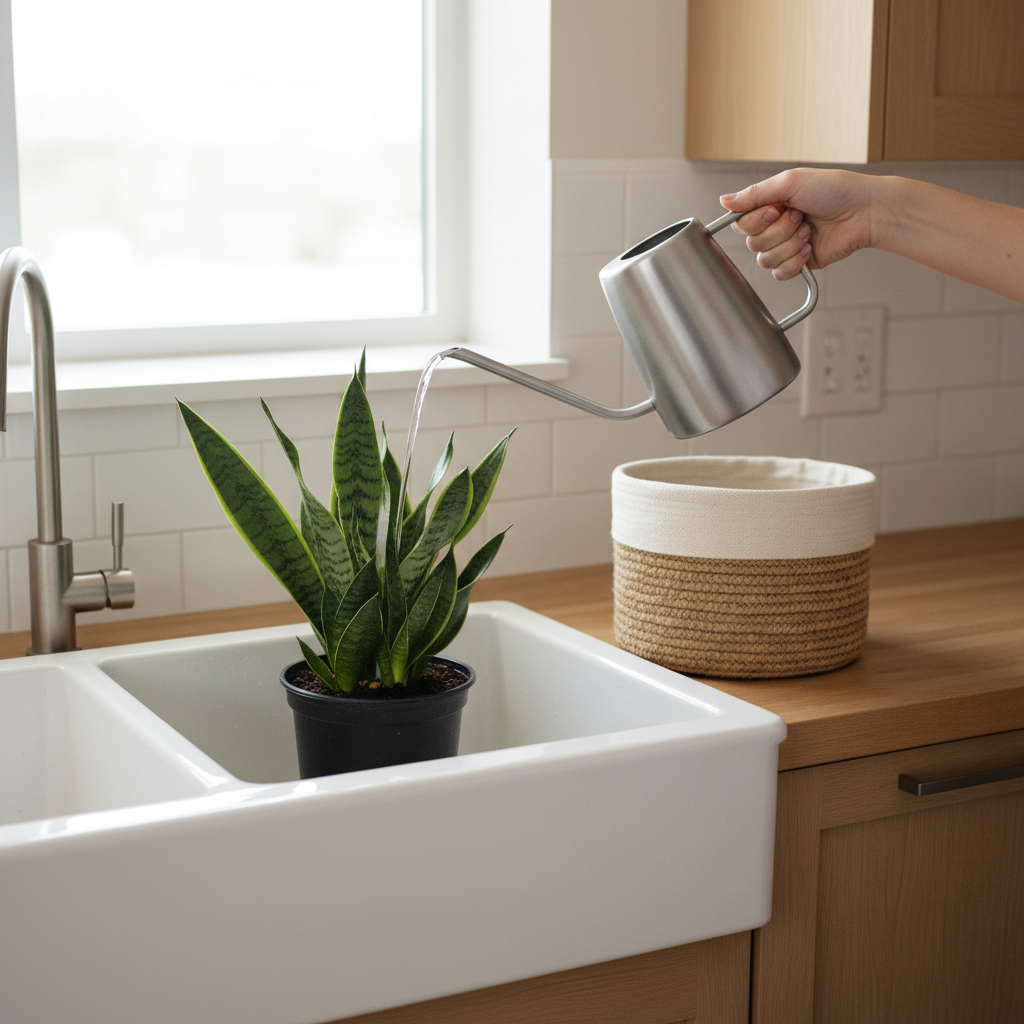
Low-drama watering habits
- Water in the sink or tub, then wait until dripping stops before returning the pot.
- If you water in place, use a measuring cup and add water slowly, stop when the saucer has a small amount, not a pool.
- Empty saucers the same day if you accidentally overwater, especially for plants that hate “wet feet.”
Simple maintenance checklist (monthly is usually enough)
- Pull the pot out, wipe the liner, and check for pinholes or tearing at folds.
- Wipe the saucer, remove mineral buildup before it hardens.
- Let the basket air out for an hour if you notice any damp smell.
According to the Centers for Disease Control and Prevention (CDC), mold grows where moisture exists, and prevention focuses on keeping areas clean and dry. You do not need to panic, but if you see persistent mildew on a basket, treat it as a moisture-management problem, not just a “cleaning problem.”
Common mistakes (and what to do instead)
- Mistake: planting directly into the basket. Better: keep the plant in a drainage pot and treat the basket as a cover.
- Mistake: no drainage strategy. Better: saucer inside, or remove the pot to water, ideally both if you are cautious.
- Mistake: sealing the entire basket heavily. Better: if you seal, do it lightly and test in a small area, some finishes can darken fibers.
- Mistake: buying a basket just by “top diameter.” Better: check inner diameter at the narrowest point, some baskets taper aggressively.
- Mistake: leaving wet liner folds. Better: smooth the liner so water cannot hide in corners.
When it makes sense to get extra help or switch approaches
If you are dealing with repeated water damage on hardwood floors, or you suspect mold in surrounding baseboards, it may be worth talking with a qualified home maintenance professional. If anyone in the home has asthma or mold sensitivity, being conservative about moisture is usually a good idea, and a clinician can give guidance that fits your situation.
On a simpler level, if you know you will always water in place, consider skipping natural fiber baskets entirely and using a true waterproof cachepot, then you can still get the “basket look” with a synthetic woven option made for moisture.
Conclusion: a good basket planter is mostly about the system
A woven basket cover can make indoor plants look finished, but the win comes from the behind-the-scenes setup: a stable fit, a liner that stays put, and a watering routine that keeps moisture from lingering. If you want a quick next step, choose one plant you see every day, build the liner sleeve version, and run it for two weeks, you will know fast whether you prefer sink-watering or a more rigid insert.
Key takeaways:
- Protect the basket with a liner and a saucer strategy, even if it feels “extra.”
- Fit beats aesthetics, a slightly larger basket usually performs better.
- Dry time matters, letting a pot drain before returning prevents most smells and warping.
FAQ
Can I water my plant while it sits inside the basket planter?
You can, but it is the easiest way to accidentally soak the basket. If you do it, add water slowly, use a saucer inside, and empty runoff the same day if it collects.
What liner works best for a woven basket planter indoors?
Thicker plastic with fewer seams tends to be more forgiving, like heavy-duty bags or vinyl sheeting. Thin grocery bags can tear at folds, especially if you remove the pot often.
How do I stop the pot from wobbling inside the basket?
Usually the basket is too wide or the base is uneven. Add a thin felt pad under the saucer, or choose a basket with a flatter, reinforced bottom. In a pinch, a rolled cloth ring can stabilize the pot while staying hidden.
Will a basket planter cause mold in my home?
It can contribute if water repeatedly leaks or sits trapped. In many cases, switching to sink-watering and letting the pot drain fully solves the issue, but persistent moisture around walls or floors deserves more caution.
Should I seal the inside of the basket?
Sealing can help with minor splashes, but it is not a replacement for a liner and saucer. Some sealers can darken natural fibers or add odor, so test first and follow product directions.
How do I size a basket planter for a 10-inch pot?
A basket inner diameter around 11–12 inches is a practical range, especially if you want room for a liner and saucer. If the basket tapers, measure the narrowest inner point, not just the top.
What if my basket already smells musty?
Remove the pot, discard and replace the liner, clean the saucer, and let the basket dry completely in a well-ventilated spot. If odor returns quickly, your routine may be leaving standing water somewhere in the system.
Can I use this idea for pet-safe setups?
Yes, but be realistic about chewing and digging. Tuck liner edges down, avoid loose plastic where pets can grab it, and if your pet persistently chews, a rigid insert is often safer than a floppy liner.
If you are building a diy woven basket planter for indoor plants and want it to stay good-looking without constant babysitting, the easiest “upgrade” is a better liner-and-saucer combo, it usually costs less than replacing a ruined basket and it makes watering feel less risky.