
When people ask how to decorate a bookshelf stylishly, what they usually mean is: “How do I make this look intentional, not like random storage?” The good news is you don’t need rare collectibles or a designer budget, you need a few clear rules, a repeatable layout, and the confidence to edit.
A bookshelf is a weird mix of practical and personal. It holds things you use, but it also sits in your sightline every day, so when it feels messy, the whole room can feel off.
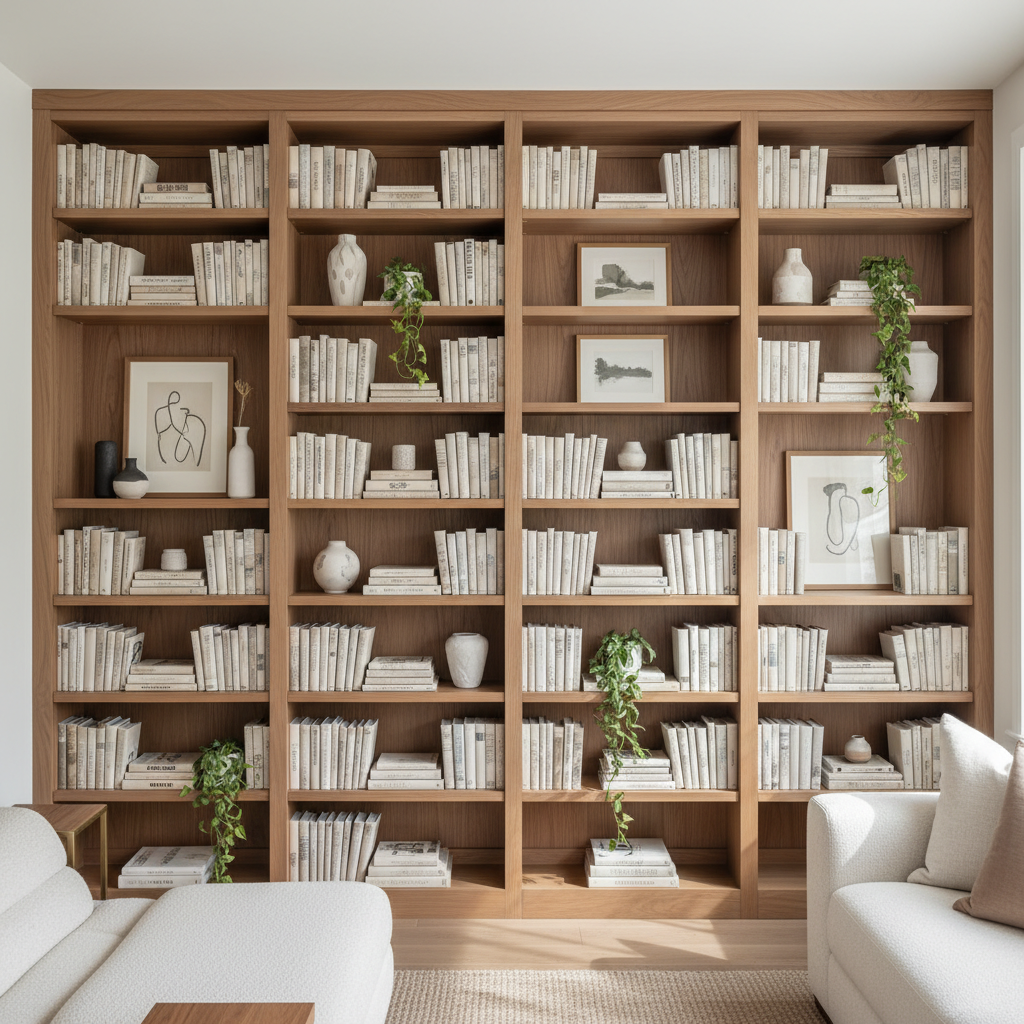
This guide focuses on what actually works in real homes: quick resets for busy weeks, flexible styling formulas, and the common mistakes that make shelves look cluttered even when the items are nice.
Start with a plan: function first, style second
Before you touch décor, decide what your shelves need to do. A “pretty” bookshelf that fails at storage becomes frustrating fast, and you’ll undo the styling within a month.
- Everyday use: lots of reading, kid items, work binders. Prioritize access and sturdy book rows.
- Mostly decorative: a few books, more objects. Prioritize negative space and statement pieces.
- Hybrid: the most common. Mix real book storage with a few styled zones.
One practical rule: reserve at least one “dump zone” shelf or basket for the things that always land here, remotes, mail, chargers. It keeps the styled shelves from becoming the catch-all.
Declutter, then group what stays (this is where the magic happens)
If you’re stuck on how to decorate a bookshelf stylishly, it’s often because you’re trying to style too many single items. Shelves look calmer when objects live in small families.
A fast edit that doesn’t feel brutal
- Pull everything off (yes, everything) and wipe shelves, dust shows up fast on open shelving.
- Sort into piles: books, display objects, paper/office, sentimental, donate.
- Limit “tiny items” to a tray, box, or bowl so they read as one unit.
According to The Library of Congress, proper book storage generally means keeping books clean, supported, and away from excess heat, moisture, and direct sunlight. Even for décor, treat your books like books, not just props.
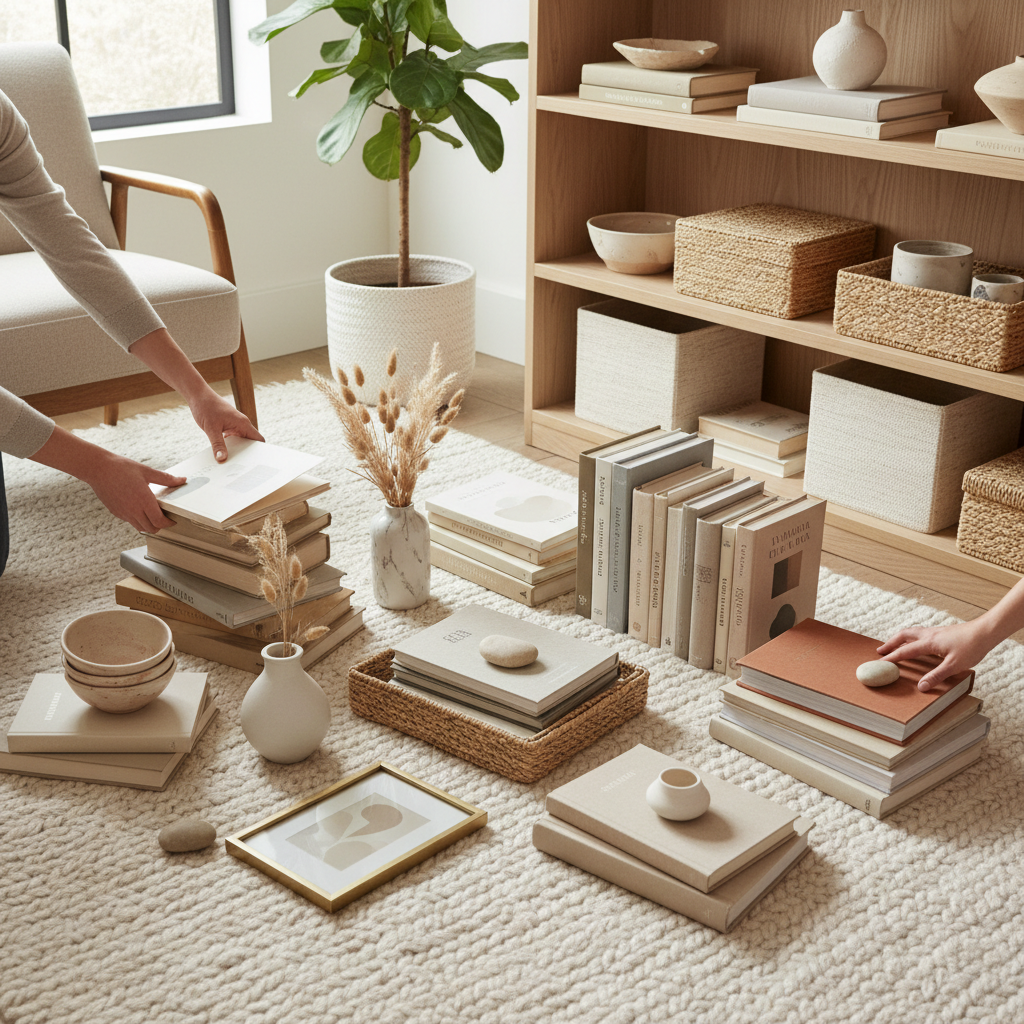
Now you’re not “decorating,” you’re curating. That mental shift makes the next steps easier.
The 5 styling principles that make shelves look intentional
You can break most great shelves down into a few visual habits. Use these as guardrails, not strict rules.
- Vary height: tall + medium + small, repeated across shelves, keeps your eye moving.
- Repeat materials: wood, ceramic, glass, metal. Repetition reads as “designed.”
- Keep a color story: not matchy-matchy, just coordinated. Two neutrals plus one accent is plenty.
- Use negative space: some empty space is what makes the “styled” areas feel elevated.
- Create triangles: cluster three items with different heights, it’s a simple way to look composed.
If you only remember one thing, it’s this: bookshelves look stylish when they’re edited, not when they’re filled.
Quick self-check: what type of bookshelf are you styling?
This is a practical checkpoint before you start placing items. Different shelf shapes want different solutions.
| Bookshelf type | What usually goes wrong | What fixes it fast |
|---|---|---|
| Open freestanding shelf | Looks busy from all angles | More baskets/boxes, fewer tiny objects |
| Built-ins | Feels flat, too symmetrical | Add art leaners, vary stacks vs rows |
| Narrow shelves | Not enough depth for décor | Lean frames, use slim vases, bookends |
| Deep shelves | Dead space behind objects | Layering: art behind, objects in front |
| Kid-heavy shelves | Visual chaos | Lidded bins + one “display” shelf only |
If your shelf is mostly for storage, aim for “tidy and consistent” instead of “showroom perfect.” That’s still stylish, just more realistic.
A simple layout formula you can repeat on every shelf
Here’s a layout that works in a lot of homes because it balances books, décor, and breathing room. Use it shelf by shelf.
The “Row + Stack + Object” formula
- Row: 60–80% of books upright (spines out) with bookends if needed.
- Stack: 3–6 books horizontal, used as a platform.
- Object: one focal item on the stack (bowl, small sculpture, candle) plus one supporting item nearby.
Repeat this pattern across shelves, but shift the location of the stacks so it doesn’t look copied and pasted.
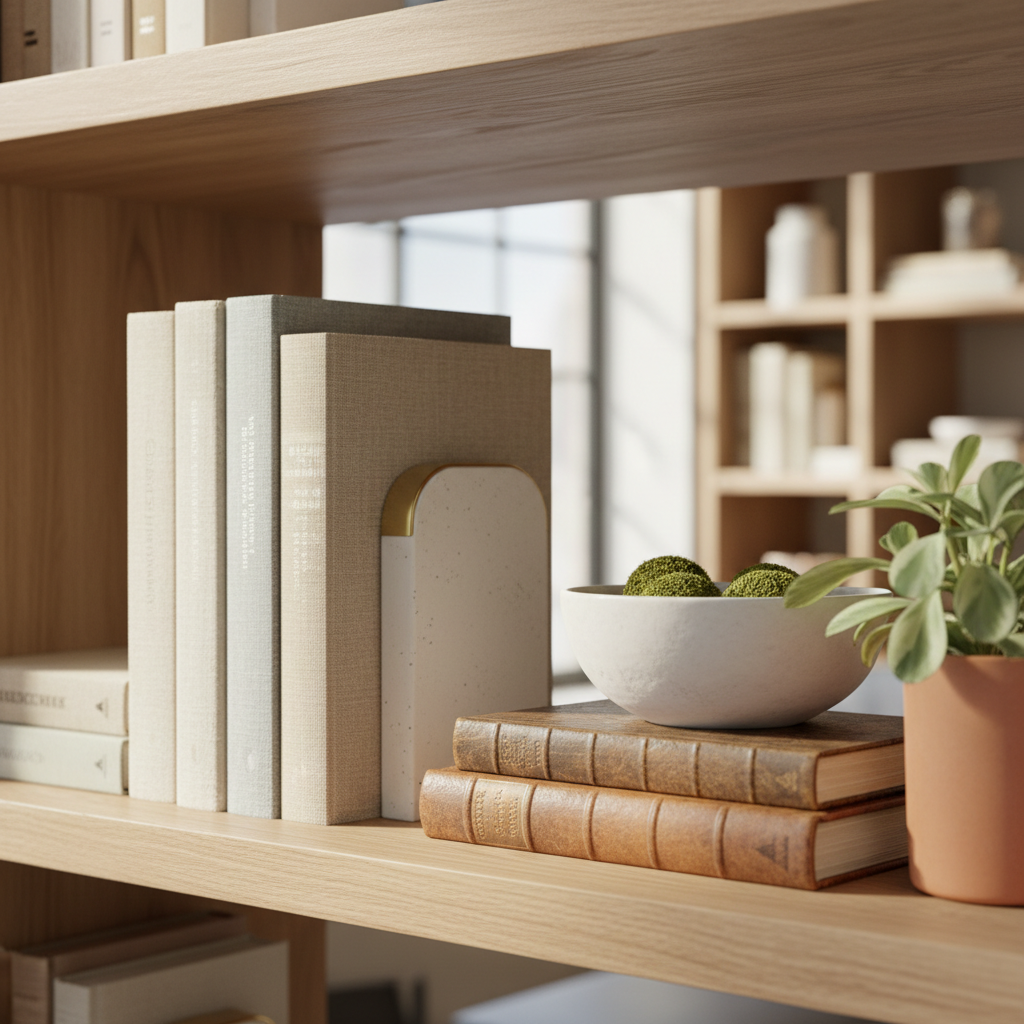
Want a faster win? Start by styling just the middle shelves at eye level, then fill in above and below. Many people burn out because they begin at the bottom and lose patience.
What to put on a bookshelf (without looking like a store display)
If you’re learning how to decorate a bookshelf stylishly, the item list matters less than the mix. The goal is contrast: soft/hard, matte/shiny, tall/short.
Reliable “shelf-friendly” items
- Art or framed photos: lean them against the back for depth, especially on deep shelves.
- Storage boxes and baskets: hide small clutter, add texture.
- Ceramics: vases, bowls, planters, they photograph well and feel timeless.
- Greenery: a trailing plant breaks up straight lines; faux can look good if the size and pot feel right.
- Bookends: practical and sculptural, great for narrow shelves.
How many “decor objects” is too many?
A decent rule is one main cluster per shelf and keep the rest book-forward. If every inch is an object, nothing reads as special.
Common mistakes (and the small fixes that actually work)
- Everything is the same size: add one tall piece (vase, frame, lamp) to break the line.
- Only books, no texture: bring in one basket or ceramic piece per 1–2 shelves.
- Too many tiny trinkets: corral them into a tray or box so they read as one shape.
- Rainbow book organizing feels loud: try grouping by light-to-dark neutrals, then add one color accent.
- Over-symmetry: matching objects on both sides can look stiff, swap one side for a stack of books.
Also, watch glare and heat if you add lamps or candles near books. If you’re unsure about wiring, mounting, or load limits, it’s sensible to consult a professional.
Practical styling routine: keep it looking good in 10 minutes a week
The most stylish shelves usually come from maintenance, not a single “perfect” styling day.
- Weekly: return 5–10 items to their zones, re-stack one shelf, toss obvious paper clutter.
- Monthly: dust, rotate one object or frame, remove one thing that started to feel like noise.
- Seasonally: swap one accent color (pillow nearby, vase, book jacket) to refresh without redoing everything.
If you want your shelves to stay camera-ready, plan a “landing spot” nearby, a small basket or tray so the shelf doesn’t become the default drop zone again.
Conclusion: a stylish bookshelf is edited, balanced, and livable
How to decorate a bookshelf stylishly comes down to a few repeatable moves: decide the shelf’s job, edit hard, group items, and build a simple pattern of books plus a couple of intentional clusters. Don’t chase perfection, chase a shelf that feels calm and looks like you.
If you do one thing today, clear one shelf completely and restyle it using the Row + Stack + Object formula, then stop. A single “finished” shelf often creates the momentum for the rest.