
Small bathroom storage solutions work best when you stop trying to “find one more spot” and start assigning every category a home, the way you would in a kitchen: daily items within reach, backups out of sight, and rarely-used stuff up high.
If your bathroom feels crowded, it’s usually not because you own too much, it’s because storage is shallow, broken up, and sitting in the wrong places. Tiny vanities, pedestal sinks, and awkward corners make it easy for clutter to spill onto the counter, then it never really resets.
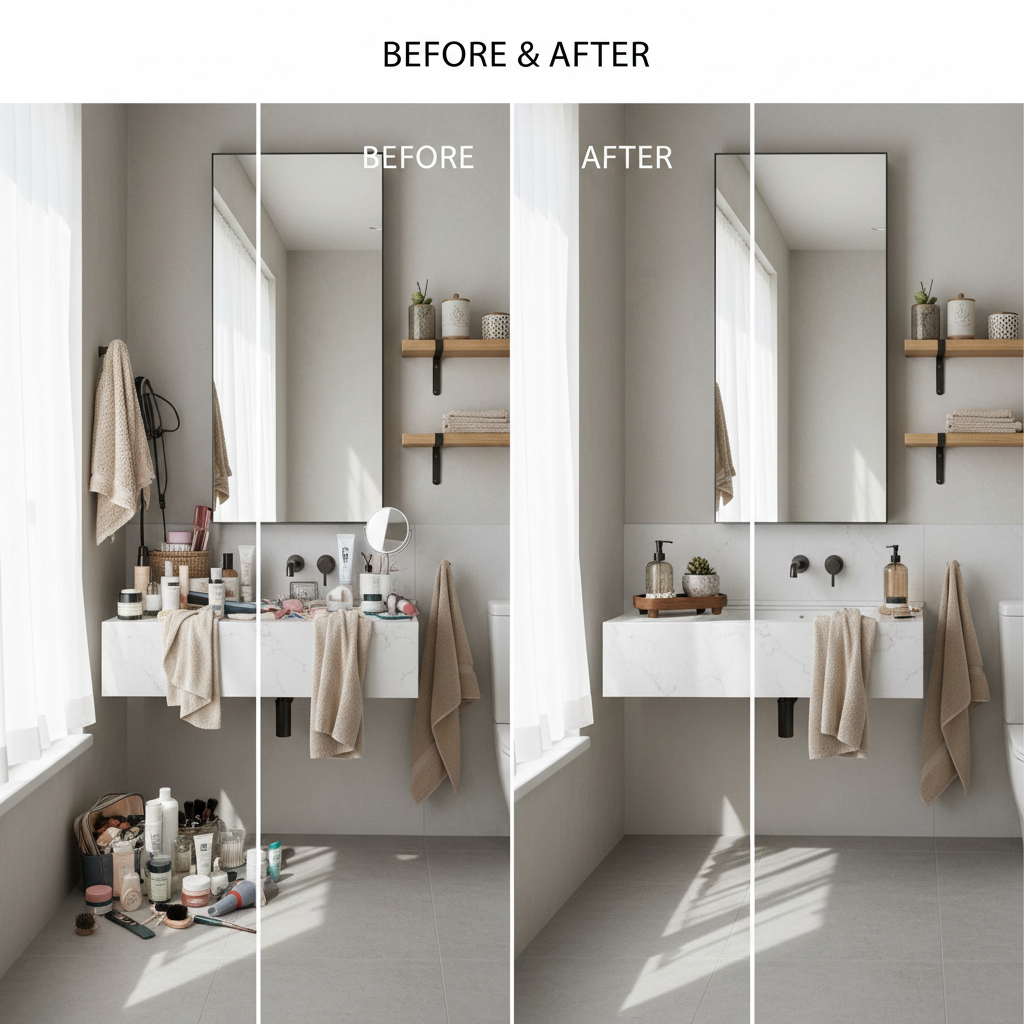
This guide focuses on practical, renter-friendly options and a few “worth it” upgrades. You’ll get a quick way to diagnose what’s causing the mess, then pick storage ideas that match your layout, not someone else’s Pinterest bathroom.
Key takeaways: use vertical space, keep surfaces intentionally sparse, and choose organizers that match what you actually store (not what looks cute in photos).
Why small bathrooms get messy (and which problem you actually have)
Most small bathrooms hit the same friction points, but the fix depends on what’s missing.
- No “landing zone”: items have nowhere to go after use, so counters become default storage.
- Too many categories mixed together: skincare, dental, hair, meds, and cleaning supplies share one drawer, then nothing stays contained.
- Vertical space ignored: the wall above the toilet, the back of the door, and the space above the vanity sit empty.
- Awkward plumbing: under-sink space is usable, but pipes make bins tip or waste half the cabinet.
- Wrong scale storage: deep baskets in a shallow cabinet, or tiny organizers for tall bottles, causes constant reshuffling.
According to the National Kitchen and Bath Association (NKBA), bathrooms should be planned around function and access, meaning storage works best when it’s placed where you use items, not just where it fits.
Quick self-check: pick your storage “type” in 2 minutes
Answer these honestly, it saves you from buying organizers that end up in a closet.
- Your counter is crowded even after cleaning: you need a dedicated daily-use zone and better wall storage.
- You have lots of backups (toilet paper, shampoo, cleaners): you need bulk storage that stays hidden but reachable.
- Drawers exist but feel useless: you need inserts that create lanes and prevent stacking.
- No vanity / pedestal sink: you need freestanding vertical storage and over-toilet solutions.
- Shared bathroom chaos: you need labeled, person-based bins to stop “everyone’s stuff” from blending.
If you check two or more, prioritize the one that annoys you daily. Fixing that first usually reduces 80% of the visual mess.
High-impact small bathroom storage solutions (organized by zone)
Instead of shopping by product, shop by location. These options tend to deliver the biggest space return in small rooms.
1) Over-the-toilet space (the easiest “new” storage)
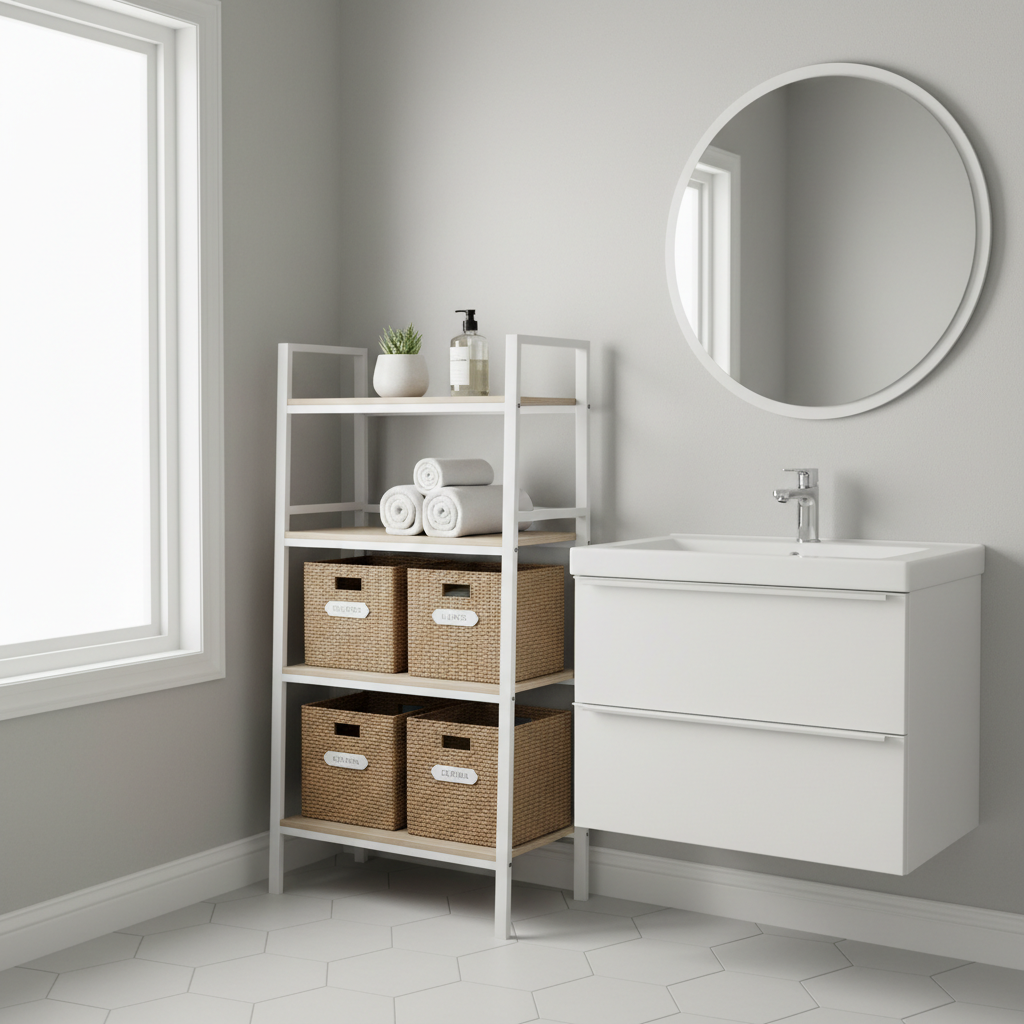
- Over-toilet shelf or étagère: good for towels and backup toiletries, choose adjustable shelves for tall bottles.
- Wall cabinet above the toilet: hides clutter, looks built-in, but measure door swing and head clearance.
- Floating shelves: cheapest and flexible, pair with lidded bins so it doesn’t look like a supply closet.
2) Behind the door (often wasted)
- Over-the-door rack with hooks: best for robes, hair tools, or a small caddy for daily items.
- Slim hanging organizer: works for makeup, skincare, and small bottles, but avoid overloading to prevent sagging.
3) Under-sink cabinet (harder, but worth it)
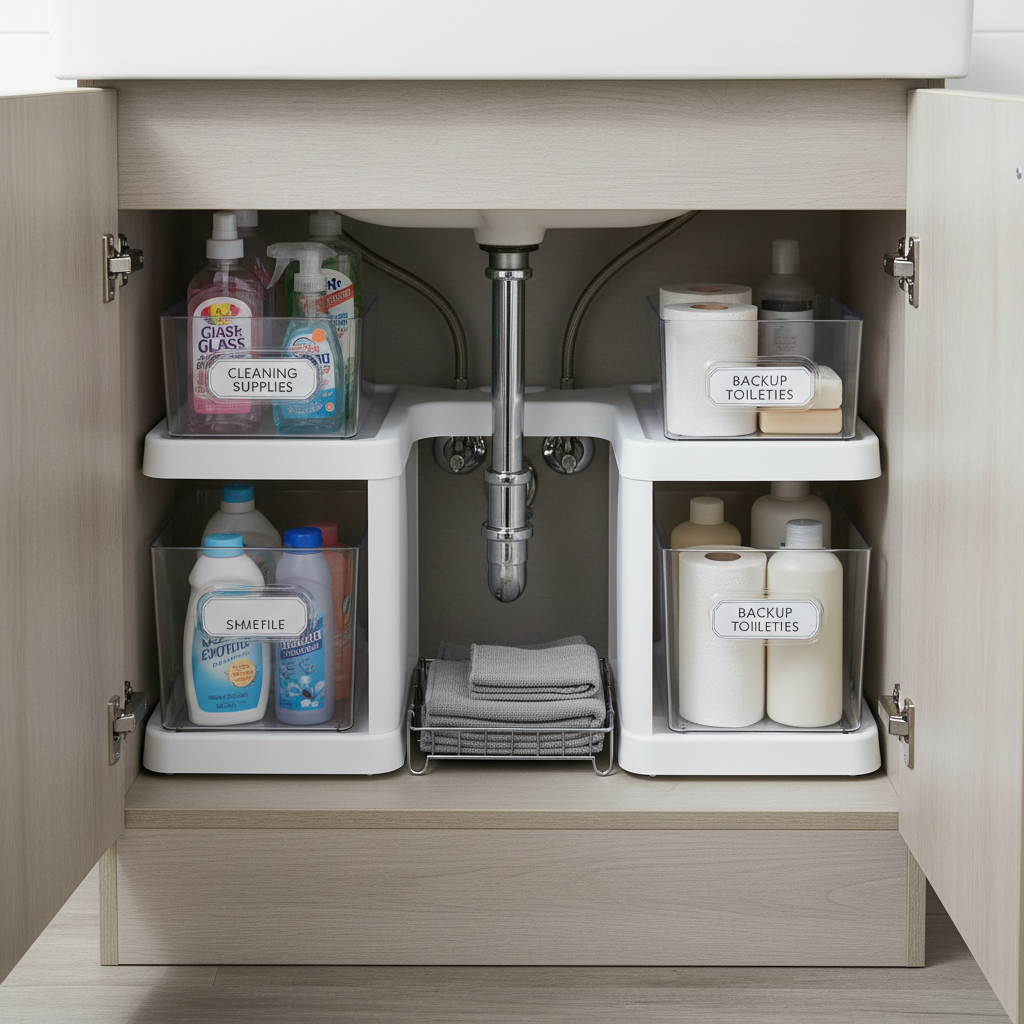
- U-shaped shelves: built to fit around plumbing, adds a second level without drilling.
- Pull-out bins: makes the back reachable, especially helpful for cleaning supplies and backups.
- Two-bin system: one for “daily refills” (toothpaste, cotton pads), one for “rarely used” (first aid, spare razors).
4) Shower and tub area (where clutter feels worst)
- Corner caddy or tension pole: keeps bottles off the tub edge, choose rust-resistant materials.
- Wall-mounted dispenser: reduces bottle count, useful if you’re okay decanting shampoo/soap.
- Small basket for “in-shower only” items: separate from shaving tools or kids’ bath items.
5) Vanity top (keep it intentionally small)
- One tray rule: limit daily items to a single tray so the rest returns to storage.
- Magnetic strip inside a cabinet: great for tweezers, nail clippers, and small metal tools.
- Stackable riser: if you must keep items out, use height so the counter still wipes clean.
A simple plan: reset your bathroom storage in one afternoon
You don’t need a full makeover. You need a reset that matches how you use the room.
- Step 1: Clear one zone at a time (counter, then under-sink, then shower). Don’t pull everything out at once if you share the bathroom.
- Step 2: Sort by category you actually use: dental, skincare, hair, meds, cleaning, backups, guest items.
- Step 3: Decide what lives “prime” (daily reach), what lives “nearby” (weekly), what lives “high/hidden” (backups).
- Step 4: Add containment before adding more shelves: small bins, drawer inserts, and labels prevent re-cluttering.
- Step 5: Set a maintenance rule: one-in-one-out for samples, and a monthly 5-minute wipe + toss expired items.
For most households, the biggest win comes from shrinking what stays on the vanity and putting a real system under the sink.
What to buy (and what to skip): a quick decision table
Not every organizer makes sense in a tight space. This table keeps it practical.
| Need | Best pick | Why it works in small bathrooms | Common mistake |
|---|---|---|---|
| Hide backups | Over-toilet cabinet | Adds closed storage without taking floor space | Installing too low so it feels cramped |
| Use under-sink space | U-shaped shelf + bins | Works around plumbing and creates levels | Buying deep bins that block the door |
| Stop counter clutter | Single tray + wall shelf | Defines limits and keeps cleaning easy | Keeping “just in case” products out |
| Organize drawers | Adjustable drawer dividers | Creates lanes for categories, reduces stacking | Using one big bin so items disappear |
| Shower bottle overload | Corner caddy or dispenser | Frees ledges and reduces visual noise | Using suction cups on textured tile |
Common pitfalls that make “more storage” feel like less
This is where many small bathroom storage solutions fail, not because the idea is bad, but because the setup doesn’t match reality.
- Buying containers before measuring: measure cabinet width, depth, and door hinge clearance. One inch matters.
- Open shelves with no lids: they can look messy fast, especially with mixed packaging. Add lidded bins for visual calm.
- Storing by brand instead of use: keep routines together, morning items together, cleaning together.
- Ignoring humidity: wood, cardboard, and cheap metal may warp or rust. In damp bathrooms, plastic, coated metal, or sealed wood tends to hold up better.
Also, be careful with anything that requires drilling into tile or messing with plumbing. If you’re unsure, it’s usually smarter to choose freestanding or adhesive options, or ask a contractor.
When it’s time to call in help (or at least slow down)
If you’re just reorganizing, you’re fine. But if you’re changing fixtures, adding outlets, or installing heavy cabinets, it can turn into a safety issue.
- Wall anchoring questions: heavy cabinets and shelves should hit studs or use proper anchors, especially above a toilet.
- Signs of water damage: soft cabinet floors, swelling, moldy smells, or persistent leaks may need a plumber or property manager.
- Electrical near water: for lighting or outlet changes, consult a licensed electrician; bathrooms have code requirements.
According to the U.S. Consumer Product Safety Commission (CPSC), tip-overs and unsafe installations are a real risk in the home, so securing tall storage and using correct mounting hardware is a sensible precaution.
Conclusion: make your small bathroom feel bigger without renovating
The most reliable way to make a small bathroom feel bigger is to reduce what lives out in the open, then reclaim vertical and under-sink space with simple containment. You don’t need dozens of bins, you need a few that match your routines.
If you do one thing this week, make it this: set up a single “daily tray” on the vanity and move everything else into a labeled home. It’s a small change, but it usually shifts the whole room.
FAQ
What are the best small bathroom storage solutions for renters?
Look for over-the-door organizers, tension shower caddies, and freestanding over-toilet shelving. They add capacity without drilling, and you can take them with you when you move.
How do I organize a small bathroom with no vanity?
A slim rolling cart, a wall cabinet, or an over-toilet unit can replace the missing storage. Keep daily items in a small basket and store backups higher so the room stays visually calm.
Is open shelving a bad idea in a tiny bathroom?
Not always, but it shows everything, so it’s less forgiving. If you like open shelves, use matching lidded bins and keep only towels or a small set of products visible.
How do I stop my bathroom counter from getting cluttered again?
Give yourself a limit you can feel, like one tray or one cup for daily tools. When the tray fills, something has to go back into a drawer or cabinet, it’s a simple reset trigger.
What should I store under the sink versus elsewhere?
Under the sink is great for refills, cleaning supplies, and backups, as long as you keep them in stable bins around plumbing. Medicines and heat-sensitive items may be better in a cooler, drier cabinet, if available.
Are adhesive hooks and shelves safe in bathrooms?
They can be, but humidity and textured tile reduce hold strength. Follow the product instructions closely, don’t overload, and consider mechanical mounting for anything heavy or breakable.
How many towels should you keep in a small bathroom?
It depends on laundry habits and household size, but many people do well with a tight rotation: a couple per person plus a small guest set. Extra stacks usually steal space from more useful categories.
If you want the “easy mode”
If you’re trying to get small bathroom storage solutions done quickly, it often helps to start with a simple kit approach: a matched set of bins for under-sink categories, one over-toilet shelf for backups, and a single counter tray for daily items. It’s not fancy, but it reduces decision fatigue and gets you to a bathroom that stays tidy longer.