
how to clean ceiling fans without dust is mostly about control, not scrubbing harder, you want to trap debris before it lifts off the blades and drifts onto furniture, floors, and your face.
If you’ve ever wiped a blade and watched a gray “snowfall” land on a freshly made bed, you already know why this matters, ceiling fan dust tends to be dry, light, and stubborn, and it spreads fast once disturbed.
This guide walks through practical methods that actually prevent fallout, from the classic pillowcase trick to vacuum-assisted cleaning, plus a quick decision checklist so you can pick the right approach for your ceiling height, blade type, and allergy sensitivity.
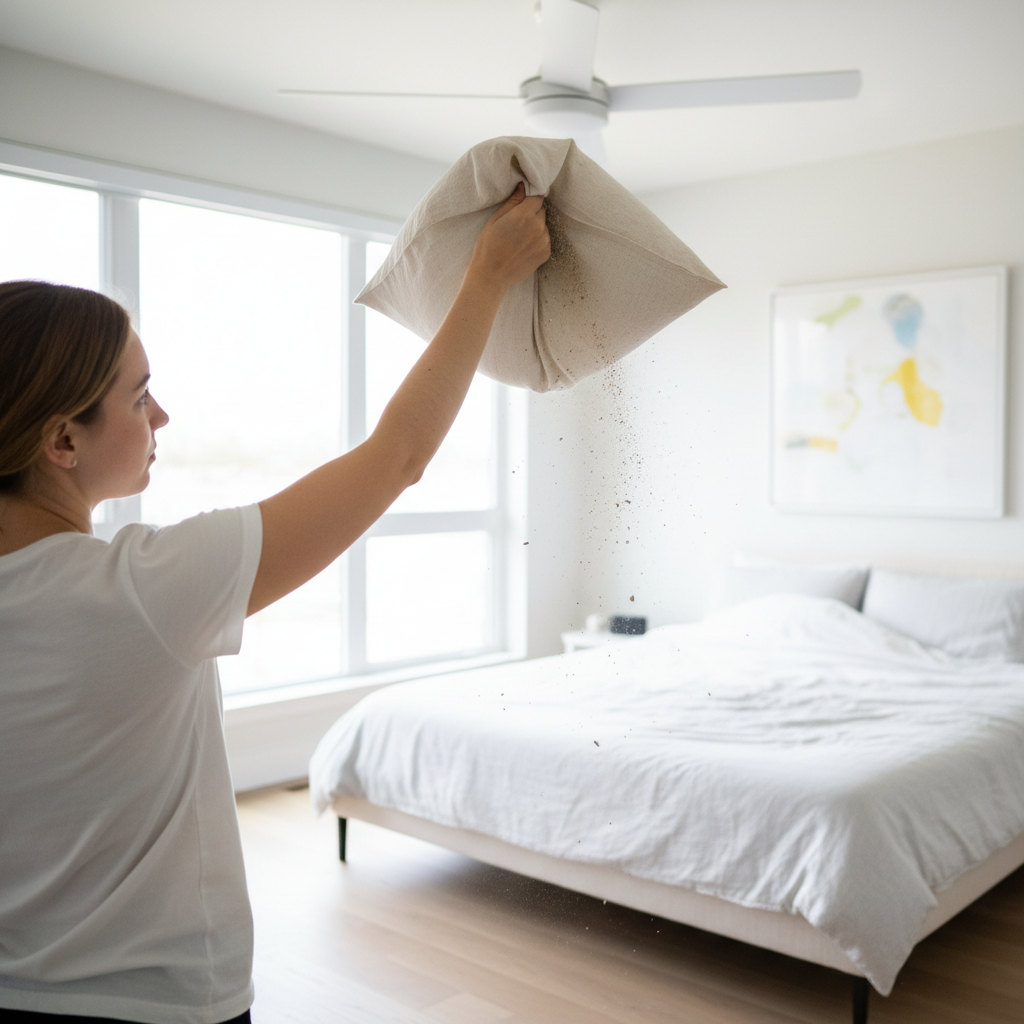
Why dust falls in the first place (and what prevents it)
Dust falls because most cleaning motions create airflow and vibration, you wipe, the blade flexes a bit, the dust layer breaks apart, then gravity does the rest. If the fan was running recently, warm air currents can keep particles floating longer than you’d expect.
What helps is surprisingly consistent across homes: reduce air movement, contain debris at the blade, and avoid dry brushing. Many “no-mess” methods work because they turn the blade into a sealed little tunnel where dust has nowhere to go except into your cloth.
- Containment beats chasing, enclose the blade with fabric or vacuum the dust as you lift it.
- Moisture (lightly) beats friction, a slightly damp microfiber grabs fine dust instead of flicking it.
- Slow movements beat fast swipes, speed is what launches dust.
Quick self-check: which no-fall method fits your fan?
Before you climb on anything, pick a method that matches your setup, this saves time and avoids the classic mistake of starting with the wrong tool.
- Low ceiling, standard blades: pillowcase method or damp microfiber wrap.
- High ceiling or stairwell install: vacuum + extension pole, or hire help if access feels sketchy.
- Heavy buildup or sticky grime: pre-soften with mild soapy water on a cloth, then wipe in a contained way.
- Allergies/asthma sensitivity: vacuum with HEPA filtration when possible, and consider a mask.
- Delicate finishes (painted wood, matte coatings): test any cleaner on an inconspicuous edge.
According to CDC, people with asthma or allergies often benefit from reducing indoor dust exposure, so if cleaning fans triggers symptoms, it’s reasonable to treat this as an air-quality task, not just a cosmetic one.
Tools that keep dust contained (simple, not fancy)
You don’t need a special “fan duster” to avoid a mess, but you do need the right texture and a plan to keep dust from dropping.
Good basics to gather:
- Old pillowcase (clean, tightly woven cotton works well)
- 2 microfiber cloths (one slightly damp, one dry)
- Vacuum with brush attachment, ideally with a HEPA filter
- Step stool or ladder that feels stable for your height
- Mild dish soap and a small bowl of warm water
- Drop cloth or old sheet (optional, but helpful for first-time deep cleans)
One small upgrade that makes a difference: a vacuum extension wand, it lets you remove dust without pushing it off the blade edge.
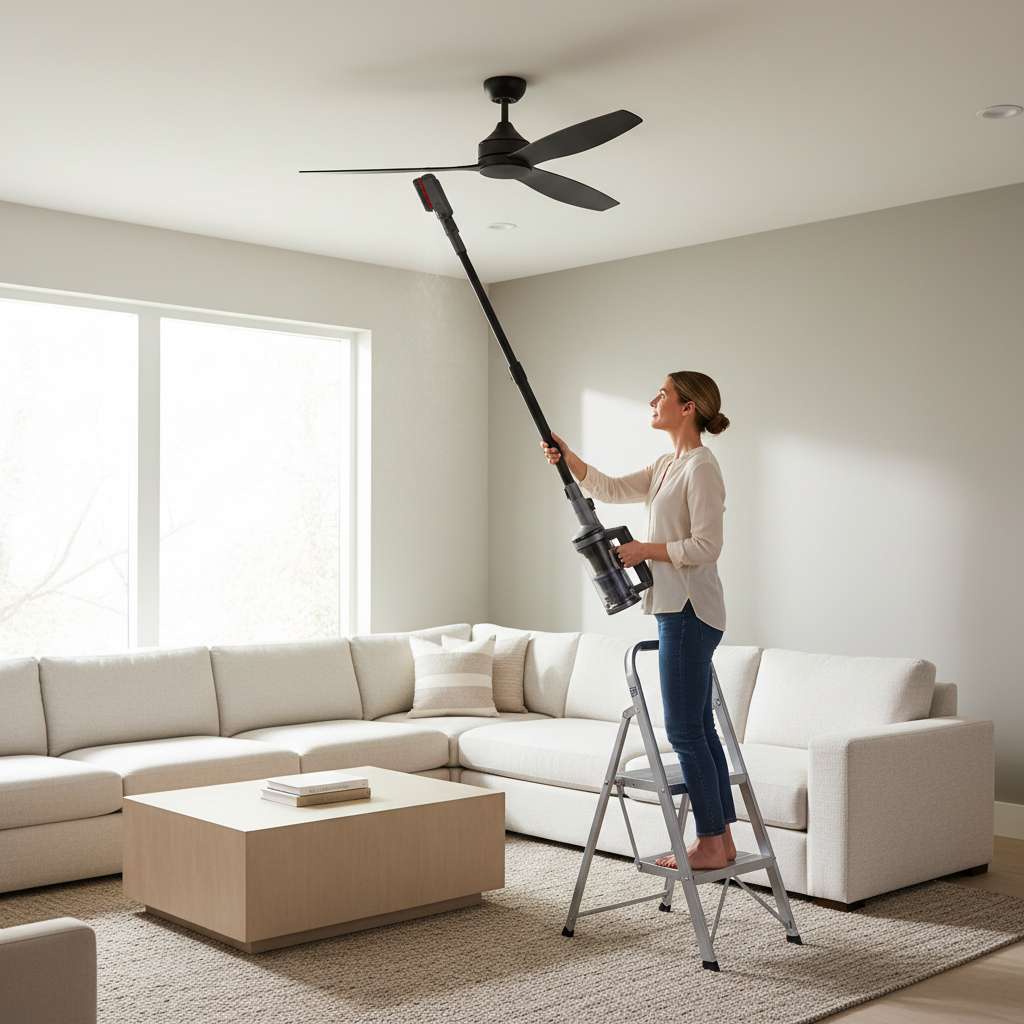
Step-by-step: how to clean ceiling fans without dust (3 proven methods)
Method A: The pillowcase trap (fast, low mess)
This is the go-to for many households because it turns fallout into a non-issue, the dust stays inside the case.
- Turn the fan off, wait until blades stop completely, if it ran recently, give it a few minutes.
- Slide the pillowcase over one blade until it covers most of the blade length.
- Pinch the case around the blade with one hand, with the other hand, gently pull the case back toward you so dust stays inside.
- Repeat for each blade, then take the pillowcase outside and shake it into a trash bag, or wash it right away.
Small but important: if you see chunky buildup, don’t “saw” the fabric back and forth, keep one slow pull per blade to avoid launching debris.
Method B: Vacuum-first, then wipe (best for allergies)
If you’re trying to keep particles from becoming airborne, vacuuming is usually the cleanest approach, especially with a HEPA-equipped unit.
- Attach the soft brush tool, start at the blade base and move outward.
- Support the blade lightly with your free hand if it wobbles, avoid bending.
- After vacuuming, wipe with a slightly damp microfiber, then dry with a second cloth.
According to EPA, using HEPA filtration can help capture fine particles, which is why this approach often feels better for people sensitive to dust.
Method C: Damp microfiber wrap (best for light dust, no laundry)
This works when buildup is thin and dry, you’re relying on microfiber’s grip plus a touch of moisture.
- Lightly dampen the cloth, it should feel barely wet, not dripping.
- Wrap the cloth around the blade like a sleeve, then pull outward in one smooth motion.
- Refold to a clean section between blades so you’re not smearing dust around.
If your fan sits above a bed or couch, this method is nice because it’s quiet, quick, and doesn’t fling lint.
Safety, setup, and what to do before you climb
Fans invite overconfidence, most injuries happen from rushing the ladder part, not from cleaning itself. If the setup feels awkward, slow down and change the setup, not your balance.
- Power: turn the fan off, and if your switch is unreliable, cut power at the breaker for peace of mind.
- Ladder choice: use a stable step ladder, avoid standing on furniture that can shift.
- Blade stability: push gently, if the fan wobbles a lot, stop and inspect hardware later.
- Personal protection: consider glasses and a mask if dust triggers sneezing or breathing issues, if you have health concerns, it may be smart to ask a clinician.
One practical habit that prevents dust clouds: keep doors and HVAC airflow low while you clean, fewer drafts means less floating dust.
What to clean beyond the blades (so it stays clean longer)
Blades get the attention, but the motor housing and light fixture often hold a ring of dust that drops later, making it feel like your work “didn’t stick.”
- Top of motor housing: wipe with a damp microfiber, then dry.
- Pull chains: quick wipe, they collect oils from hands.
- Light globes: remove if easy, wash with mild soap, dry fully before reinstalling.
- Air vents nearby: if supply vents blast air at the fan, they can speed up dust return, consider replacing HVAC filters on schedule.

Common mistakes that still make dust rain down
Most “I tried everything” stories come down to a few repeatable missteps, fixing them usually solves the mess.
- Dry feather dusters: they look gentle but often flick dust into the air instead of capturing it.
- Cleaning with the fan running: even low speed can turn dust into a room-wide problem.
- Over-wetting blades: water can drip, spot finishes, and push grime into seams, damp is enough.
- Using harsh cleaners: ammonia or strong degreasers can dull some finishes, mild soap is safer in many cases.
- Not refolding the cloth: once the cloth saturates with dust, you start redistributing.
Cheat sheet table: choose a method in 10 seconds
| Situation | Recommended method | Why it works | Watch out for |
|---|---|---|---|
| Light dust, monthly upkeep | Damp microfiber wrap | Dust clings to microfiber, minimal disturbance | Cloth should be barely damp |
| Heavy dust, you want zero fallout | Pillowcase trap | Fabric encloses blade and captures debris | Pull slowly, don’t scrub fast |
| Allergies, fine dust concerns | Vacuum-first then wipe | Removes dust before it becomes airborne | Use soft brush to avoid scratches |
| High ceiling, hard access | Vacuum with extension | Less climbing and less blade contact | Stability matters, avoid overreaching |
Practical maintenance plan (so you clean less often)
If you want to clean ceiling fans without dust falling every time, the boring truth helps: smaller, more frequent cleanings are easier to contain than seasonal deep cleans.
- Every 3–4 weeks: quick microfiber wrap or vacuum pass.
- Every 2–3 months: pillowcase method plus motor housing wipe.
- Twice a year: check blade screws, tighten gently, clean light fixture parts.
Key takeaways: contain dust at the blade, keep motions slow, choose vacuum-first when air sensitivity is a concern, and don’t forget the housing where “mystery dust” often hides.
If you want a quick win today, pick one method above, do a single blade to confirm it stays clean, then finish the set, that small test saves you from committing to a messy approach.
FAQ
What is the easiest way to clean ceiling fans without dust falling?
The pillowcase method is usually simplest because it physically contains debris, you’re not relying on perfect wiping technique, just slow, steady pulls.
Can I use a dryer sheet to wipe ceiling fan blades?
Some people do for light dust because it can reduce static, but it may leave residue on certain finishes, if you try it, test a small area and follow with a clean microfiber.
How often should I clean my ceiling fan to avoid dust buildup?
In many homes, every 3–4 weeks keeps buildup light enough that dust doesn’t “flake,” if you run fans daily or have pets, you may need a shorter interval.
Is it safe to clean a ceiling fan without turning off the breaker?
Turning the switch off is often sufficient, but if the switch is unreliable or you’ll be close to wiring near a light kit, cutting power at the breaker adds safety, when in doubt, choose the safer route.
Why does my fan get dusty so fast?
Common contributors include HVAC airflow, open windows, pets, and higher indoor lint, it doesn’t always mean your home is “dirty,” it often reflects air movement patterns.
What cleaner should I use for greasy ceiling fan dust in a kitchen?
Start with mild dish soap diluted in warm water on a cloth, greasy buildup can smear, so vacuuming first and using a fresh cloth section per blade helps, avoid harsh chemicals unless the manufacturer recommends them.
How do I clean a ceiling fan on a very high ceiling?
A vacuum extension wand or a long-handled microfiber tool can work, but if you need to lean, stretch, or stand on stairs with a ladder, it may be safer to hire a professional cleaner or handyman.
Final thoughts
Learning how to clean ceiling fans without dust comes down to one mindset shift: trap, lift, and remove, don’t brush and hope. Start with the pillowcase or vacuum-first approach, then keep it on a simple schedule so you rarely face thick buildup again.
If you want the least hassle, set a recurring reminder and do a two-minute wipe before the dust layer turns into flakes, your floors stay cleaner, and the whole job feels a lot less annoying.