
Eclectic home decor mix styles works when the room feels intentional, not random, and the good news is you don’t need a design degree to get there. Most “eclectic fails” come from mixing too many statements without a plan, or skipping the boring basics like scale, lighting, and repeatable color cues.
If you’re trying to blend vintage with modern, boho with traditional, or thrifted finds with new pieces, the goal isn’t matching, it’s coherence. A room can hold contradictions, but it still needs a few rules so your eye knows where to land.
What this guide does is give you a practical framework for 2026 buying habits and real homes, smaller spaces, open-plan layouts, more online shopping, and fewer “full room sets.” You’ll get a quick self-check, a clear mixing formula, a table you can use while shopping, and a step-by-step plan to pull a room together without starting over.
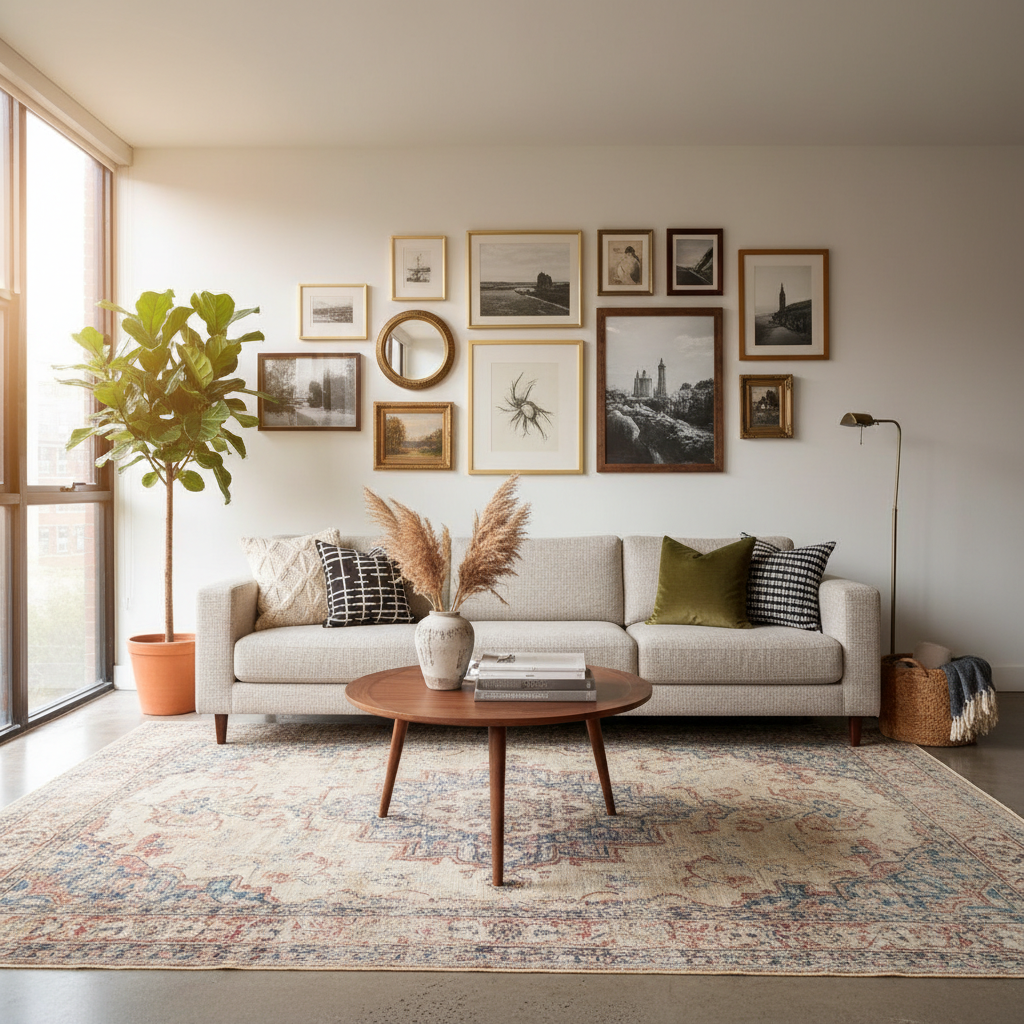
Why eclectic rooms look “collected” (and why some look messy)
The difference is rarely the budget. It’s the editing. Eclectic rooms that feel calm usually share a few hidden anchors, and then the variety rides on top.
- A limited color story: not one color, but a repeatable palette that shows up across art, textiles, and small decor.
- Consistent scale: big pieces relate to each other in height and visual weight, even if styles clash.
- Repeatable shapes or materials: arches, fluting, brass, walnut, boucle, black metal, you pick a couple and echo them.
- Breathing room: empty wall sections, negative space on shelves, and a clear walking path.
Lots of people blame “too many patterns,” but the real culprit is often competing focal points. If everything is the star, nothing is.
According to The American Society of Interior Designers (ASID), design decisions that support comfort and function matter as much as aesthetics, which is a helpful reminder for eclectic spaces: if the room doesn’t work day-to-day, no styling trick saves it.
A quick self-check: what type of mixer are you?
Before you buy another chair “because it’s cool,” figure out what’s actually happening in your space. These questions diagnose the problem fast.
1) Is the room busy or just unfinished?
- Busy: lots of small objects, many patterns, little empty space, and no clear focal point.
- Unfinished: few items, but nothing connects, and the room feels temporary or flat.
2) What’s your most expensive mistake risk?
- Buying the wrong rug size (the number-one way eclectic rooms feel off).
- Choosing a sofa that forces every other choice to fight it.
- Overdoing open shelving without a plan, visual clutter shows instantly.
3) What do you repeat right now?
If the honest answer is “nothing,” that’s your first job. Repetition is what makes eclectic home decor mix styles feel designed instead of accidental.
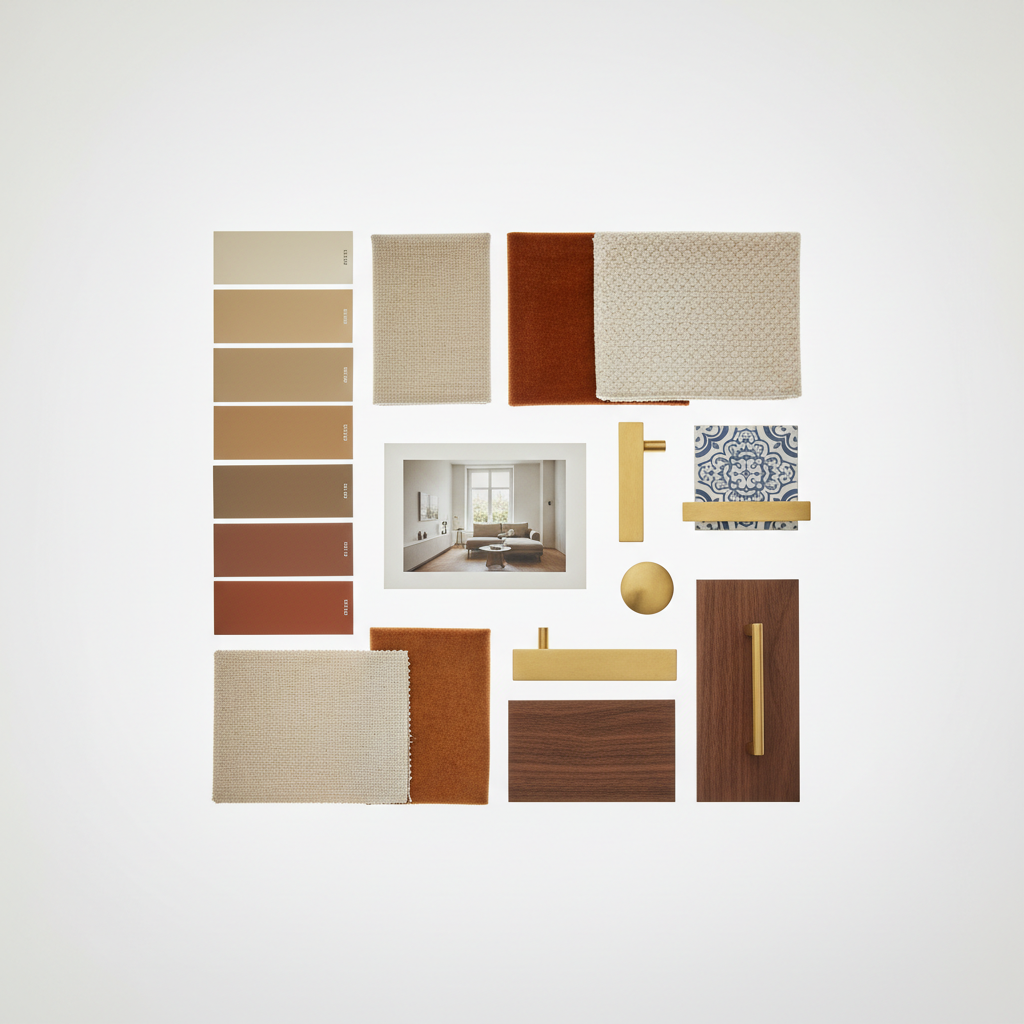
The 60/30/10 mixing rule (a practical way to stop overthinking)
This is the simplest system that works in real shopping conditions. Not perfect, just dependable.
- 60% Base: your “quiet” layer, walls, large upholstery, big rug background, foundational wood tone.
- 30% Secondary: pieces with personality, casegoods, accent chairs, curtains, larger art.
- 10% Wildcards: the weird, the bold, the travel finds, the color pops, the sculptural lamp.
In practice, your base is what prevents chaos. If you love maximalist color, that’s fine, but the base still needs consistency, maybe it’s a repeating jewel-tone palette instead of neutrals.
To keep eclectic home decor mix styles from turning into “everything I’ve ever liked,” pick one primary era to lead the room, then let the other eras cameo. Example: mid-century leads, 1970s textiles cameo, contemporary lighting ties it up.
Use this table while shopping (it prevents most mismatch)
If you only do one thing, do this. A simple checklist beats “vibes” when you’re mixing online carts, thrift finds, and hand-me-downs.
| Category | Choose 1–2 Anchors | Add Variety Like This | Red Flags |
|---|---|---|---|
| Color | 3–5 colors total (include wood/metal) | Repeat one accent color 3 times | Every item introduces a new color |
| Wood tones | One dominant wood tone | Mix in one supporting tone via small pieces | Four unrelated woods at equal weight |
| Metals | One primary metal finish | Second finish only in 1–2 locations | Chrome + brass + black everywhere |
| Patterns | One “hero” pattern (usually rug) | Vary scale: large + medium + small | Same-scale patterns competing |
| Silhouettes | Consistent visual weight in big pieces | Mix curves with straight lines intentionally | All chunky or all spindly, no balance |
A room-by-room plan that actually works
Here’s the sequence that prevents expensive resets. The order matters because some choices “lock in” the rest.
Living room
- Start with the rug if you want pattern, it sets the palette and scale.
- Pick one big upholstered piece (sofa or sectional) in a calm fabric, then layer personality on top.
- Choose lighting early, eclectic rooms often look odd under a single ceiling fixture.
Bedroom
- Use bedding as your base layer, keep it simple, then add a statement headboard or vintage nightstands.
- Limit art above the bed to one strong move, a large piece or a tight group, not a scattered mix.
Dining area
- Mixing chairs is allowed, but keep one unifier, same color, same material, or same silhouette.
- If the table is ornate, keep the chandelier simpler, and vice versa.
Entryway
- One mirror, one catchall, one light source, and one “character” piece (bench or console) usually reads intentional.
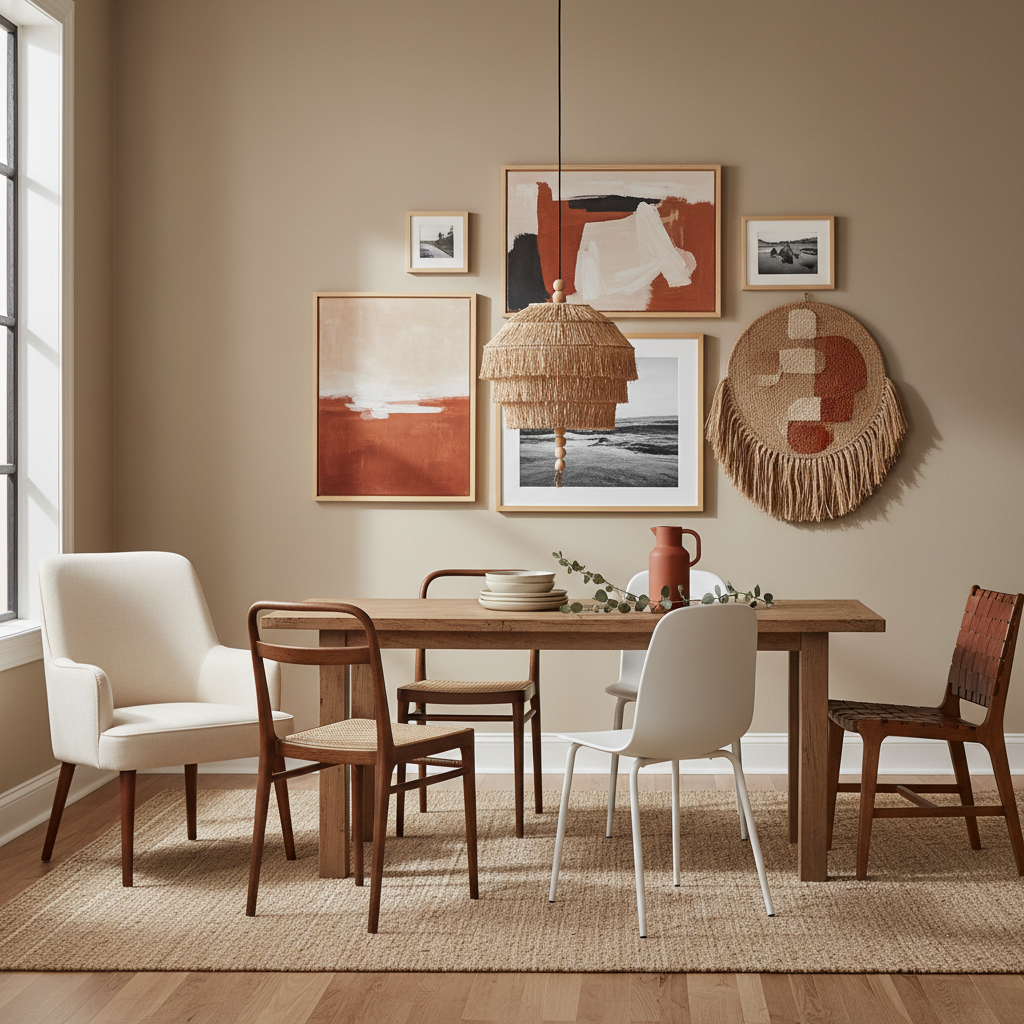
Styling moves that make mixed styles feel intentional
These are small actions with outsized impact, especially if your furniture already varies a lot.
- Group decor in odd numbers and vary height, three objects read curated more often than five scattered ones.
- Use trays and bowls to “contain” small items on coffee tables and consoles.
- Repeat one material across the room, for example, black metal in frames, a floor lamp, and cabinet pulls.
- Do one big art moment instead of many small ones, or commit to a proper gallery wall with consistent spacing.
- Add one textile layer you can swap seasonally, throw blanket, pillow covers, or curtains.
A useful mental test: if you removed half the accessories, would the room still have a point of view? If not, you’re using decor to patch a missing foundation.
Common mistakes (and what to do instead)
- Mistake: Mixing styles but ignoring function. Fix: start with layout, walking paths, and lighting, then decorate around that.
- Mistake: Buying every “statement” piece you like. Fix: pick one statement per zone, rug zone, sofa zone, art zone.
- Mistake: Too many tiny framed prints. Fix: add one oversized piece, or consolidate into a grid with matching frames.
- Mistake: Random wood tones everywhere. Fix: choose a dominant wood, then let the other tone show up twice, not ten times.
- Mistake: Trends drive every purchase. Fix: keep trendy items in the 10% wildcard layer so they’re easy to swap.
On safety: if you’re installing heavy mirrors, ceiling lights, or wall-mounted shelving, it’s usually smart to follow manufacturer guidance and consider a licensed professional if wiring or load-bearing questions come up.
Key takeaways for 2026 shopping and mixing
- Build a repeatable palette before you hunt for one-off treasures.
- Anchor first, accessorize last, rugs, lighting, and big upholstery should lead.
- Repetition beats matching, echo colors, materials, and shapes across the room.
- Edit harder than you think, eclectic home decor mix styles looks better with negative space.
If you want a simple next step, take 10 minutes, pick your base palette and one dominant wood tone, then shop only for items that support those decisions. You can still be spontaneous, just not directionless.
FAQ
How do I mix modern and vintage without it looking like two different rooms?
Use one unifier that shows up in both camps, color is easiest, then keep the biggest piece (usually sofa or bed) quieter. Let vintage show up in one to three strong moments, like a rug, a mirror, or a casepiece.
What colors work best for eclectic interiors?
Many palettes work, but eclectic spaces usually benefit from a limited “core” set of colors plus one accent. If you’re stuck, start with warm neutrals and add one saturated color through art and textiles.
Can I mix wood tones in eclectic home decor mix styles?
Yes, but give one wood tone priority. Then add a supporting tone in smaller amounts, and repeat it so it looks deliberate, not like a series of unrelated purchases.
How many patterns are too many?
It depends on scale and spacing. One hero pattern (often the rug) plus two supporting patterns at different scales is a safe range, especially in smaller rooms.
What’s the easiest way to make an eclectic room look more expensive?
Upgrade lighting and go bigger on art. A well-sized rug and substantial curtain panels also change the feel fast, even if the furniture mix stays the same.
How do I make open-plan spaces feel cohesive when I’m mixing styles?
Repeat two or three elements across zones, like the same metal finish, a shared accent color, or matching frame style. Then let each zone keep one unique statement so it doesn’t feel like a showroom.
Is eclectic the same as boho?
Not really. Boho is one style family, while eclectic is a mixing approach that can include boho, traditional, modern, industrial, or coastal, as long as the room has anchors and repetition.
If you’re trying to pull eclectic home decor mix styles together but keep getting stuck at the “it still feels off” stage, it may help to start from a tighter palette and a short shopping list, then add your wildcards on purpose rather than by accident.