
Best wooden coat racks entryway choices usually come down to one thing: whether the rack matches how your household actually drops stuff at the door, not how it looks in a styled photo.
If your entryway feels messy, the fix is often simpler than adding more storage bins. A solid wooden coat rack gives you “grab-and-go” organization for jackets, bags, and dog leashes, and it can make a narrow hallway feel intentional instead of cluttered.
This guide breaks down the wooden coat rack types that work in real U.S. homes, how to measure so it doesn’t block traffic, what “sturdy” really means in practice, and a quick checklist to help you buy once instead of buying twice.
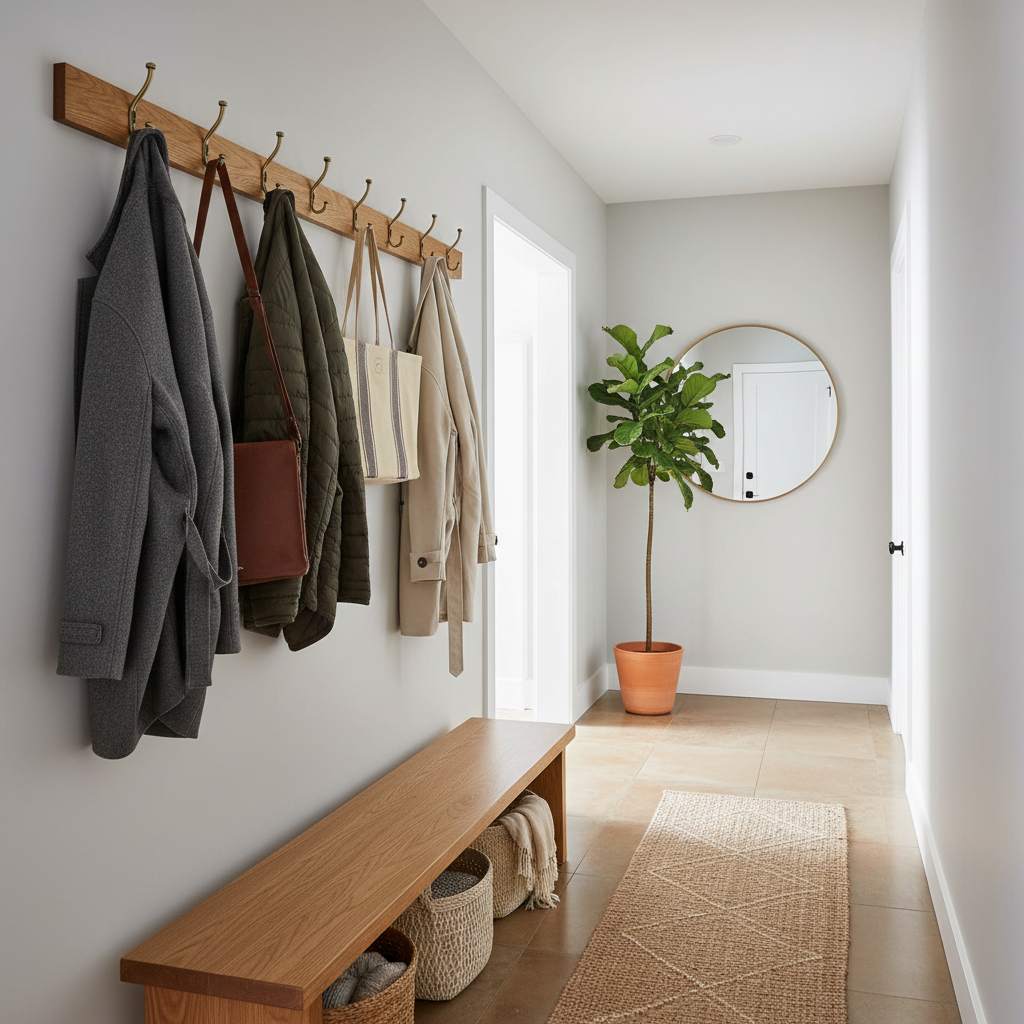
What makes a wooden coat rack “best” for an entryway?
The “best” rack is the one that holds weight, stays stable, and fits your daily flow. Looks matter, but in most homes the rack fails for three predictable reasons: it tips, it pulls out of the wall, or the hooks end up too crowded to use.
- Stability: Freestanding racks need a wide base and balanced load, wall-mounted racks need proper anchoring.
- Hook spacing: If hooks sit too close, coats overlap and fall off, especially bulkier winter layers.
- Wood build quality: Hardwood (oak, maple, walnut) usually dents less than softer woods, but good joinery matters as much as species.
- Finish: A sealed finish handles wet jackets better and wipes clean faster than raw or lightly oiled surfaces.
- Right height: Adult-friendly heights differ from kid-friendly heights; some families need both.
According to the U.S. Consumer Product Safety Commission (CPSC), tip-over incidents can be a serious household hazard, so if you have kids or pets, stability and anchoring deserve more attention than trendier shapes.
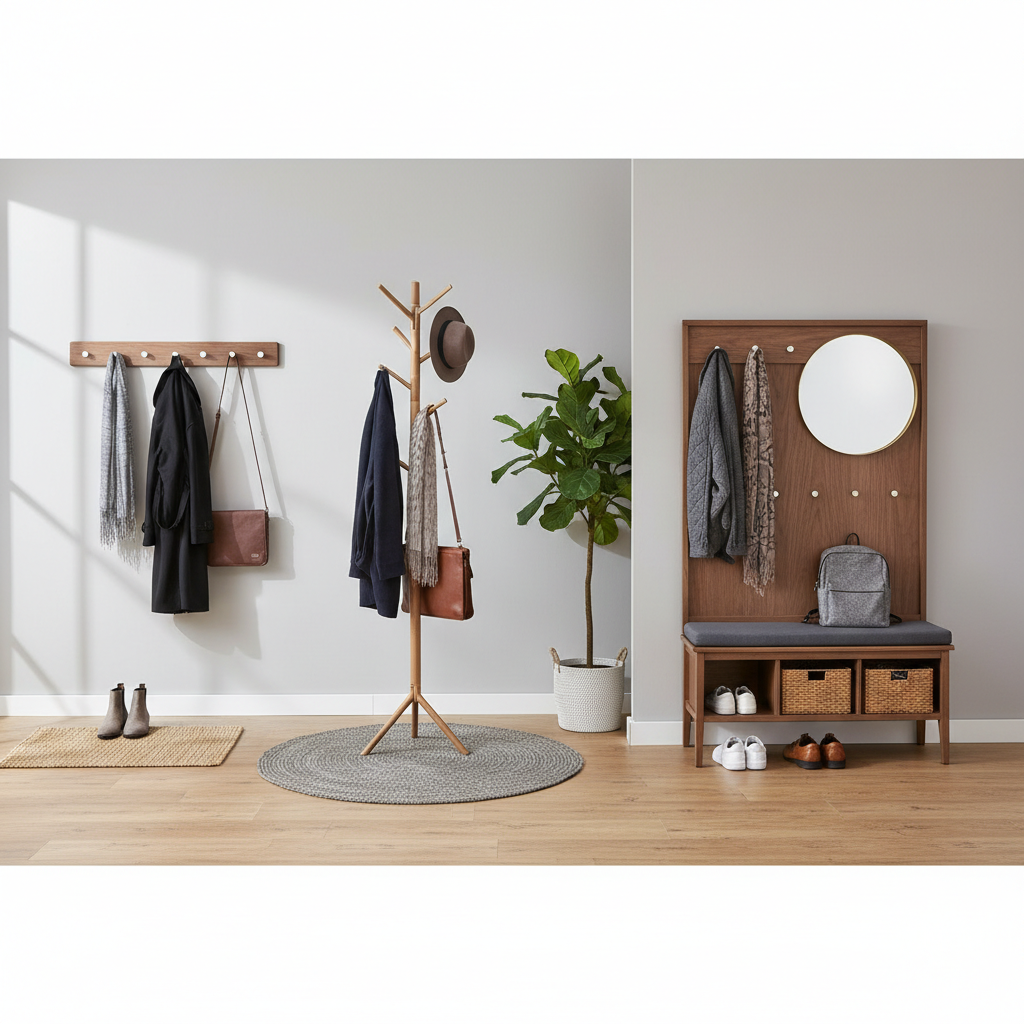
Types of wooden coat racks (and who each one fits)
Most shoppers default to “tree style” racks, but entryways vary a lot. Pick the category that matches your walls, your traffic, and your storage expectations.
Wall-mounted wooden coat racks
Best when floor space is tight or when you want the cleanest traffic path. In many cases, this is the safest pick because it can be secured into studs.
- Good for: narrow hallways, apartments, households with heavy winter coats
- Watch out for: weak anchors in drywall, hook placement too high for kids
Freestanding “tree” racks
Flexible and easy to move, but more likely to wobble if people hang backpacks on one side. If you go this route, choose a heavier base and avoid ultra-tall, skinny designs.
- Good for: renters who can’t drill, open entry areas
- Watch out for: tipping, spinning, overloaded top hooks
Hall tree / coat rack with bench and shoe storage
More furniture than “rack,” and often the most practical for families. You get a landing zone for shoes and a spot to sit.
- Good for: kids, muddy seasons, people who want one organized station
- Watch out for: depth that blocks a hallway, complicated assembly quality
Quick sizing guide: measure once, avoid regrets
Before you shop, measure the space like you’re planning a walkway, not a display. Hallways punish bulky furniture.
- Walkway clearance: Many entryways feel comfortable with roughly 30–36 inches of clear walking path, but your home layout may need more.
- Hook height: Adults often like hooks around shoulder to eye level; if kids use it daily, add lower hooks or a second rail.
- Depth: Coats can stick out more than you expect; in a tight hallway, shallow wall racks reduce snags.
- Door swing: Check the door arc so coats don’t get smashed behind the door.
If you’re choosing a hall tree, tape the footprint on the floor with painter’s tape for a day. It’s a quick reality check, and it saves you from “it looked smaller online.”
Best wooden coat racks entryway: a practical comparison table
Use this to decide what to prioritize. It’s less about “top 10 lists,” more about matching constraints to the right build.
| Type | Best for | Main trade-off | What to look for |
|---|---|---|---|
| Wall-mounted rack | Tight hallways, heavy coats | Requires drilling | Mounting plate, studs/quality anchors, solid hooks |
| Freestanding coat tree | Renters, flexible layouts | Can tip or wobble | Wide weighted base, low center of gravity, fewer but stronger hooks |
| Hall tree with bench | Families, shoe management | Takes more depth | Sturdy bench rating, anti-tip option, integrated cubbies |
| Floating peg rail | Minimalist look, light loads | Limited capacity | Hardwood rail, removable pegs, sealed finish |
Self-check: which rack should you buy?
If you answer these quickly, the “best wooden rack” becomes obvious.
- Do you hang backpacks or tote bags daily? If yes, favor wall-mounted into studs or a hall tree, not a light coat tree.
- Is your entryway a hallway? If yes, avoid deep benches unless you’ve measured clearance.
- Do you rent? If yes, consider a freestanding rack or confirm your lease allows wall mounting with patching later.
- Do kids use it? If yes, plan for lower hooks or a second row, otherwise coats end up on the floor anyway.
- Do wet coats land here? If yes, choose sealed wood and leave space between hooks for airflow.
One more honest question: are you trying to store coats for guests, or for everyone living there? Those are different capacity needs, and it changes what “best wooden coat racks entryway” means for you.
Installation and setup tips that make the rack feel sturdier
A good rack can still feel cheap if it’s installed poorly. This is where most frustration comes from.
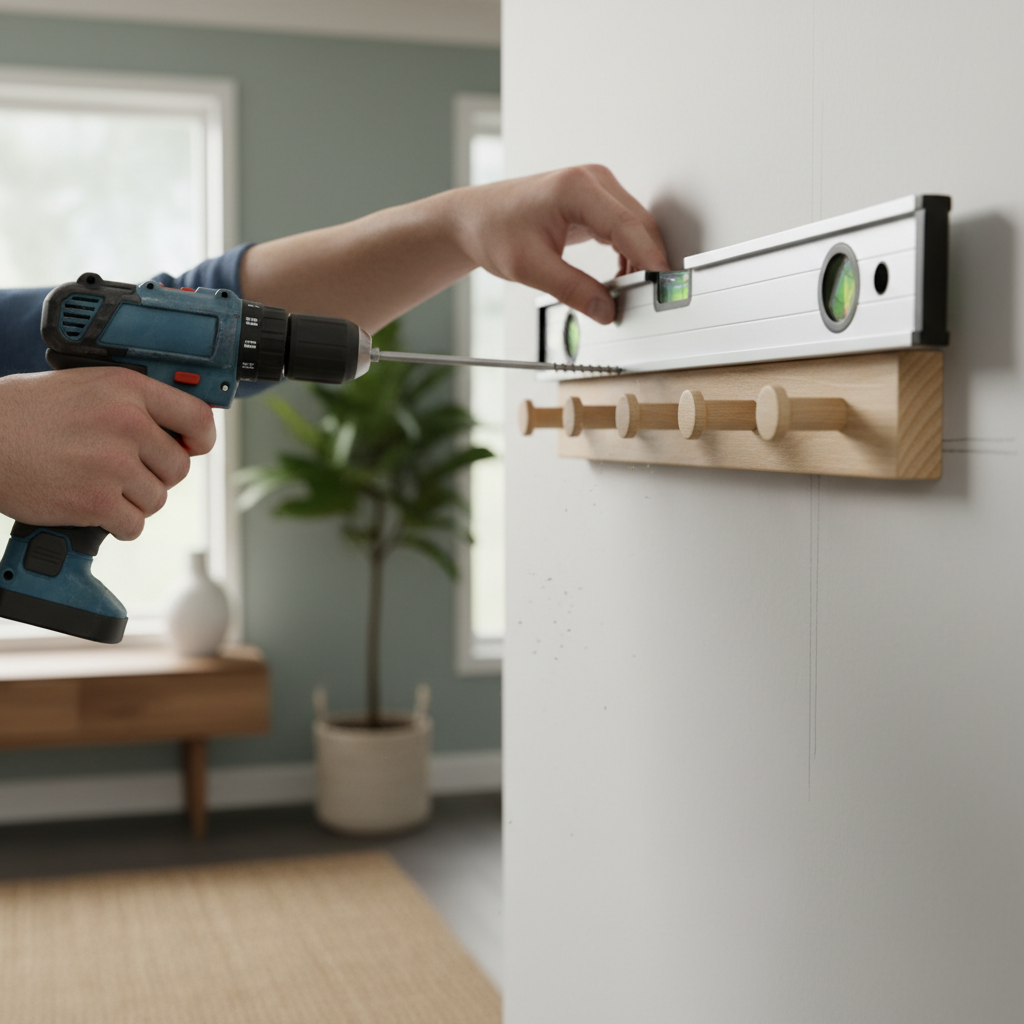
Wall-mounted racks: don’t gamble on drywall
- Find studs where possible, especially for heavy coats and bags.
- If studs don’t line up, use high-quality wall anchors rated for your load, and follow the anchor maker’s instructions.
- Place frequently used hooks at the most reachable height, and keep “occasion hooks” higher.
Freestanding racks: load them like a grown-up
- Keep the heaviest items lower if your design allows it.
- Spread weight around the rack, not all on one side.
- If the base includes felt pads, make sure they’re even, uneven pads create wobble.
Mistakes to avoid (they waste money fast)
- Buying for looks, ignoring hook count: A beautiful rack with four tiny hooks won’t survive a family of four.
- Overestimating “solid wood” claims: Some racks mix wood and engineered panels; that can be fine, but check how hooks are fastened.
- Placing hooks too close to corners: Coats rub walls, get scuffed, and feel cramped.
- Skipping anti-tip thinking: Freestanding racks can become climbing temptations for kids; if you have safety concerns, consider anchoring options or switching types.
- Ignoring seasonal swaps: Many households need “winter mode” and “summer mode.” A rack that barely works in summer can fail in winter.
According to the American Academy of Pediatrics (AAP), anchoring furniture helps reduce tip-over risks. If you’re unsure what’s appropriate for your wall type and household, a local handyman can usually advise on mounting and hardware.
Conclusion: choosing the right rack without overthinking it
The best wooden coat racks entryway pick is the one that matches your space constraints and your heaviest, most annoying daily items, not the one with the most hooks on paper. If your hallway is tight, wall-mounted often wins; if shoes are part of the mess, a hall tree can change the whole routine.
Action steps: measure your clearance today, then decide whether you want a wall-mounted rack (stability) or a hall tree (capacity). After that, shop with hook spacing and mounting quality at the top of your list.
FAQ
What is the best height to mount a wooden coat rack in an entryway?
Many people mount it around shoulder to eye height for adults, but if kids use it daily, adding a lower row often works better than forcing everyone to reach.
Are freestanding wooden coat racks safe around kids and pets?
They can be, but stability varies a lot. If your household has climbing-age kids or energetic pets, a wall-mounted rack or a hall tree that can be secured may be a safer direction.
How many hooks do I need for a small family entryway?
A rough starting point is one hook per person plus a couple extra for bags or guests, but bulky winter coats need more spacing, not just more hooks.
Is hardwood always better than softwood for coat racks?
Hardwood usually resists dents and screw pull-out better, but a well-built rack in a softer wood can still hold up if the joinery and mounting hardware are solid.
Can I mount a wooden coat rack on drywall without studs?
Sometimes, yes, if you use anchors rated for the load and your wall condition is good. For heavy coats and backpacks, many homeowners prefer hitting studs or getting help choosing the right hardware.
What finish is best for an entryway coat rack that gets wet coats?
A sealed finish tends to wipe clean more easily and helps with moisture exposure. If you prefer an oil finish, you may need occasional re-oiling to keep it looking even.
Should I buy a coat rack with a shelf above it?
If you actually use the shelf for hats, mail, or baskets, it can be great. If your entryway is narrow, that extra depth can feel visually heavy, so measuring matters.
If you’re trying to pick a rack quickly, start with your constraints: hallway width, wall type, and whether backpacks live here. If you need a more “set it and forget it” setup, a wall-mounted wooden rack installed into studs is often the simplest long-term solution.