
Best memory foam mattress toppers can make an old mattress feel noticeably more comfortable, but only if you match the topper to the problem you’re trying to solve.
If you’re waking up with shoulder or hip pressure, feeling “stuck” in bed, or overheating at night, a topper can be a smart middle step before buying a whole new mattress. The catch is that memory foam varies a lot by thickness, firmness, and temperature performance, and those details matter more than most listings admit.
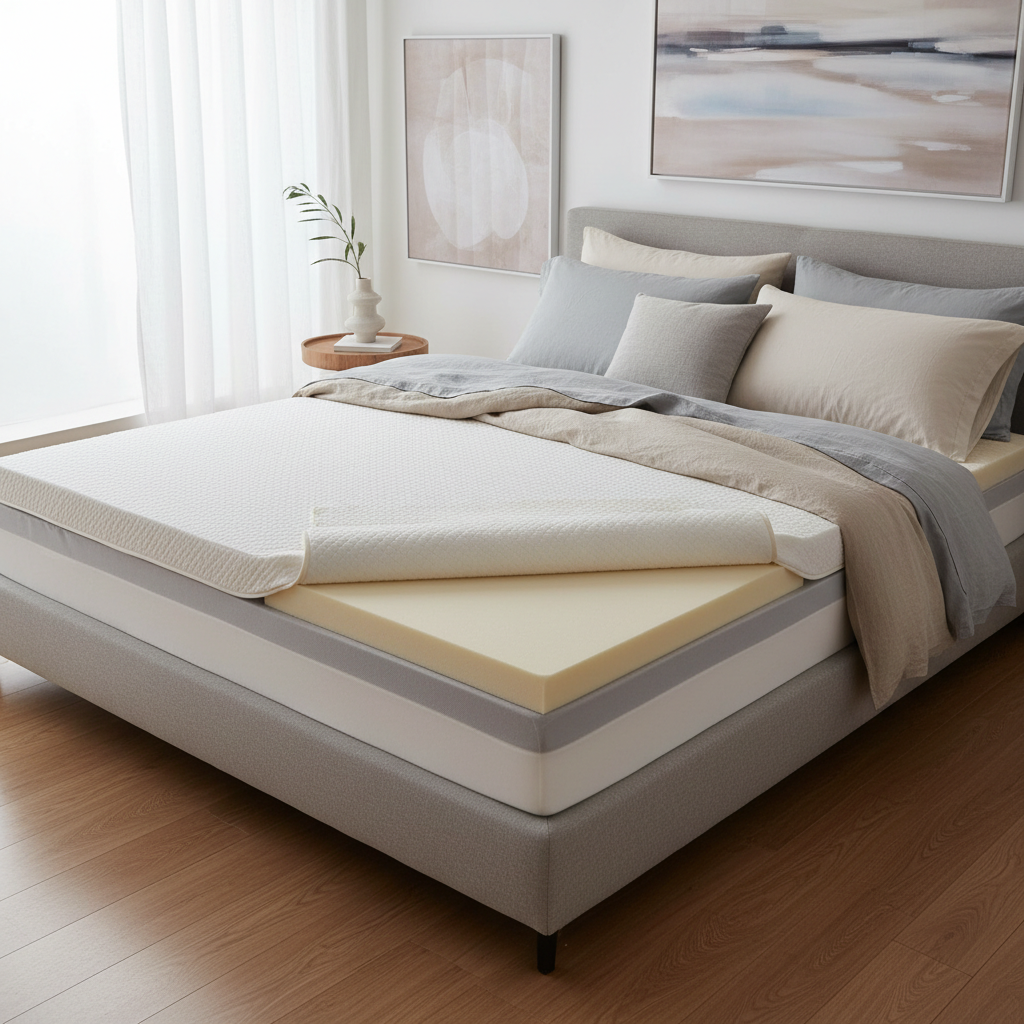
This guide narrows it down in a practical way: what to buy for pressure relief vs. cooling vs. back support, how to judge your current mattress, and what “gel,” “density,” and “ILD” really mean in plain English.
Quick take: what “best” usually means for memory foam toppers
There isn’t one universal winner, because a topper is really a “comfort layer.” What counts as “best” tends to be the topper that fixes your specific sleep complaint without creating a new one.
- Pressure relief: softer feel, better contouring, often 2–3 inches thick
- Back support: medium feel, usually 2 inches, relies on the mattress beneath
- Cooling: more breathable foam + cover, not just “gel” marketing
- Motion dampening: most memory foam helps, thicker usually isolates more
Key point: if your mattress is already sagging or has a deep body impression, a topper can add comfort but rarely “fixes” structural support. In that case, you may still feel misaligned.
How to choose the right topper (without guessing)
The selection gets easier when you decide on thickness and firmness first, then filter by cooling and materials.
Thickness: 1 inch vs 2 inch vs 3 inch
- 1 inch: small comfort boost, good if you already like your mattress but want a touch more softness
- 2 inch: the most versatile choice, balances contour and stability for many sleepers
- 3 inch: deeper sink-in feel, often best for sharp pressure points, can feel too “slow” for some
If you’re under about 130 lb, 2 inches often feels plenty. If you’re over about 200 lb or have bony pressure points, 3 inches may be more noticeable, though it can also increase heat retention depending on foam design.
Firmness and ILD: what matters in real life
Some brands list ILD (Indentation Load Deflection), which is a lab measure of firmness. Many don’t, so you’ll rely on “soft/medium/firm” descriptions and reviews.
- Soft: more contour, can reduce pressure, may feel unstable if your mattress is soft already
- Medium: safer pick for mixed positions, usually pairs well with most mattresses
- Firm: can add a bit of “pushback,” but a topper rarely makes a truly soft bed feel firm
In practice, memory foam firmness also changes with temperature. A cooler room often makes foam feel firmer at first, then softer as it warms.
Cooling features: what helps vs what’s mostly hype
“Gel-infused” memory foam can help a little, but it’s not magic. Look for a combination of features.
- Open-cell or ventilated foam: improves airflow through the topper
- Breathable cover: a thick, non-breathable cover can cancel out “cooling” foam
- Phase-change fabric (PCM): can feel cool to the touch, results vary by person
According to the Sleep Foundation... memory foam tends to sleep warmer than more breathable materials, so shoppers who run hot often benefit from airflow features and temperature-regulating bedding.
A simple “which topper should I buy?” table
If you want a fast shortlist, use the table below as a starting point, then adjust one step based on your weight and sleep position.
| What you want to fix | Recommended thickness | Feel to look for | Extra features that help |
|---|---|---|---|
| Shoulder/hip pressure | 2–3 inch | Soft to medium | High-density foam, stretchy cover |
| Back stiffness in the morning | 2 inch | Medium | Even support, not too plush |
| Overheating at night | 2 inch | Medium (less sink) | Ventilation, breathable cover, PCM optional |
| Guest bed upgrade | 2 inch | Medium | Easy straps, washable cover |
| Partner moves wake you up | 2–3 inch | Medium | Denser foam, snug fit |
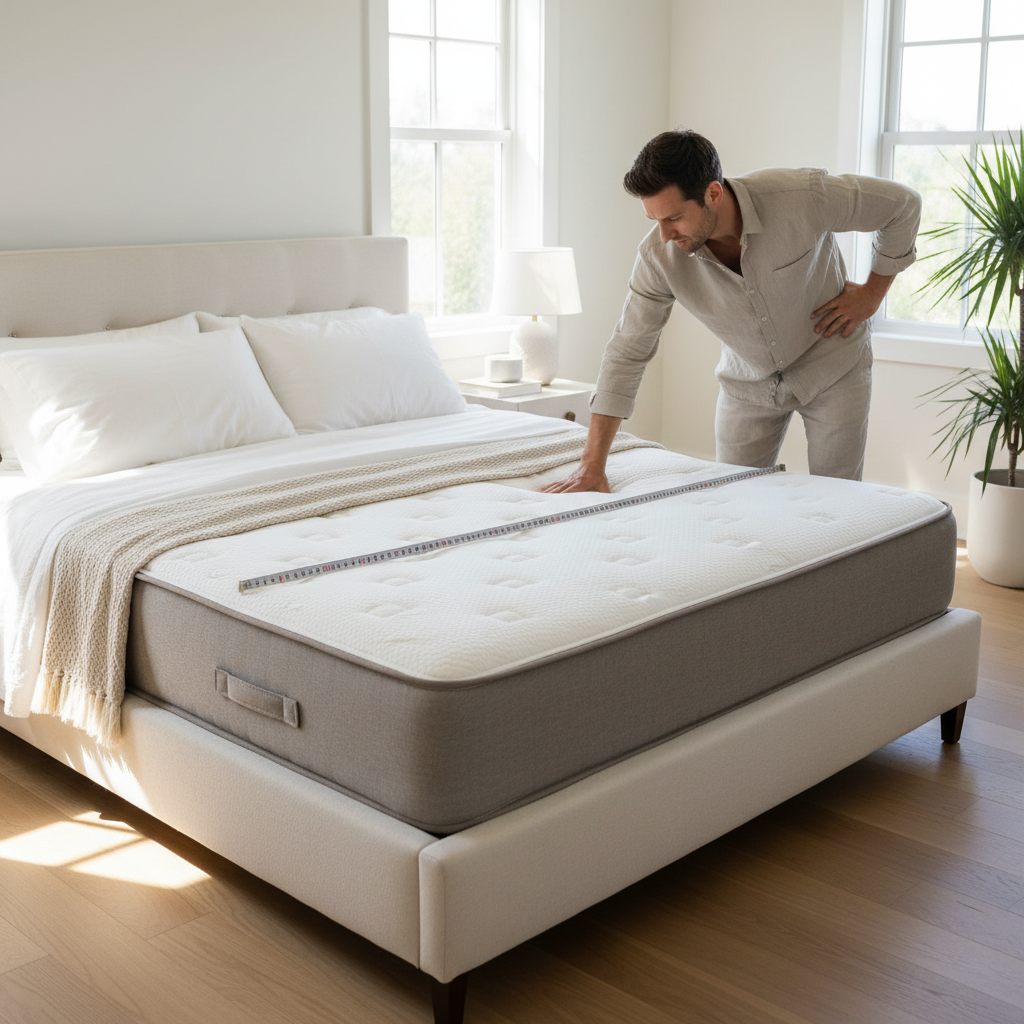
Self-check: are you a good candidate for a memory foam topper?
Before you click “add to cart,” spend two minutes on a reality check. It saves returns.
- Your mattress surface feels too firm, but it’s still supportive and fairly flat
- You feel pressure points in side sleeping, or you toss to find a comfortable spot
- You want less motion transfer without changing the whole mattress
- Your mattress is 3–7 years old and comfort is fading, but there’s no obvious sag
If you can see a visible dip, or you roll toward the center, comfort layers won’t rebuild the base support. That’s when even the best memory foam mattress toppers may disappoint.
Practical buying tips: what to look for on product pages
Product listings can be vague, so you want a few concrete “signals” that a topper is more than a cheap slab of foam.
Specs that are worth paying attention to
- Foam density (lb/ft³): higher density often means better durability and slower response, but can sleep warmer
- Certifications: look for CertiPUR-US for foam standards and emissions testing
- Cover material: stretchy knit helps contouring, removable/washable is a practical win
- Return policy: memory foam feel is personal, generous returns matter
According to CertiPUR-US... certified foam is made without certain harmful chemicals and is tested for low emissions, which can be reassuring if you’re sensitive to odors.
Red flags that usually lead to regret
- Only “gel memory foam” mentioned, but no ventilation, no cover details, no density info
- Very thick topper marketed as a “mattress fix” for sagging support
- Ultra-low price with no meaningful return window
Setup steps that make a topper work better (and last longer)
You can buy a great topper and still hate it if it shifts, bunches, or traps heat because of bedding choices.
- Let it expand: many toppers need time to fully decompress, check the brand’s window
- Use a deep-pocket fitted sheet: tight sheets compress foam and reduce contouring
- Add a grippy layer: a thin non-slip pad under the topper helps on smooth mattress covers
- Protect it: a breathable mattress protector can reduce sweat and oils soaking into foam
If you sleep hot, don’t overlook the basics: lighter comforter, breathable sheets, and room airflow often do more than switching from “gel” to “copper” foam.
Common mistakes when shopping memory foam toppers
These show up again and again, especially in online reviews where people say “this topper is terrible” when it was just the wrong match.
- Going too thick on an already-soft bed: you sink more, alignment can get worse
- Expecting firmness from memory foam: foam can feel supportive, but it’s still a cushioning material
- Ignoring sleep position: side sleepers typically want more pressure relief than stomach sleepers
- Confusing “cool-to-touch” with all-night cooling: initial feel isn’t the same as temperature balance at 3 a.m.
Key takeaway: the “best” topper is the one that matches your mattress condition and your sleep position, not the one with the most buzzwords.
When to consider professional help (or a different solution)
If you regularly wake with numbness, tingling, or sharp pain, it may be worth talking with a healthcare professional. Sleep surfaces can contribute to discomfort, but they aren’t the only factor.
Also consider skipping a topper if your mattress has obvious structural collapse, or if you need a significant change in support. In many households, the more cost-effective move is a new mattress, especially if you’re stacking fixes on top of fixes.
Conclusion: choosing comfort without overbuying
Shopping for best memory foam mattress toppers gets simpler when you pick for your problem: 2 inches and medium feel covers a lot of people, while 3 inches works better when pressure relief is the headline issue and your mattress still supports you.
If you want one concrete next step, do this tonight: check your mattress for sag, decide whether your main complaint is pressure, heat, or support, then shop by thickness first and features second.
FAQ
What thickness is best for memory foam mattress toppers?
For many sleepers, 2 inches is the most flexible choice. If you have strong pressure points or higher body weight, 3 inches can feel more relieving, assuming the mattress underneath is still supportive.
Do best memory foam mattress toppers help back pain?
They can help if your pain is tied to pressure relief or minor comfort issues, but they usually can’t correct a mattress that sags or throws off alignment. Persistent or severe pain is a good reason to consult a professional.
Will a memory foam topper make my bed hotter?
It might, especially with thicker foam and non-breathable bedding. Ventilated foam, a breathable cover, and lighter sheets often reduce heat buildup, but results vary by person and room temperature.
Is gel memory foam actually cooling?
Gel can reduce heat retention in some designs, but it’s not a guarantee. Look for airflow features and cover construction, because those often matter as much as the infusion.
How long do memory foam toppers typically last?
It depends on foam density, thickness, and use. Higher-density foam often holds up better, while very soft, low-density toppers may show wear sooner, especially under heavier sleepers.
Can I put a memory foam topper on any mattress?
Usually yes, but it performs best on a flat, supportive surface. On a very soft or sagging mattress, the topper may follow the dip, which can keep your spine from staying neutral.
Should I use a mattress protector over a topper?
In many cases, yes, because it helps with sweat, spills, and hygiene. If cooling is a priority, choose a protector marketed as breathable and avoid thick, plasticky films.
How do I stop a topper from sliding?
A fitted sheet with enough depth helps, and a thin non-slip mat underneath is often the simplest fix. Some toppers include straps, but they don’t fit every mattress style equally well.
If you’re trying to choose between two or three toppers and the descriptions all sound the same, it can help to narrow by your sleep position, room temperature, and whether your mattress is still structurally sound, that’s usually where the “right” option becomes obvious.