
Small space home gym with resistance bands setups work best when storage is part of the training plan, not an afterthought. If your bands live in a tangled pile, you waste time, skip sessions, or end up buying duplicates because you “can’t find the right one.”
The good news is you don’t need a spare room or a fancy rack. With a few choices about where you anchor, where you store, and how you reset the space after each workout, bands become the easiest tool to use consistently in an apartment, small bedroom, or shared living area.
This guide covers practical layouts, storage options that don’t look like a garage, and a simple routine flow. You’ll also get a quick self-check to match solutions to your space, because what works in a studio often feels wrong in a kid-filled living room.
Why small spaces get messy fast (and why bands are usually the culprit)
Bands are lightweight, flexible, and easy to stash, which sounds like a win until you realize they also slide, curl, and snag on everything. Most clutter comes from a few predictable patterns.
- No “home” for each band: if every band goes into one bin, they knot up and you stop sorting.
- Anchors stored far from where you train: door anchors, handles, and loops end up in different drawers, so setup feels like a scavenger hunt.
- Workout zone overlaps with daily life: living-room workouts mean you constantly pack up, and loose bands disappear under furniture.
- Too many similar bands: when resistance levels aren’t labeled, you waste time testing tension.
In many homes, the fix isn’t “more storage,” it’s less friction: keep the band you need visible, keep accessories together, and reduce the number of steps between “I have 15 minutes” and “I’m training.”
Quick self-check: what kind of small-space gym are you building?
Before you buy organizers, decide which scenario matches your reality. Your best storage method depends on whether the gym can stay out or must disappear.
- Always-out corner: you can keep hooks or a small rack visible, fastest setup time.
- Pack-away setup: everything must fit in a bin, backpack, or ottoman, clean look matters.
- Shared space: storage needs to look “normal,” and you’ll want soft-sided containers and covered solutions.
- Traveling between rooms: you train where it’s quiet, storage should be portable and labeled.
Also ask one safety question: do you have a reliable anchor point, or will you rely on door anchoring? If you’re unsure about load limits, it’s worth being conservative and, when needed, consulting a qualified professional.
Storage options that actually work (and when to use each)
For a small space home gym with resistance bands, storage should do two jobs: prevent tangles and make selection obvious. Here are the most reliable approaches.
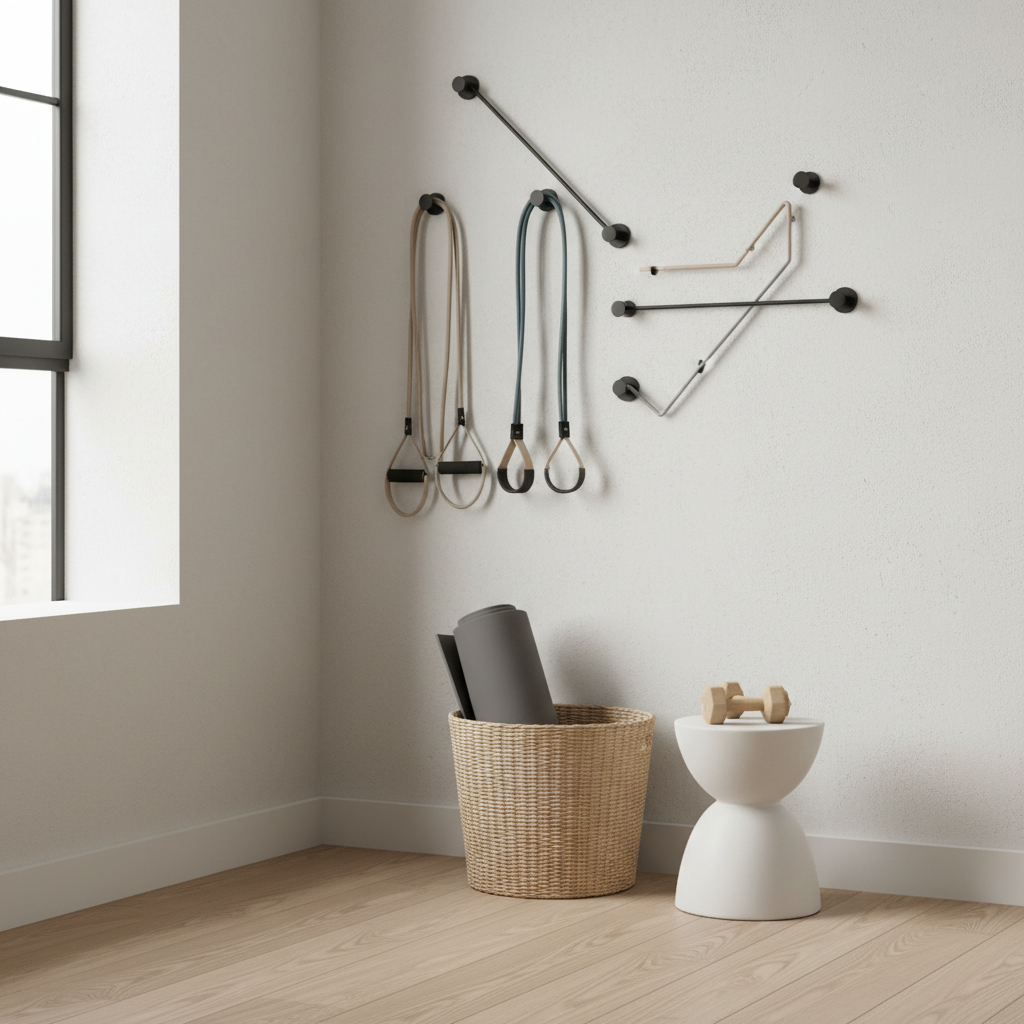
1) Wall hooks + labeled loops (best for always-out corners)
Use a short row of hooks and hang bands individually. Add small tags (or color-coded zip ties) so you can grab the right resistance without testing it mid-session.
- Pros: fastest setup, easiest to keep untangled
- Watch-outs: needs a “gym corner” that can stay visible
2) Over-the-door organizer (best for rentals)
A pocket organizer turns dead door space into storage. Put bands in separate pockets, keep handles and anchors in a dedicated pocket, and you’re done.
- Pros: no drilling, compact, looks tidy when the door is closed
- Watch-outs: don’t overload the door, and keep items from swinging
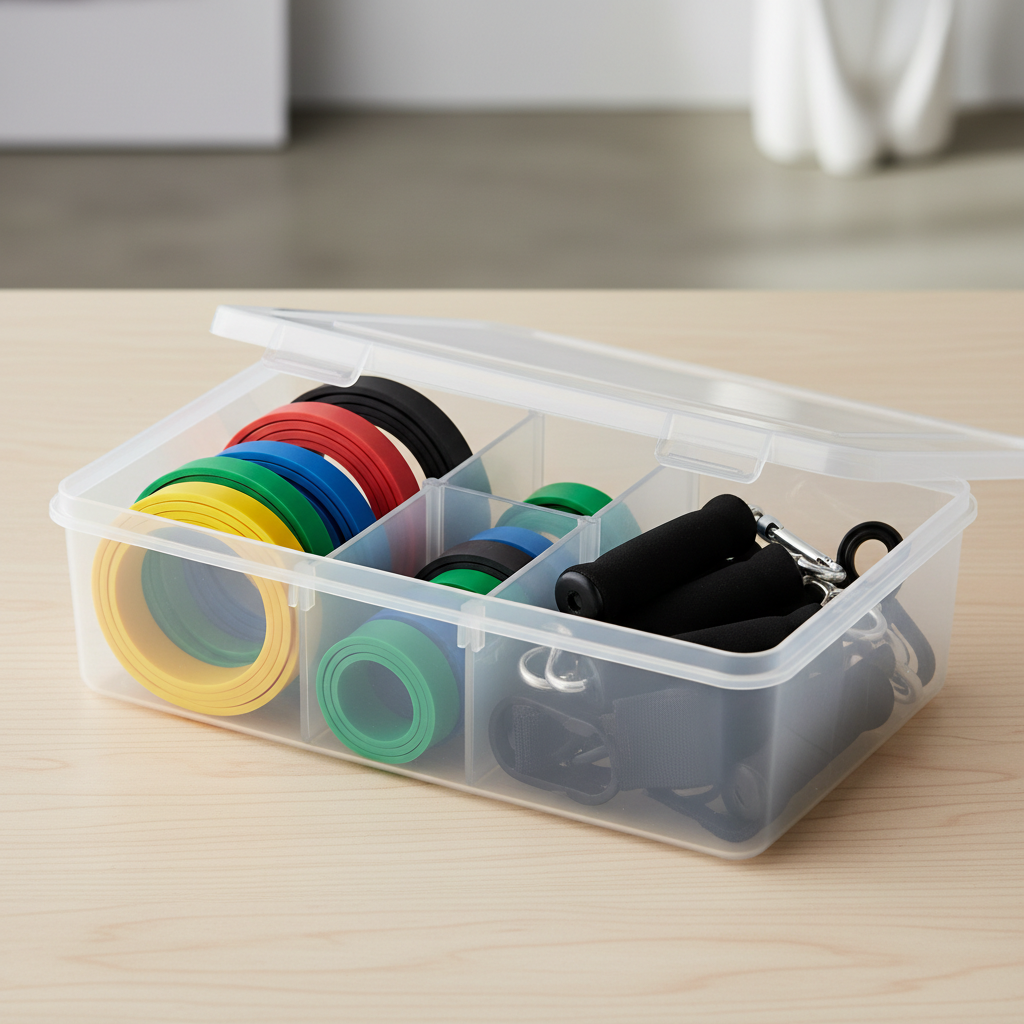
3) Clear lidded bin with dividers (best for pack-away)
A bin works if you add structure. Dividers or small pouches stop “band spaghetti.” The lid matters because it signals the space is reset.
- Pros: quick to stash, works under bed or in a closet
- Watch-outs: without dividers you’re back to tangles
4) Drawer tray + band “wrap” method (best for minimalist setups)
If you already own a drawer unit, roll each band into a loose loop and secure with a simple band wrap or Velcro tie. Store flat in a tray so you can see everything at a glance.
- Pros: hidden storage, easy to maintain
- Watch-outs: requires consistent reset habits
A simple layout: where the gym goes in a studio or small room
Layout is mostly about reducing decisions. Pick one spot for training, one spot for storage, and make them adjacent. When they’re separated, workouts start feeling “bigger” than they are.
Try this compact blueprint:
- Workout footprint: one yoga mat space, plus one step backward for band tension.
- Storage zone: within arm’s reach of the mat, not across the room.
- Anchor point: door anchor or sturdy fixed point you can inspect quickly.
- Accessory cup: one container for handles, ankle straps, and carabiners.
Door anchors and safety: practical rules (no drama, just smart)
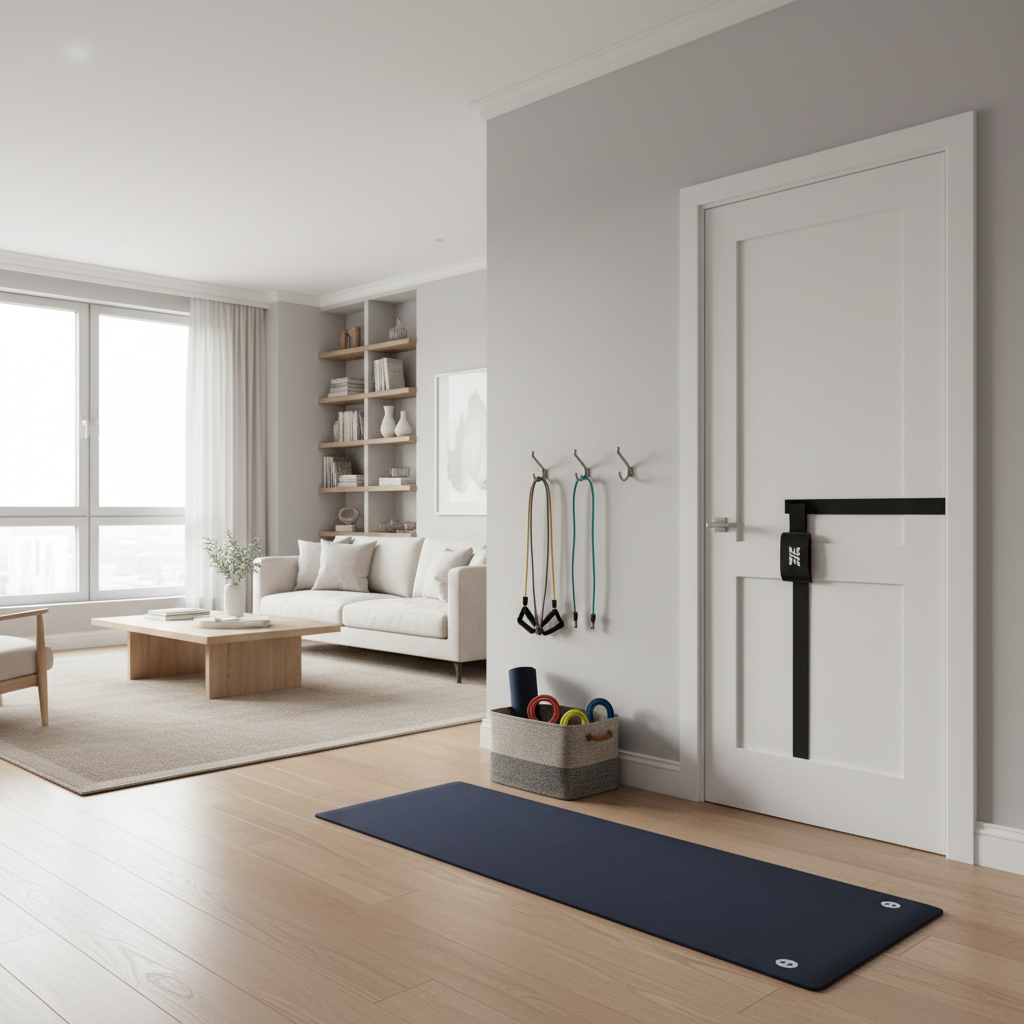
Door anchoring is common in the U.S. because it’s cheap and renter-friendly, but it deserves respect. Bands store small, yet they can create a lot of tension, and accidents usually happen during setup.
Basic safety habits that reduce risk in many situations:
- Check the door direction so it closes against the pull, not toward you.
- Test the anchor with a gentle pull before starting a set.
- Keep bands away from sharp edges, rough door gaps, and pet claws.
- Retire bands that show cracks, thinning, or sticky spots.
According to the American Council on Exercise (ACE), proper technique and controlled movement matter for resistance training safety. If you have a prior injury, pain that feels sharp, or uncertainty about an anchor point, it’s reasonable to consult a qualified fitness professional.
What to store together (and what to separate)
People often store bands by “type,” but for consistency, store by “use.” Put the items you grab in the same sequence in one place, and separate the items that cause tangles.
- Store together: door anchor, handles, ankle straps, and a small towel or wipe.
- Store separately: long tube bands vs loop bands, and latex bands vs fabric bands.
- Keep visible: your most-used 2–3 resistance levels.
If your small space home gym with resistance bands includes multiple strengths, labeling becomes non-negotiable. A simple label prevents guesswork and keeps workouts moving, especially when you train on a timer.
Setup-to-reset workflow: make it easy to stick with
The real magic is a 2-minute “open and close” routine. When you finish a set and everything goes back to the same place, the next session starts with zero mental load.
A repeatable 5-step flow
- Open: mat down, anchor set, pick today’s bands.
- Train: keep unused bands off the floor to avoid stepping on them.
- Wipe: quick wipe if you sweat, especially on handles.
- Wrap: loop bands neatly, secure with a tie.
- Reset: return each band to its labeled spot, close bin or door pockets.
This is also where you avoid buying more gear. When storage is reliable, you know what you own, and your setup feels intentional instead of improvised.
Recommended storage setups by budget (table)
Below is a practical comparison. Prices vary by brand and retailer, so treat ranges as rough planning guidance.
| Setup | Best for | What you need | Why it works |
|---|---|---|---|
| Wall hooks + labels | Always-out corner | 3–6 hooks, label tags, small accessory cup | Fast selection, prevents tangles |
| Over-door pockets | Renters, hidden storage | Over-door organizer, small pouches | Uses vertical space, stays tidy |
| Clear bin + dividers | Pack-away lifestyle | Lidded bin, 3–6 dividers or zip pouches | Quick reset, easy to move rooms |
| Drawer tray system | Minimalist look | Drawer unit, tray inserts, Velcro ties | Hidden, organized, low visual clutter |
Key takeaways (so you can act today)
- Storage is training infrastructure: if it’s annoying, you won’t use it.
- Prevent tangles by default: separate bands, label resistance, and avoid one “everything bin.”
- Keep anchor + accessories together: reduce setup steps to keep workouts realistic.
- Build a reset habit: two minutes after training protects your next session.
Conclusion: a small gym that stays ready beats a big gym you avoid
A small space home gym with resistance bands can feel surprisingly complete when the storage matches how you actually live. Pick one storage method that fits your space rules, label your most-used options, and commit to the quick reset after each workout.
If you want one action to start, choose your storage zone tonight, even if it’s just a single bin with dividers. Tomorrow’s workout will feel easier, and that’s usually what keeps people consistent.
FAQ
How do I keep resistance bands from tangling in a small apartment?
Don’t store them as one loose pile. Use hooks, pockets, or dividers so each band has its own spot, and add a simple wrap or Velcro tie to keep loops from twisting.
Is an over-the-door organizer strong enough for bands and accessories?
For most band sets, it’s usually fine if you keep heavier items minimal and distribute weight across pockets. Avoid overloading with dumbbells or bulky equipment, and make sure it hangs securely.
What’s the safest way to use a door anchor in a small space?
Close the door so it resists the pull direction, test tension gently before your first set, and keep the band away from sharp edges. If the door feels flimsy or the gap is rough, use a different anchor method.
How many bands should I keep for a minimalist home gym?
Many people do well with 3–5 resistance levels they actually use, plus one or two specialty pieces like a mini loop for glutes. If you routinely skip certain bands, store them out of the prime zone or consider trimming the set.
Should I store latex bands differently than fabric bands?
It often helps. Latex can stick or degrade faster with heat and sunlight, so keep it out of direct sun and away from rough surfaces. Fabric bands handle storage a bit more easily but still benefit from a dedicated pouch or pocket.
What if my space is shared and I can’t leave gear visible?
Go for a lidded bin, an ottoman with storage, or a drawer tray system. The key is a “one-grab” setup where your anchor, handles, and 2–3 go-to bands live together.
Can resistance bands replace weights in a tiny home gym?
They can cover a lot of strength work, especially when you control tempo and use consistent progression. If you have specific strength goals or joint concerns, a coach or physical therapist can help tailor exercises and resistance choices.
If you’re trying to keep workouts consistent without turning your living room into a permanent gym, build your storage around your habits, not a perfect Pinterest setup. A compact system you’ll reset every time is usually the one you’ll still be using three months from now.