
How to remove grease stains from kitchen walls comes down to two things: matching the cleaner to your wall finish, and not scrubbing so hard that you trade a stain for damaged paint.
Grease is tricky because it isn’t just “dirt” sitting on top, it’s oily residue that can spread when you add too much water, and it can bond to flat paint and textured drywall in a way that makes quick wipes disappointing.
This guide breaks down what works for common U.S. kitchens, painted walls, tile, backsplash areas, and the “why is it still shiny” spots near the stove. You’ll also get a quick test checklist, a simple product table, and steps you can actually follow without turning the wall patchy.
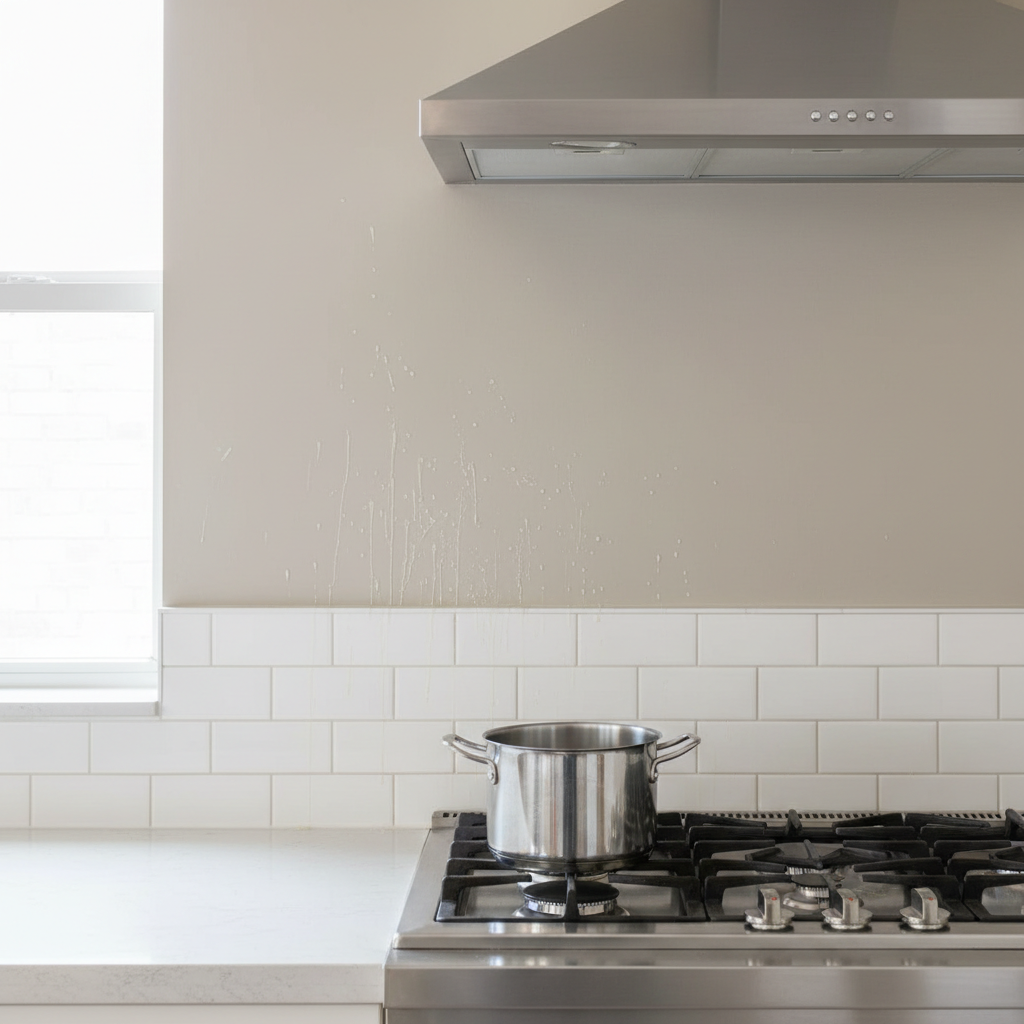
Why grease stains cling (and why some wipes make it worse)
Most cooking grease becomes a thin film, and film behaves differently than a crumb or a coffee drip. If you hit it with a soaking-wet sponge, you can spread the oil, push it into porous paint, and create larger dull or shiny zones.
- Heat + airflow pulls aerosolized oil toward nearby walls, especially around ranges without strong venting.
- Time turns fresh splatter into a sticky layer that catches dust, so it looks darker and feels tacky.
- Wall finish matters: semi-gloss usually releases grease easier than flat or matte paint.
- Wrong chemistry can backfire: harsh abrasives can burnish paint, and strong solvents can soften latex paint.
According to the U.S. Environmental Protection Agency (EPA), it’s smart to minimize indoor chemical exposure by choosing safer products and using good ventilation when cleaning. That matters in kitchens where you’ll keep cooking afterward.
Quick wall check: identify paint vs drywall vs tile before you clean
Before you grab a degreaser, take 60 seconds to figure out what you’re cleaning. This avoids the classic mistake: using the “right” cleaner in the wrong place.
Fast self-check
- Sheen test: does the wall reflect light (semi-gloss/satin) or look chalky (flat/matte)? Flatter paint scuffs easier.
- Texture test: orange-peel or knockdown texture holds grease in tiny valleys, so you need gentler pressure and more dwell time.
- Water spot test: dab a hidden spot with a barely damp cloth. If the paint darkens fast or feels soft, keep moisture minimal.
- Tile/grout: glazed tile is forgiving; grout is not. Treat grout like a porous surface.
If you rent, or you don’t know the paint type, assume it’s standard interior latex and start with the mildest method, you can always step up.
Cleaner options at a glance (what to use, where, and what to avoid)
This isn’t about buying a special “miracle” product. It’s about choosing a cleaner that cuts oil without stripping paint or leaving residue that attracts new grime.
| Surface | Start with | Step-up option | Avoid |
|---|---|---|---|
| Painted wall (satin/semi-gloss) | Warm water + a few drops dish soap | Diluted degreaser, then rinse | Abrasive powders, magic eraser overuse |
| Painted wall (flat/matte) | Lightly damp microfiber + dish soap | Baking soda paste (very gentle) on spot only | Heavy scrubbing, strong solvents |
| Tile backsplash | Dish soap spray, let dwell 3–5 min | Degreaser safe for tile | Acid on natural stone tile |
| Grout | Dish soap + soft brush | Oxygen bleach cleaner (label-guided) | Bleach mixing, wire brushes |
Key point: whatever you use, plan to do a light rinse wipe after. Residue is a big reason grease “comes back” in the same spot.
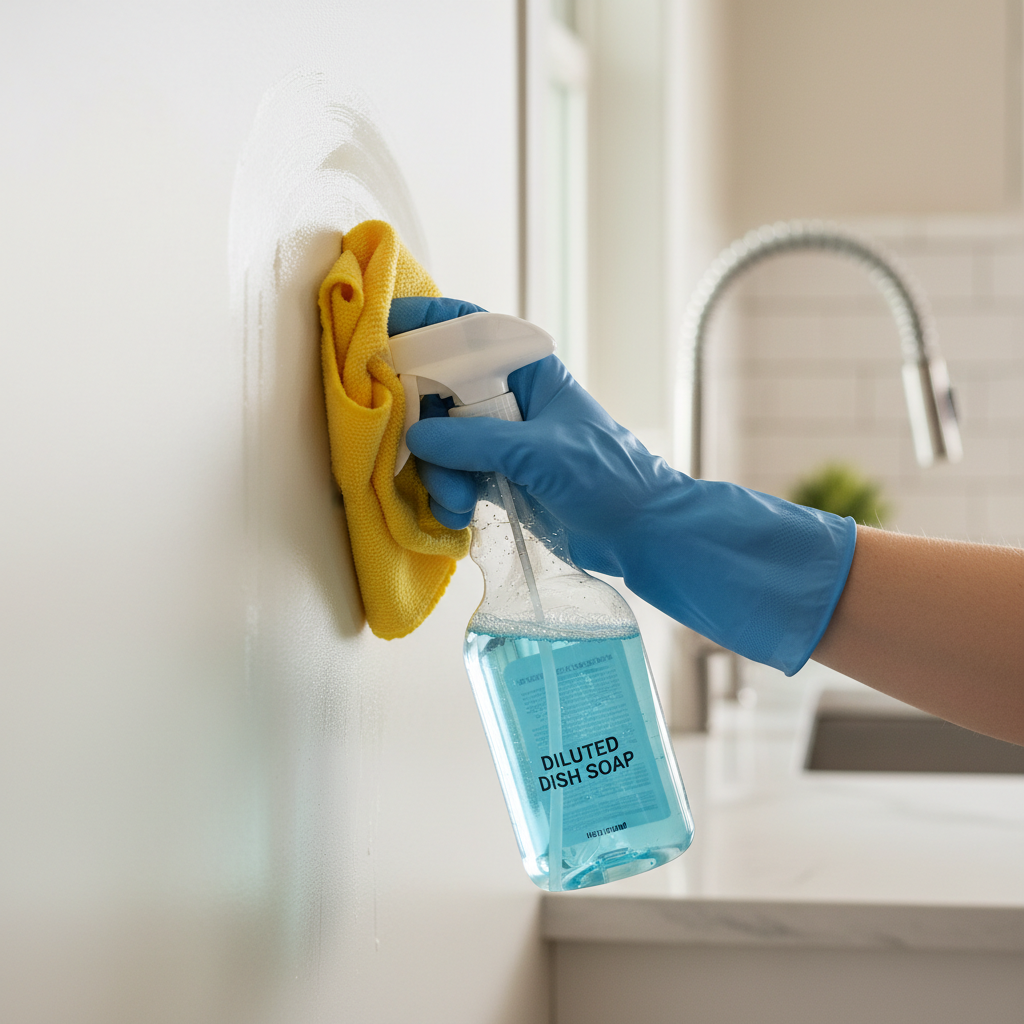
Step-by-step: painted kitchen walls (the safest workflow)
This is the method I’d use in most real kitchens because it balances effectiveness with low risk. It also keeps you from over-wetting drywall, which is where many DIY cleanups go sideways.
1) Dry prep (yes, it matters)
- Dust the area with a dry microfiber cloth so you don’t turn dust into muddy streaks.
- Put a towel on the counter/floor under the wall, especially near outlets.
2) Mix a gentle degreasing wipe
- In a bowl: warm water + a few drops of dish soap.
- Use a microfiber cloth, wring it out hard. You want “damp,” not “dripping.”
3) Clean in small sections
- Wipe with light pressure, top to bottom, 1–2 sq ft at a time.
- If the stain is stubborn, hold the damp soapy cloth against it for 20–30 seconds, then wipe again.
4) Rinse wipe + dry buff
- Wipe once with a separate cloth dampened with clean water.
- Buff dry with a towel to prevent water marks and reduce shine differences.
If you still see a dark halo, don’t panic and don’t immediately scrub harder, that’s usually leftover oil or cleaner residue. Repeat with longer dwell time before escalating.
Stubborn grease near the stove: targeted spot treatment (without repainting)
The area behind burners tends to build a thicker layer, and it can look like “staining” when it’s really aged grease plus dust. Here’s how to step up while staying careful.
Option A: diluted degreaser (best for satin/semi-gloss paint)
- Check the label for painted-wall compatibility and dilution guidance.
- Apply to cloth first, not directly on the wall, so you control spread.
- Wipe, then do a clean-water rinse wipe, then dry.
Option B: baking soda paste (best for small spots, gentle pressure)
- Mix baking soda with a little water to a soft paste.
- Apply a thin layer to the spot, wait about 5 minutes.
- Wipe off with a damp cloth, then rinse wipe and dry.
Reality check: on flat paint, even “successful” cleaning can leave a slightly different sheen because you’ve cleaned one area more thoroughly than the rest. If that happens, cleaning a wider area evenly often looks better than chasing a perfect circle.
Tile and grout: remove grease film without leaving a haze
Tile is easier than paint, but grease can still leave a cloudy look if cleaner dries on the surface.
Tile method
- Spray warm water + dish soap solution, let it sit 3–5 minutes.
- Wipe with a non-scratch sponge or microfiber.
- Rinse wipe with clean water, then dry with a towel.
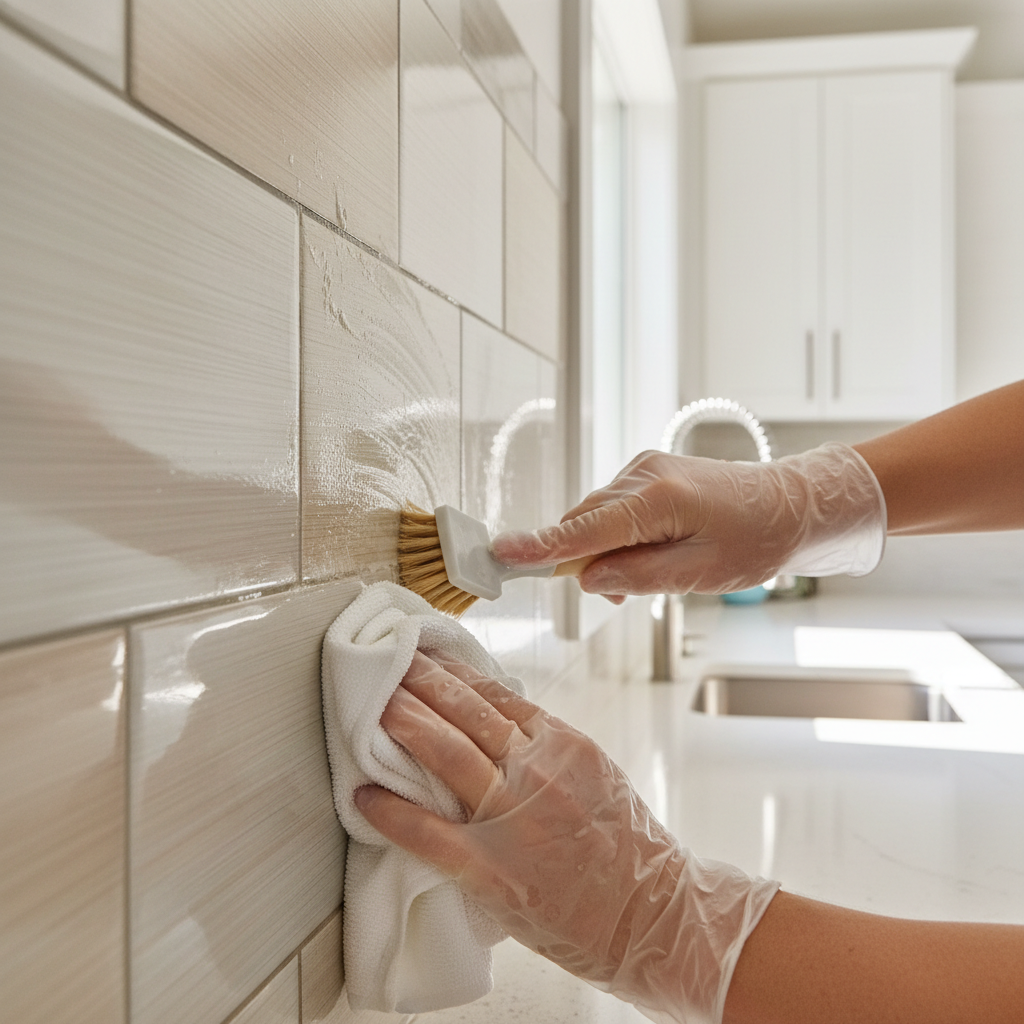
Grout method (go gentle)
- Use a soft brush, think old toothbrush, not stiff grout brush unless needed.
- Work in short passes, then wipe away slurry so it doesn’t re-settle.
- If grease is deeply set, an oxygen bleach cleaner can help, follow label directions and ventilation guidance.
According to the Centers for Disease Control and Prevention (CDC), you should never mix household cleaners such as bleach and ammonia because dangerous fumes can form. If you’re switching products, rinse the surface and your tools first.
Common mistakes that waste time (or damage walls)
- Over-wetting drywall: water can swell paper facing or leave waves, especially near seams.
- Scrubbing with abrasive pads: you may remove the stain and also remove the finish, leaving a shiny patch.
- Skipping the rinse wipe: cleaner residue can attract dust and make the area look dirty again quickly.
- Spraying directly near outlets: better to spray onto the cloth, it’s cleaner and safer.
- Using “stronger” chemicals too early: many kitchens only need dish soap plus patience and a second pass.
When cleaning isn’t enough: staining, paint damage, and next steps
Sometimes you’re not seeing grease anymore, you’re seeing discoloration that seeped into porous paint, or you’re seeing a sheen change from prior scrubbing. If repeated gentle cleaning keeps giving the same result, you may be at the limit of what cleaning can do.
- Persistent yellowing on older walls may need a stain-blocking primer and repaint, especially near frequent frying.
- Peeling or soft paint suggests moisture sensitivity or prior coating issues, stop aggressive cleaning and let it dry fully.
- Mystery finishes like unsealed plaster or specialty paints can react unpredictably, test in an inconspicuous spot.
If you’re dealing with very large areas, recurring buildup from poor ventilation, or you suspect smoke residue rather than cooking oil, talking with a professional cleaner or painter often saves money versus repeated trial-and-error.
Practical routine to prevent grease stains from coming back
Once the wall looks good, the easiest win is reducing how much grease lands there in the first place, and doing short “maintenance” wipes before buildup hardens.
- Run your range hood while cooking and for a few minutes after, if you have one.
- Do a quick weekly wipe in the stove zone with a barely damp soapy microfiber cloth.
- Keep a dedicated cleaning cloth for kitchen walls so you don’t transfer floor grit onto paint.
- Consider a wipeable backsplash panel behind the stove if splatter is constant.
Bottom line: the most reliable way to remove grease is gentle degreasing plus patience, and the most reliable way to keep walls looking even is rinsing and drying, not scrubbing harder.
Key takeaways
- Match the method to the finish, flat paint needs a lighter touch than semi-gloss.
- Use minimal water on drywall, apply cleaner to the cloth rather than spraying the wall.
- Dwell time beats elbow grease, let soap or degreaser work before repeating a pass.
- Always rinse wipe and dry to prevent haze and re-soiling.
- If stains persist, you may be looking at paint discoloration, not removable residue.
FAQ
How do I remove grease stains from kitchen walls without removing paint?
Start with warm water and a few drops of dish soap on a well-wrung microfiber cloth, wipe gently, then rinse wipe and dry. Avoid abrasive pads and heavy pressure, especially on flat paint.
Will vinegar remove grease from painted walls?
Vinegar can help with some residues, but for grease it often underperforms compared with dish soap, and it can still dull certain finishes. If you try it, dilute it, test a hidden spot, and don’t skip the rinse wipe.
Can I use a Magic Eraser on grease marks near the stove?
It can work, but it’s mildly abrasive, so it may leave a shiny or lighter patch, particularly on matte paint. If you use one, go very lightly, keep it small, and stop the moment the mark lifts.
What removes old sticky grease on textured walls?
Textured paint usually needs a gentle cleaner with longer dwell time and multiple light passes. Use dish soap first, then step up to a diluted degreaser applied to the cloth, keeping moisture low so grease doesn’t spread into crevices.
Why does my wall look streaky after I cleaned it?
Streaks often come from cleaner residue, uneven rinsing, or cleaning one spot more intensely than the surrounding area. A wider, even wipe of the whole section with a rinse wipe and a dry buff usually improves the look.
Is it safe to use bleach for kitchen wall grease?
Bleach isn’t a great grease remover and can discolor paint. If you’re addressing mold or sanitation concerns, follow label directions, ventilate well, and don’t mix products. When in doubt, it’s reasonable to consult a professional.
How often should I clean kitchen walls to prevent grease buildup?
In many kitchens, a quick weekly wipe around the stove area prevents the film from turning sticky. If you fry often or your range hood is weak, you may need a light wipe more frequently.
If you’re trying to keep walls clean with less trial-and-error, it helps to build a small “kitchen wall kit” with microfiber cloths, a gentle dish-soap mix, and a paint-safe degreaser for stove-zone touch-ups, it’s a simple setup that makes maintenance feel manageable.