
How to remove sticky residue from glass surfaces comes down to two things most people skip, using the right “type” of remover for the adhesive, and giving it enough dwell time so you’re lifting, not scraping.
If you’ve ever peeled off a label and ended up with that gummy film that smears around, you already know why this matters, it looks bad, attracts dust, and can turn into a streaky mess after you “clean” it.
This guide walks you through a practical decision path, what to try first, when to escalate to stronger options, how to avoid scratches, and what to do when glass has coatings or sits near plastics and paint.
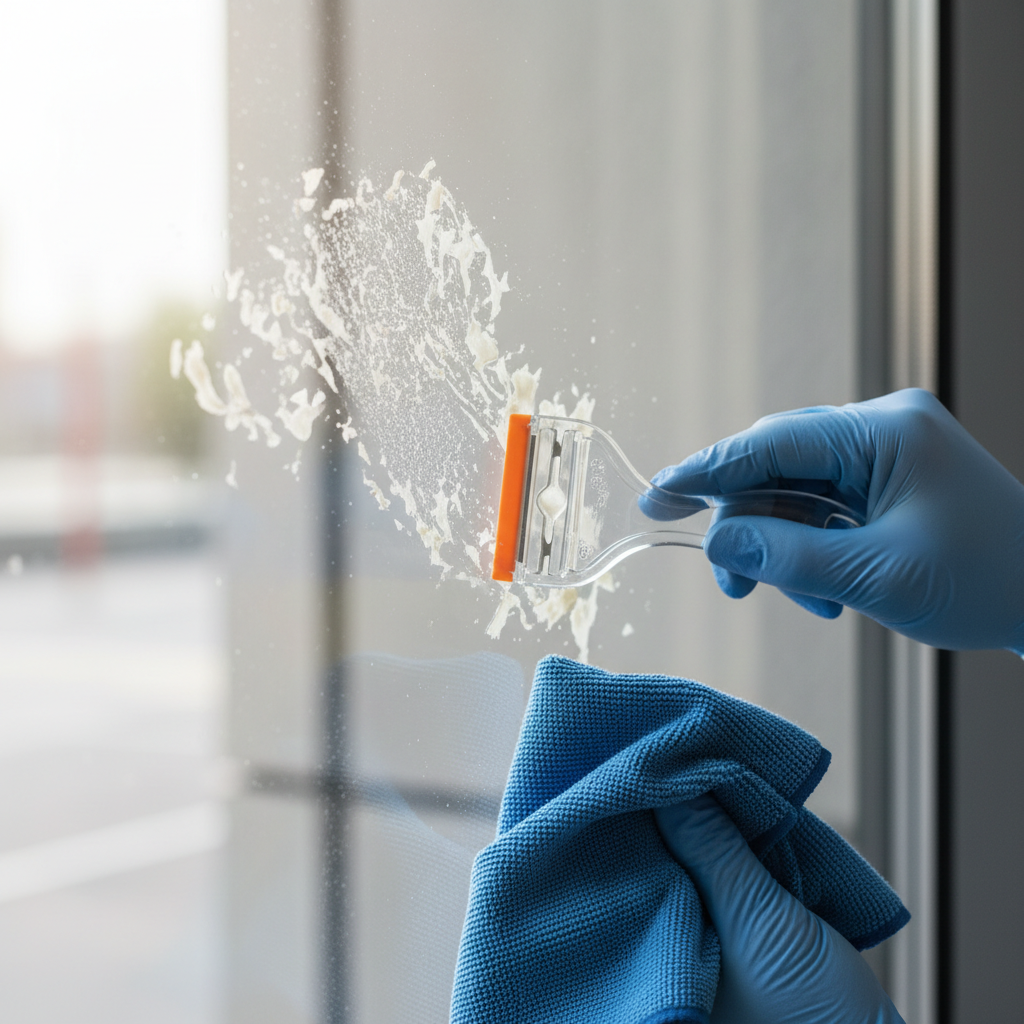
Why sticky residue clings to glass (and why it smears)
Most sticky residue is pressure-sensitive adhesive, designed to stay tacky under light pressure. On glass, it spreads into a thin film that grips tightly, especially after heat, sun exposure, or time.
- Heat and UV can “bake” adhesive, making it tougher and more rubbery.
- Wrong cleaner often makes it worse, some sprays dilute the glue into a smear instead of dissolving it.
- Too much friction with paper towels can leave lint and push adhesive around.
- Mineral deposits from hard water can sit on top of the residue, creating haze even after the stickiness is gone.
In plain terms, if it feels like you’re endlessly smudging, you’re usually using a product that doesn’t match the adhesive, or you’re wiping before the remover has time to work.
Quick self-check: what kind of residue are you dealing with?
You don’t need a lab test, a 20-second check helps you choose the least aggressive method that still works.
- Fresh label glue: slightly tacky, rolls into “boogers” when rubbed with a finger.
- Old baked-on adhesive: dull, amber or gray film, resists rubbing, smears when wet.
- Tape residue (packing tape, masking tape): narrow bands, stretchy, may lift in strips.
- Protective film adhesive (new windows, appliances): wide areas, thin clear glue, easily hazes.
- Unknown gunk: if it feels oily and spreads fast, it may be sap, grease, or silicone, treat cautiously.
Also take a second to look around the glass, is it next to painted trim, tinted film, or plastic? That changes what solvents you should avoid.
Best tools and supplies (what to grab before you start)
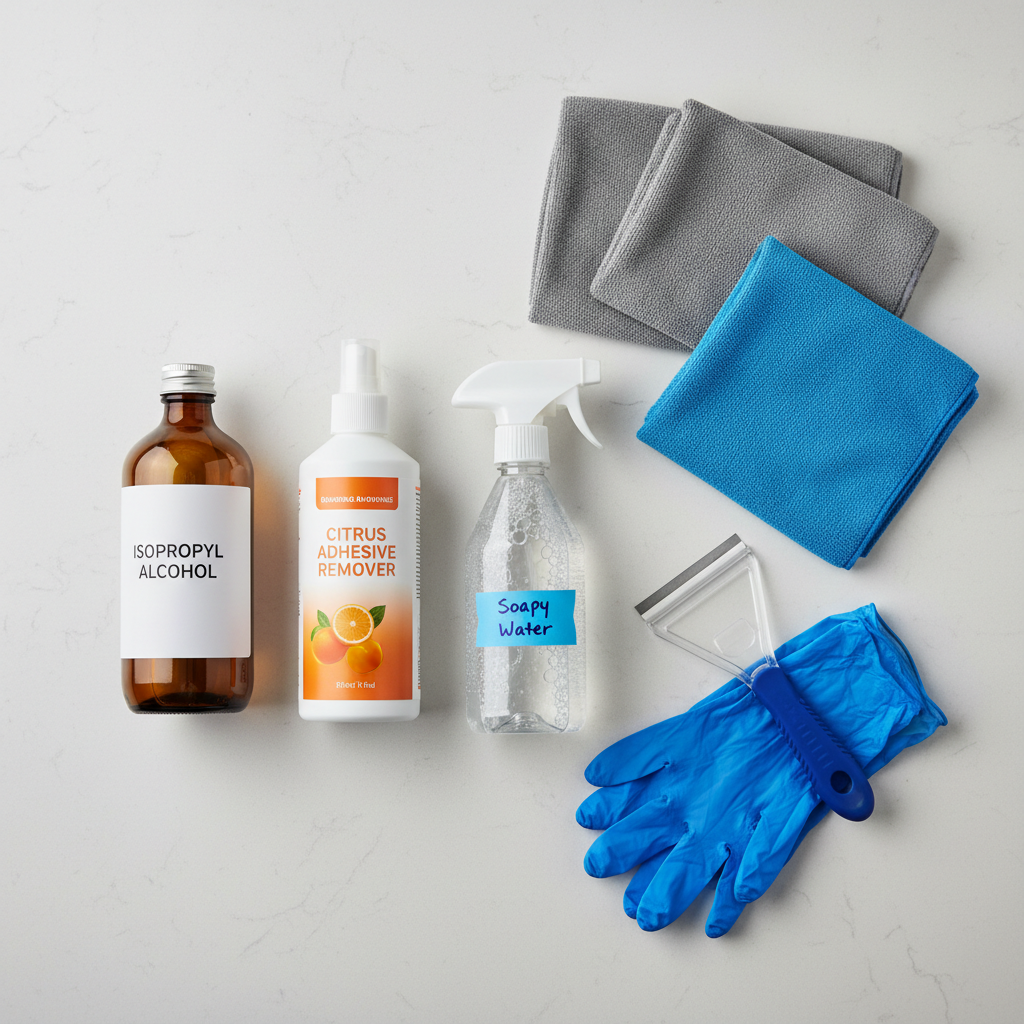
For most homes, you can solve 90% of cases with a simple kit, the goal is to dissolve, lift, then wash away.
- Microfiber cloths (at least 2, one for remover, one for final wipe)
- Plastic scraper or an old gift card (safer than metal for many people)
- Glass-safe cleaner or mild dish soap and warm water
- Isopropyl alcohol (70% or higher)
- Adhesive remover (citrus-based or purpose-made)
- Optional: razor blade scraper for uncoated glass only
Safety note: Many removers are flammable and can irritate skin or eyes. According to OSHA, you should review the product label and safety data information and use ventilation when working with solvents. If you’re unsure, start with milder options and test a small corner first.
Methods that work: choose the least aggressive option first
If you only remember one thing about how to remove sticky residue from glass surfaces, remember this order, soften → dissolve → lift → wash. Skipping the soften step is where most frustration starts.
Method A: Warm soapy water + dwell time (best first step)
For fresh residue or paper label leftovers, soak a cloth in warm soapy water, press it onto the spot for 2–5 minutes, then wipe. You’re trying to soften the top layer so it releases cleanly.
Method B: Isopropyl alcohol (fast and usually safe for plain glass)
Wet a microfiber cloth with isopropyl alcohol and hold it on the residue for 30–60 seconds, then wipe in one direction. Alcohol often breaks down label glue without leaving much oily film.
Method C: Citrus or commercial adhesive remover (for stubborn glue)
Apply a small amount, wait a couple minutes, then use a plastic scraper to lift. Wipe the dissolved adhesive onto a “dirty” cloth, don’t spread it around with your final polishing cloth.
Method D: Razor blade scraper (only when appropriate)
On uncoated glass like many windows and mirrors, a razor scraper can be effective, keep the surface wet with soapy water or cleaner, hold the blade low, and push gently. If the glass has film, tint, or special coatings, avoid blades unless the manufacturer says it’s safe.
Step-by-step: a reliable workflow for streak-free results
This is the repeatable process that prevents the “it’s gone but now it’s hazy” outcome.
- Dry scrape big chunks with a plastic scraper, no chemicals yet, just remove the thick stuff.
- Apply your chosen remover and let it sit, usually 1–5 minutes, follow the label.
- Lift, don’t grind, use the scraper lightly, then wipe residue onto a sacrificial cloth.
- Wash the area with warm water + a drop of dish soap to remove oily remover film.
- Final glass clean with a glass cleaner, then buff with a clean dry microfiber.
Key point: If it keeps smearing, you’re often in a loop where dissolved adhesive stays on the surface, swap to a fresh cloth and wash with soap before the final glass polish.
What to use (and what to avoid): a practical comparison table
Different removers behave differently on glass, especially near frames, tint film, or painted trim. This table is a “start here” guide, not a substitute for reading product labels.
| Option | Works well for | Pros | Watch-outs |
|---|---|---|---|
| Warm soapy water | Fresh labels, paper residue | Low risk, cheap | May not touch baked-on adhesive |
| Isopropyl alcohol | Most label glue, light tape residue | Evaporates clean, less oily | Can affect some plastics nearby, test first |
| Citrus adhesive remover | Stubborn sticky film | Strong dissolving power | Often leaves oily film, needs soap wash |
| Commercial adhesive remover | Old glue, thick residue | Designed for adhesives | Label directions vary, ventilation often recommended |
| Razor scraper (wet use) | Thick, baked-on patches | Fast mechanical removal | Risk of scratches, unsafe on films/coatings |
| Acetone (spot use) | Very stubborn adhesive | Powerful solvent | Can damage paint/plastic, flammable, test and ventilate |
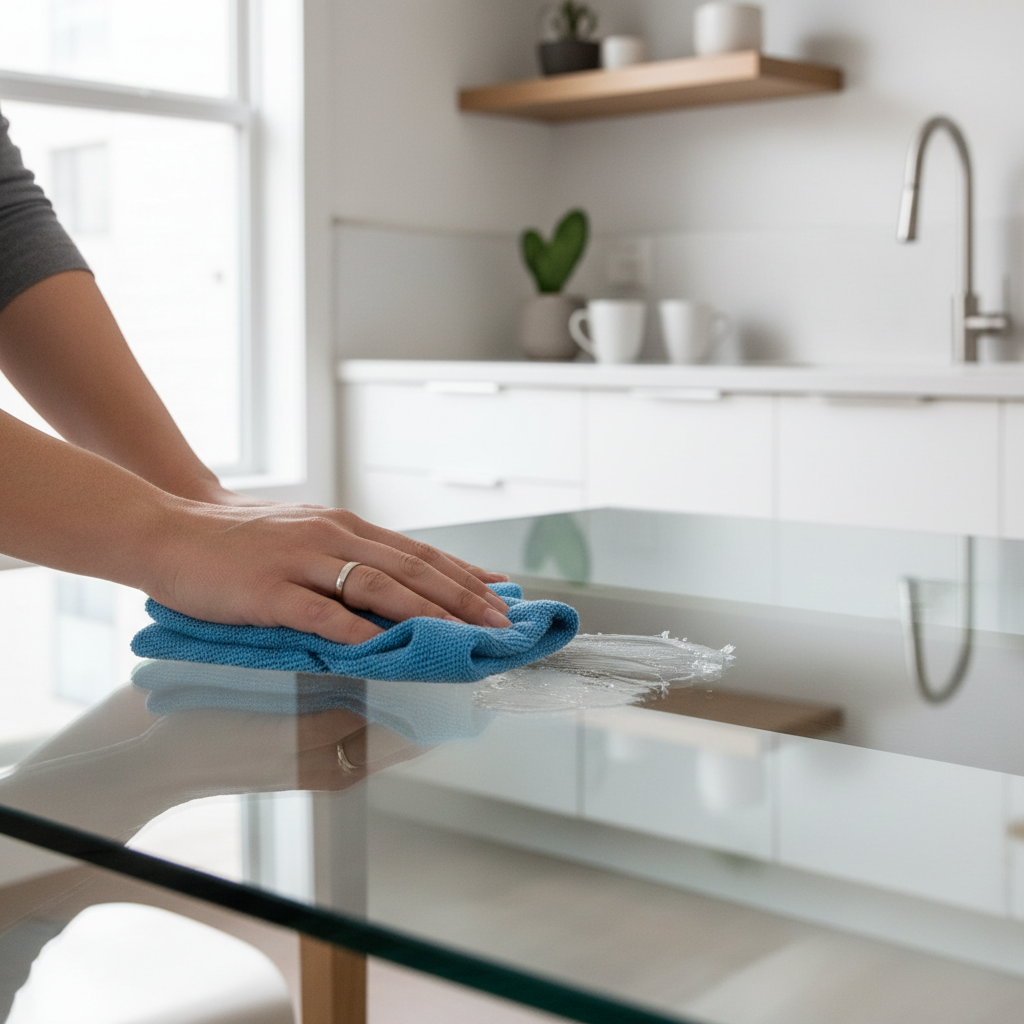
Common mistakes that cause scratches, haze, or “never-ending stickiness”
- Scrubbing with abrasive pads: some “non-scratch” sponges still leave micro-swirls on glass and mirrors.
- Using a dry blade: blades should glide on a wet surface, dry scraping increases scratch risk.
- Mixing chemicals: avoid combining cleaners or solvents unless the label says it’s compatible, fumes can be harmful.
- Skipping the soap wash: many removers dissolve glue but leave an oily layer that looks like streaks.
- Not changing cloths: once a cloth loads with adhesive, it redeposits a thin film everywhere.
If you’re working on a car windshield, tinted window, or coated shower glass, slow down. Some coatings and films react poorly to solvents and scraping, and replacement costs can be annoying.
When to stop and get professional help
Most homeowners can handle label glue, tape bands, and small patches. It’s worth calling a glass pro, detailer, or installer when:
- The glass has tint film, privacy film, or a specialty coating and you don’t know what it is.
- Residue covers a large area, like protective film glue on new doors or windows.
- You suspect the residue is silicone, construction adhesive, or chemical sealant, those can require specialty removers.
- You already see scratches or haze and don’t want to worsen it, polishing glass is a different skill set.
Also, if you’re sensitive to odors or have respiratory concerns, consider asking a professional, solvent ventilation is not always comfortable in small spaces.
Key takeaways you can follow today
- Dwell time beats force, hold the remover on the spot before wiping.
- Start mild, then move up, warm soapy water → alcohol → adhesive remover → careful scraping.
- Use the right cloth strategy, one cloth to “collect glue,” a clean one to finish.
- After strong removers, wash with dish soap and water so you don’t leave oily haze.
If you’re dealing with a few spots, pick one method and do a small test area. Once you see it lift cleanly, repeat across the rest of the glass without switching products midstream.
FAQ
How do I remove sticky residue from glass surfaces without scratching?
Use a solvent that dissolves the adhesive, like isopropyl alcohol or a citrus adhesive remover, then lift with a plastic scraper. Scratching usually comes from dry scraping or abrasive pads, not from the residue itself.
Will vinegar remove sticky residue on glass?
Vinegar can help with mineral haze and some light grime, but many adhesives don’t dissolve well in vinegar. If vinegar smears it around, switch to alcohol or an adhesive remover and give it dwell time.
Is Goo Gone safe for glass?
Many people use citrus-based removers on plain glass successfully, but they often leave an oily film that needs a soap-and-water wash afterward. If the glass sits next to plastics, paint, or window tint, test a small edge area first and follow the product label.
Can I use a razor blade on a window to remove sticker residue?
Often yes on uncoated glass, if you keep the surface wet and use a proper glass scraper at a low angle. If there’s tint film, protective film, or a specialty coating, a blade can damage it, so check manufacturer guidance when possible.
Why does the residue come off but the glass looks cloudy?
Cloudiness is commonly leftover remover oil, adhesive film spread thin, or hard-water minerals exposed after cleaning. Wash with dish soap and warm water, rinse, then finish with glass cleaner and a clean microfiber cloth.
What’s the fastest way to remove tape residue from glass?
Alcohol is usually the quickest first try, apply, wait about a minute, then wipe and reapply if needed. For older tape bands, an adhesive remover plus a plastic scraper tends to save time compared with repeated wiping.
Is it safe to use acetone on glass?
Acetone can work on stubborn adhesive on plain glass, but it can damage nearby paint, plastics, and some finishes, and it’s flammable. Use good ventilation, keep it off frames and trim, and consider professional advice if you’re unsure.
If you’re cleaning up after a move, a renovation, or a big sticker removal project and you’d rather not experiment on every window, it can be easier to pick one glass-safe adhesive remover, follow a consistent workflow, and do a small test spot before committing to the whole surface.