
how to clean window tracks from dirt and debris comes down to two things: loosen the dry grit first, then lift the stuck-on grime without flooding the frame.
If you skip that order, you usually end up pushing dirty water into corners, making the track look worse and sometimes leaving a musty smell behind. The good news, this is one of those chores where the right setup matters more than elbow grease.
Below is a practical, homeowner-friendly routine, plus quick ways to diagnose what kind of mess you have, and what to do when the issue is actually damaged seals or mold risk.
What makes window tracks get so dirty
Most window track grime is a mix of fine dust, pollen, pet hair, and whatever rides in on shoes and airflow. Add a little moisture from condensation or rain, and it turns into a paste that clings to corners.
- Dry debris build-up: sand, soil, dead bugs, leaf bits, pet hair, usually easy if you vacuum first.
- Greasy film: common near kitchens or busy streets, needs a mild detergent to break it up.
- Hard water residue: chalky white deposits around weep holes or near leaks, may need a gentle acid like diluted vinegar.
- Sticky contamination: paint specks, adhesive, or old lubricant, better handled with scraping and spot cleaning.
According to U.S. Environmental Protection Agency (EPA)... moisture control is a key factor in preventing mold growth indoors, so if your tracks stay wet or smell musty, the “cleaning” plan should also include fixing the moisture source.
Quick self-check: what you’re actually dealing with
Before grabbing a spray bottle, take 60 seconds to identify the mess type. This keeps you from over-wetting a track that really needs dry removal first.
- Run a finger along the track: gritty means vacuum first, greasy means soap solution, chalky means mineral residue.
- Look at the corners and weep holes: clogged holes often cause water pooling and recurring dirt.
- Check the sash movement: if it grinds even after debris removal, you may have worn rollers or a warped frame.
- Sniff test: persistent musty odor can suggest hidden moisture or early mold, cleaning may not be the whole fix.
Key point: if the track has standing water or you see staining that keeps coming back fast, treat it as a moisture problem first, not a “dirty window” problem.
Tools and cleaners that usually work (and what to avoid)
You don’t need specialty products most of the time. You do need small tools that fit into narrow channels.
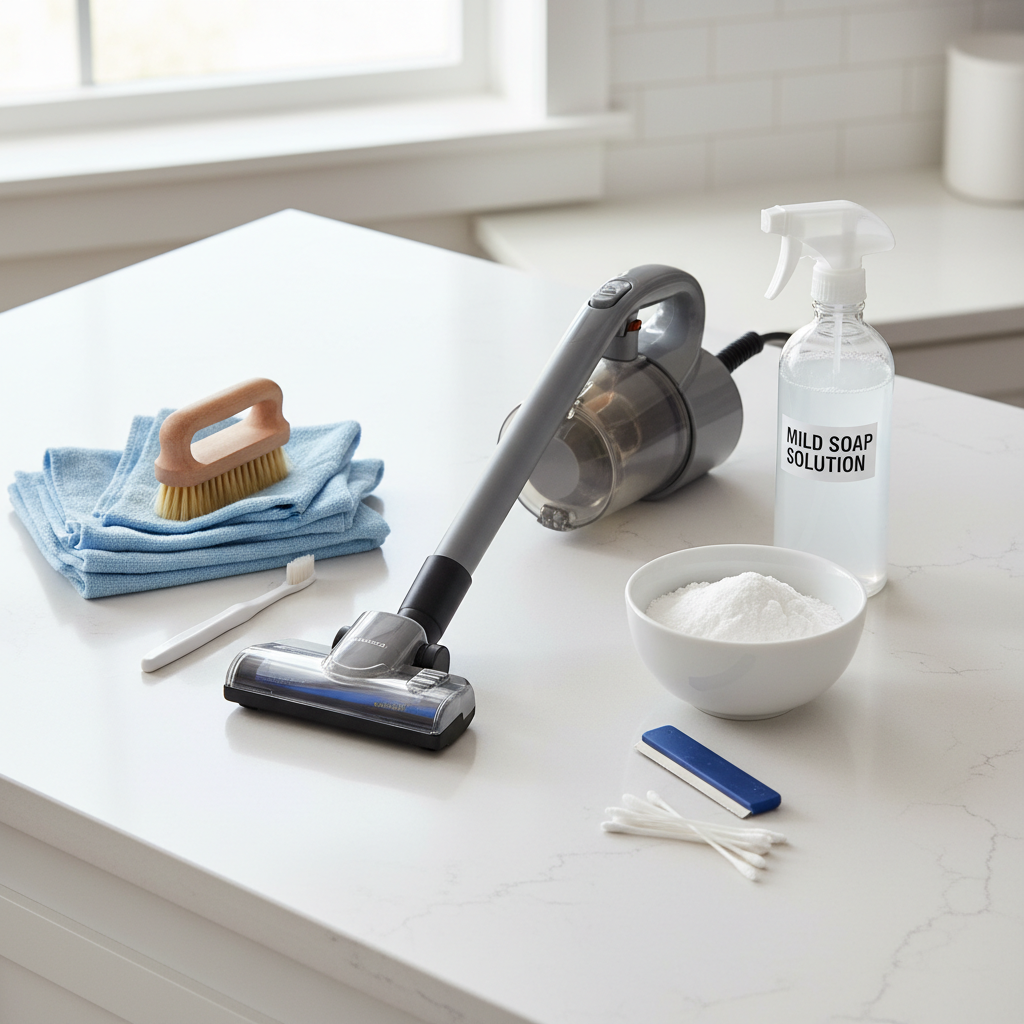
What to use
- Vacuum with crevice tool (or a handheld vac)
- Stiff nylon detail brush or old toothbrush
- Microfiber cloths or paper towels
- Cotton swabs for corners and tight seams
- Spray bottle with warm water + a few drops of dish soap
- Baking soda (optional) for gentle scrubbing paste
- Diluted white vinegar (optional) for mineral spots
- Plastic scraper or old gift card for stuck gunk
What to avoid in many cases
- Abrasive pads: they can scratch vinyl and painted aluminum finishes.
- Strong bleach mixes: can discolor surfaces and create irritating fumes, especially in small rooms.
- Soaking the track: excess water can run into wall cavities around the frame depending on construction.
- Oily sprays: they attract dust and often make the track grime return faster.
Step-by-step: how to clean window tracks from dirt and debris
This process aims to keep debris out of the corners and prevent muddy runoff. Take it in two passes: dry first, wet second.
1) Dry removal (don’t skip this)
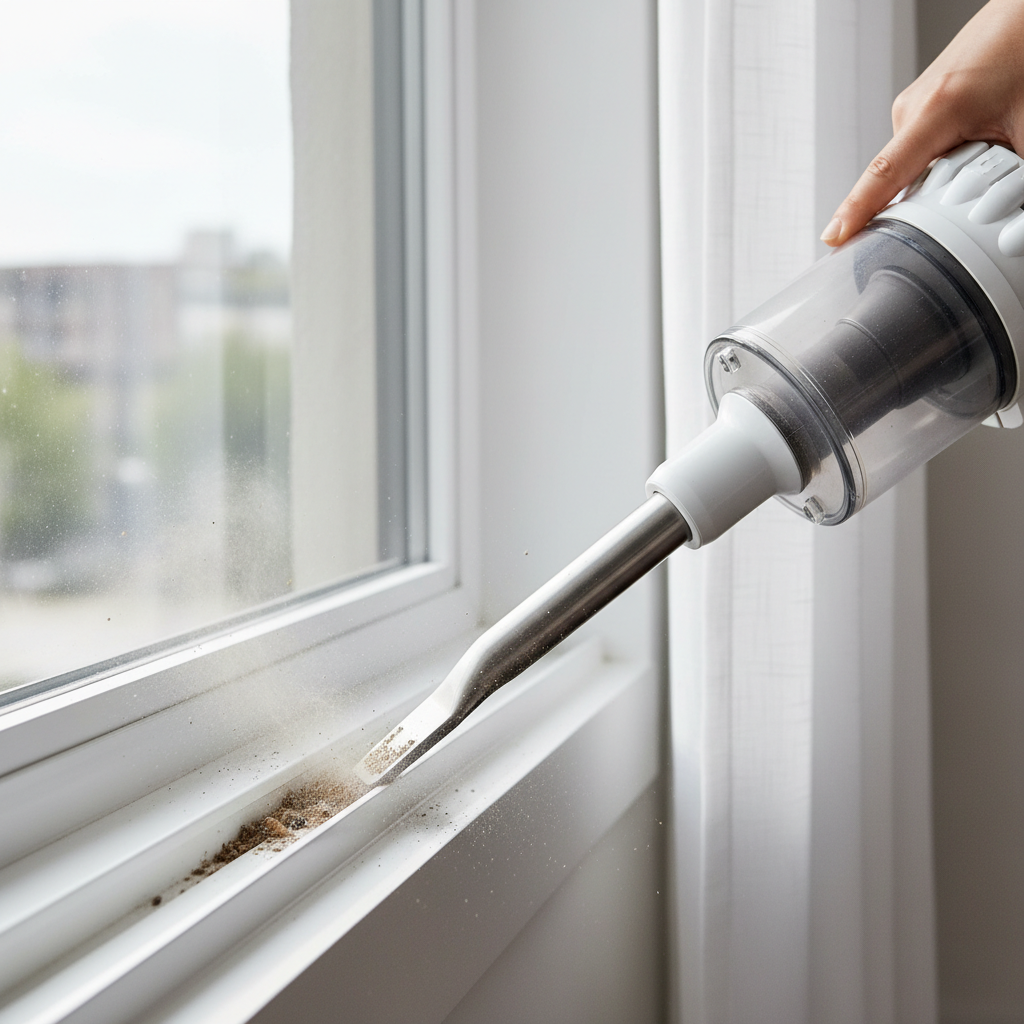
- Open the window fully so you can access the full channel.
- Use the vacuum crevice tool to pull out loose dirt, especially in corners and along the track edges.
- Brush while vacuuming if debris is packed in place, the brush loosens, the vacuum removes.
2) Loosen stuck grime with minimal moisture
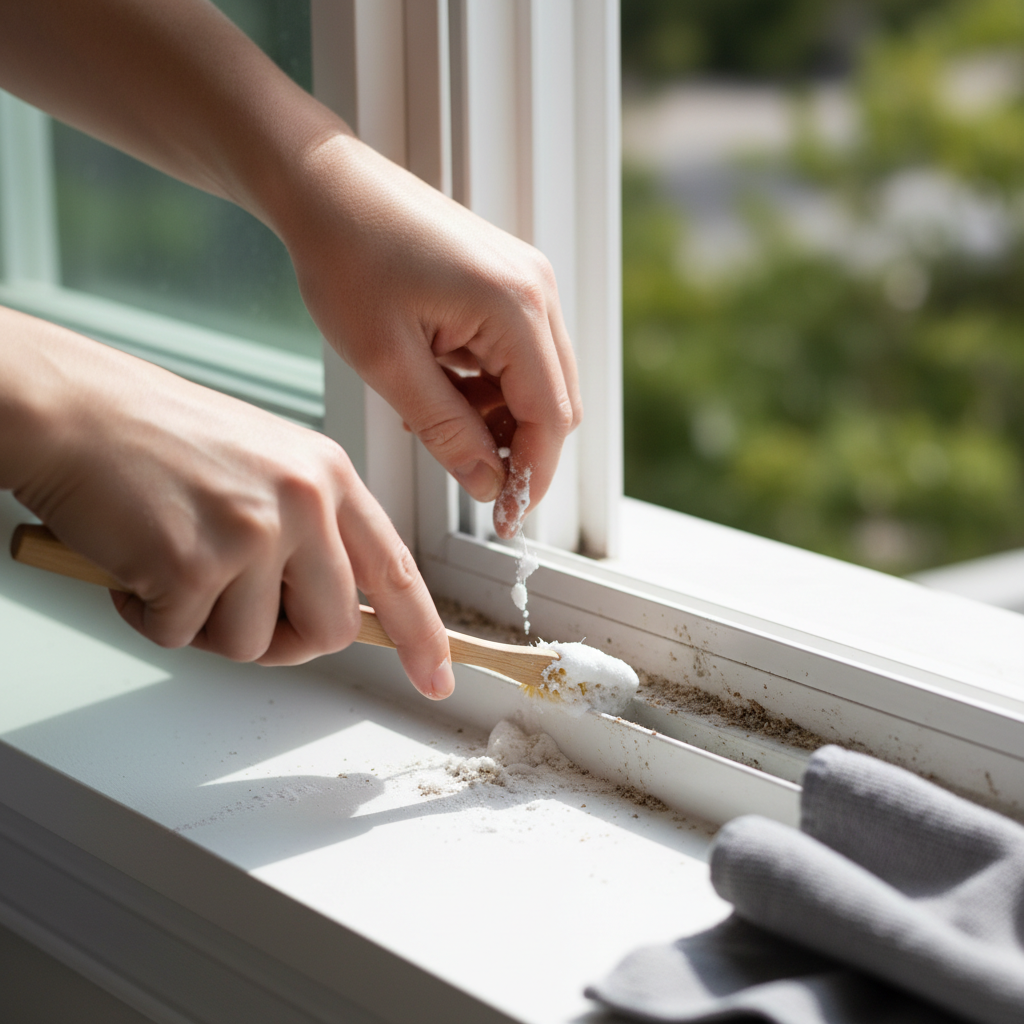
- Lightly mist the track with warm soapy water, aim for “damp” not “dripping.”
- Let it sit 2–5 minutes so the film softens.
- Scrub with a toothbrush or nylon brush, pushing grime toward an area you can wipe up easily.
3) Lift and wipe, then detail the corners
- Wipe the track with a folded microfiber cloth, switching to a clean side as it darkens.
- Use cotton swabs for the corners and seams where cloth won’t reach.
- If you see sludge, vacuum again after it dries slightly, or blot with paper towels first.
4) Rinse lightly and dry thoroughly
- Mist with clean water to remove soap residue, then wipe again.
- Dry the track completely with a clean cloth to reduce new dirt sticking.
If you’re repeating this and still not getting clean results, it’s often because the weep holes stay clogged or the grime is mineral scale rather than “dirt.” The next section handles those.
Special situations: mold, mineral scale, and painted tracks
Some track problems look like ordinary dirt but behave differently, and if you treat them the same way you waste time.
When you suspect mildew or mold
- Ventilate the room and consider gloves, especially if you’re sensitive to odors.
- Clean what you can see with mild soap and water, then dry fully.
- Don’t assume bleach is required; in many households it creates more hassle than benefit, and moisture control matters more long-term.
If you see widespread growth, recurring staining, or you have respiratory concerns, it’s reasonable to consult a qualified remediation professional for guidance on safe cleanup and prevention.
When it’s hard water residue (white crust)
- Apply diluted vinegar to a cloth (not directly flooding the track), press onto the deposit for a few minutes.
- Scrub gently with a nylon brush, then wipe and rinse.
- Repeat rather than using heavy abrasion, many finishes scratch easily.
When paint or adhesive is the problem
- Use a plastic scraper or old card to lift blobs carefully.
- Spot-clean with soapy water, avoid harsh solvents unless the window manufacturer allows it.
Maintenance routine: keep tracks cleaner with less effort
After you learn how to clean window tracks from dirt and debris once, the bigger win is making sure you don’t have to do the “deep gunk” version again soon.
- Monthly quick pass: vacuum the track and wipe with a dry microfiber cloth.
- Seasonal deeper clean: soap-and-brush routine, then dry thoroughly.
- After storms or heavy pollen: vacuum first, especially if you keep windows cracked for airflow.
Also check the weep holes during your quick pass. If they’re blocked, water can pool and the track will collect grime faster than it should.
Cheat sheet table: common mess → best approach
| What you see | What it usually is | Best first move | Avoid |
|---|---|---|---|
| Loose grit, crumbs, dead bugs | Dry debris | Vacuum with crevice tool, then brush | Spraying water right away |
| Dark smear that feels oily | Traffic film/grease | Warm water + dish soap, light dwell time | Oily “lubricant” sprays |
| White chalky crust | Mineral scale | Diluted vinegar on cloth, gentle scrub | Abrasive pads |
| Sticky spots or flakes | Paint/adhesive residue | Plastic scrape, then spot-clean | Metal blades on vinyl |
| Musty odor, recurring dark staining | Moisture/mildew risk | Clean lightly, dry fully, fix moisture source | Ignoring leaks or clogged weep holes |
When to consider professional help
Most homeowners can handle track cleaning, but a few situations cross into repair or indoor air quality territory.
- Water keeps pooling in the track even after you clear debris and weep holes.
- The window won’t slide smoothly after cleaning, which may indicate roller, balance, or frame issues.
- You see extensive mold-like growth, or someone in the home has asthma or sensitivities and symptoms seem triggered.
- You suspect the frame seal failed and moisture might be getting into the wall, a contractor or window pro can assess.
Conclusion: a cleaner track is mostly about the sequence
Clean tracks look satisfying, but the real payoff is smoother operation and fewer “mystery” odors. Keep the sequence simple: vacuum out dry grit, use minimal moisture to loosen film, wipe and dry thoroughly, then maintain with quick passes so deep grime never gets comfortable.
Action to take today: do one dry vacuum pass on your worst window track, then decide if it needs the full wash, you’ll know fast.
FAQ
How often should I clean window tracks?
Many homes do fine with a quick vacuum-and-wipe monthly and a deeper clean seasonally. If you live near construction, heavy pollen areas, or keep windows open often, you may want to shorten that cycle.
Can I use vinegar on vinyl window tracks?
Diluted vinegar is commonly used for mineral residue, but finishes vary by manufacturer. Test a small hidden area first and avoid soaking, especially near seams.
What’s the fastest way to remove packed dirt in corners?
Vacuum while brushing, then use cotton swabs for the last bit. Packed corners usually resist wiping until the dry material is removed.
Is baking soda safe for window tracks?
Baking soda works as a mild abrasive paste for stubborn grime. Keep pressure light, and avoid using it on surfaces that scratch easily, if you see dulling, stop and switch to soap and a brush.
Why do my window tracks smell bad after cleaning?
Most often it’s leftover moisture, dirty runoff trapped in corners, or clogged weep holes. Wipe again with clean water, dry thoroughly, and make sure drainage paths are clear.
How do I clean window tracks without making a mess on the floor?
Place a towel under the track area, and keep the track damp rather than wet. Blot sludge with paper towels before you wipe, that prevents drips.
My window still sticks after cleaning, what now?
That can be debris you missed, but it can also be worn rollers, warped frames, or misalignment. If you’ve cleaned thoroughly and it still binds, a window technician can usually diagnose quickly.
If you’re cleaning multiple windows and want a more predictable routine, set up a small “track kit” with a crevice tool, detail brush, microfiber cloths, and a spray bottle, it keeps the job quick enough that you actually do it before the grime turns into a project.