
laundry room drying rack ideas for small spaces usually come down to one thing: you need drying capacity without stealing your walking path, door swing, or hamper zone.
If you have a tight laundry closet, a stacked washer dryer, or a narrow utility room, the wrong rack turns “air-dry a few items” into a constant game of Tetris. Shirts drip onto the floor, you bump into wet sleeves, and nothing feels put away.
This guide focuses on practical rack types that actually work in small U.S. homes and apartments, plus a quick way to measure your space, pick hardware, and avoid the mistakes that cause sagging, mildew smells, or wall damage.
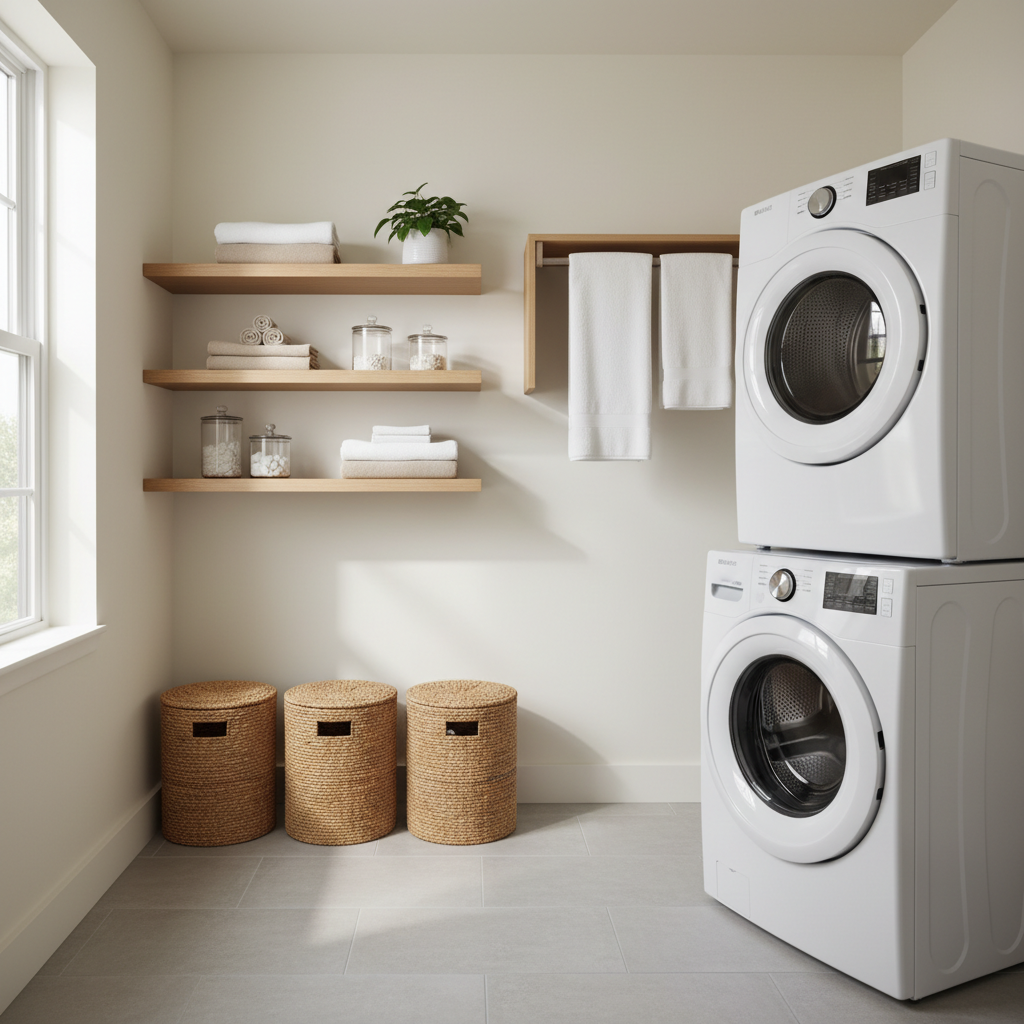
Start with a quick “small space” layout check
Before you buy anything, decide what you’re optimizing for: clearance (not hitting your body or doors) or capacity (more linear drying feet). In small rooms, clearance usually wins.
- Door swing and traffic lane: mark the door arc and the path you actually walk while carrying a basket.
- Vent and heat sources: keep racks away from dryer vents, baseboard heaters, and anything that can overheat fabrics.
- Drip zone: plan where water goes for hand-wash items, a boot tray, or a towel underneath.
- Mounting surfaces: drywall alone may not hold a loaded rack; studs or proper anchors matter.
According to OSHA, good housekeeping means keeping walkways clear and reducing slip and trip hazards, which is a useful lens for laundry rooms too, even in a home setting.
Wall-mounted fold-down racks: the “disappears when not in use” option
If you want the room to feel normal when you’re not doing laundry, a fold-down wall rack is often the cleanest answer. You get a flat profile when closed, then a decent span of bars when opened.
Where it works best
- Above a front-load washer/dryer where that wall is otherwise wasted
- On a short wall near a sink (if you have one), so drips stay contained
- In a laundry closet where you can open the rack and still close the closet doors
Installation tips people skip
- Prioritize studs if possible; if not, use anchors rated for dynamic loads (wet laundry shifts weight).
- Mount high enough for hangers to clear the machine lids or counters, but low enough to reach without standing on the washer.
- Keep a small gap from the side wall so sleeves don’t smear against paint.
One more honest note: many “decor” fold-down racks look great but flex under jeans and towels. If you plan to dry heavier items, check for metal arms, sturdy hinges, and a realistic weight rating.
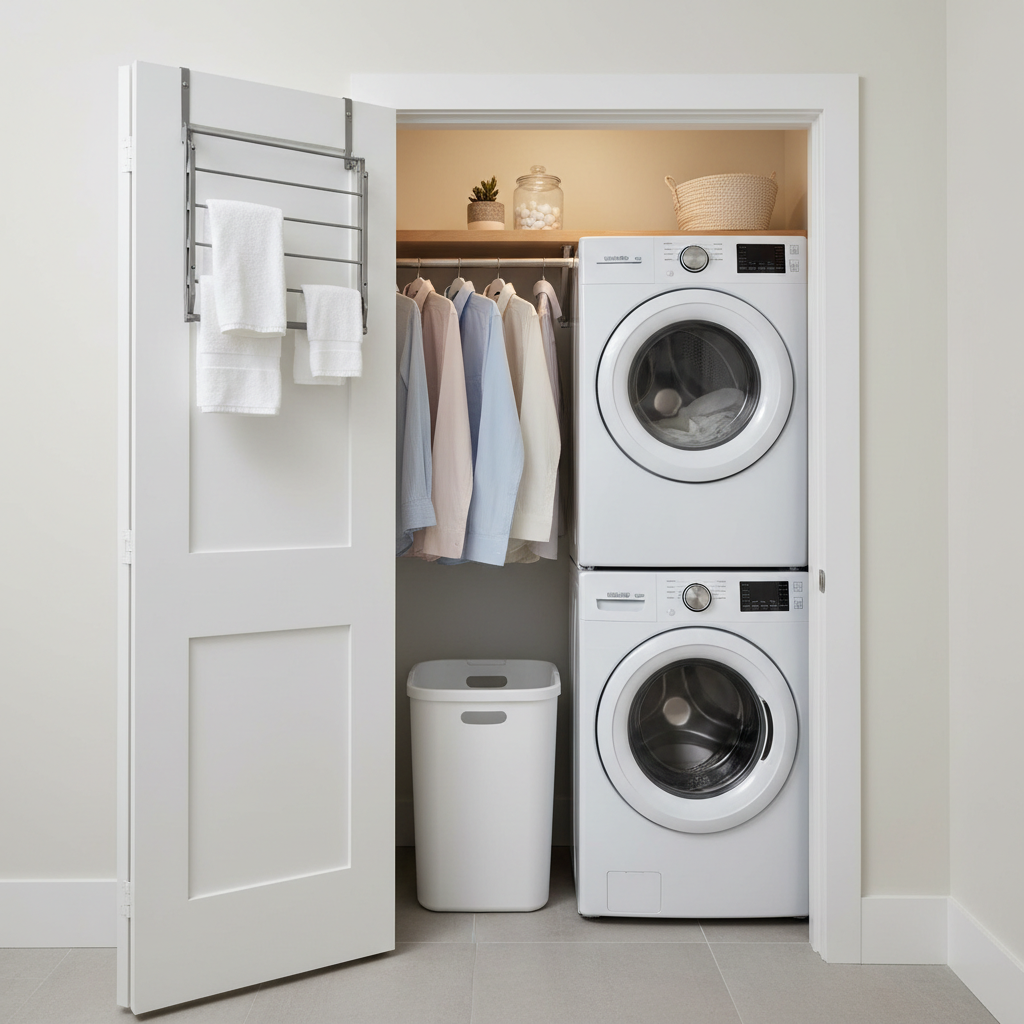
Over-the-door and cabinet-door racks: good for renters, tricky in tight rooms
Over-the-door solutions are popular because they feel low-commitment. In small spaces, they’re great only when the door can still close and the rack won’t block your steps.
- Best use: delicates, kids’ clothes, dish towels, microfiber cloths
- Watch out for: thick hooks that prevent the door from latching, and wet fabric rubbing paint
- Quiet fix: add thin felt pads where metal touches the door to reduce rattling
If you’re collecting laundry room drying rack ideas for small spaces as a renter, this category is the most landlord-friendly, but you still want to test clearance with the door fully open and fully closed.
Ceiling-mounted and pulley racks: maximum capacity with zero floor footprint
If your floor is the problem, go up. Ceiling racks (including pulley styles) can dry a surprising amount, and they’re especially useful when the only open area is above the machines.
When they’re a good fit
- You have a higher ceiling and can keep items above head level
- You’re drying frequently and want a semi-permanent station
- You can mount into joists or a solid ceiling structure (important for safety)
Small-space details that matter
- Headroom: leave enough space so you’re not ducking under wet clothes.
- Airflow: don’t crowd the bars; packed laundry dries slower and can smell musty.
- Reach: pulley systems help if you can’t comfortably lift arms overhead for long.
Safety note: overhead installation is not a “close enough” project. If you’re unsure about joists, anchors, or weight limits, it’s reasonable to ask a handyman or contractor for guidance.
Freestanding folding racks: flexible, but plan where they live
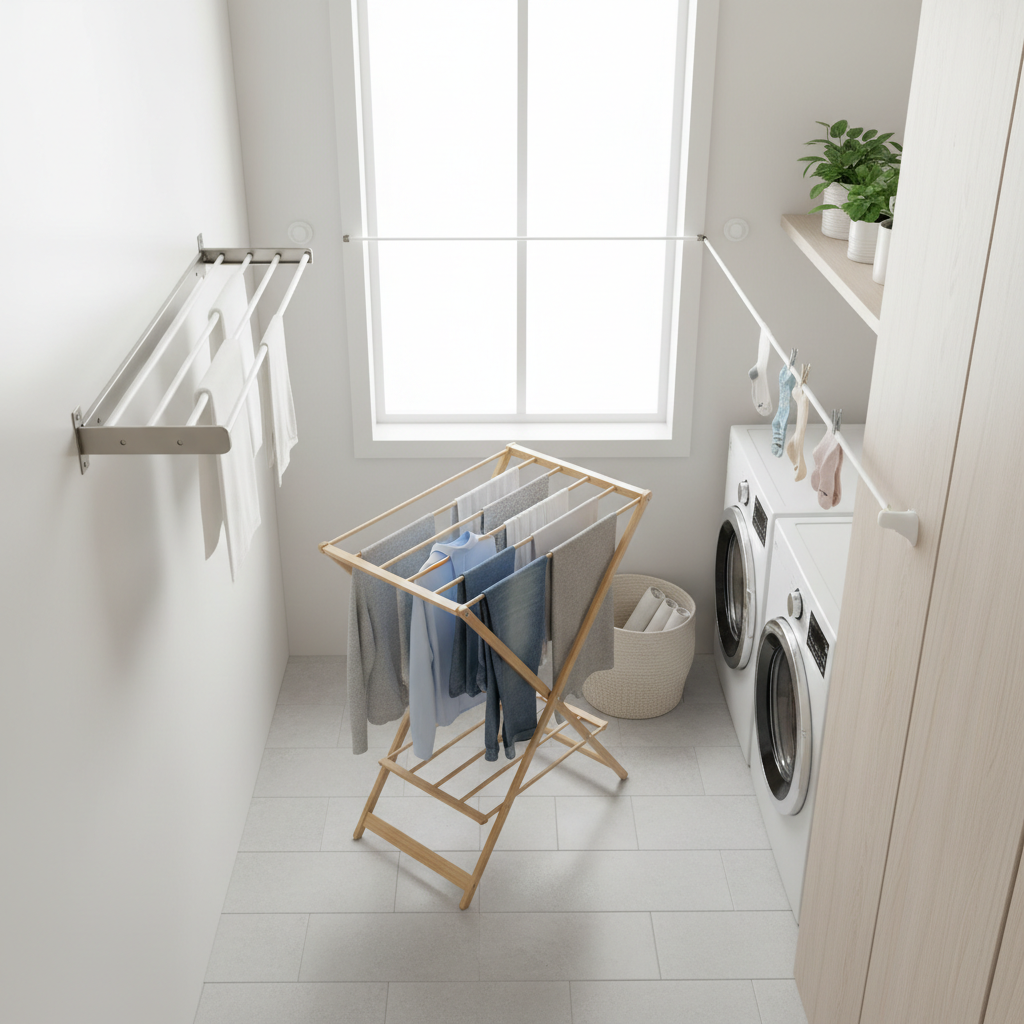
A classic folding rack is still one of the best laundry room drying rack ideas for small spaces when you want flexibility. The catch is storage: you need a predictable “parking spot” so it doesn’t become permanent clutter.
- Choose this if: you only air-dry a few loads per week, or you move racks near a dehumidifier or window
- Avoid this if: your laundry room is basically a hallway, or you trip easily on protruding legs
Key point: measure the rack’s footprint open and its thickness folded. Some fold thin enough to slide beside a washer; others don’t.
Slim slide-out racks and retractable lines: underrated for “one wall only” rooms
If you have a single usable wall and almost no depth, look for slide-out towel-rack-style dryers or retractable clotheslines. They’re not for bulky bedding, but they’re excellent for daily basics.
- Slide-out racks: mount on a wall or the side of a cabinet, pull out only when needed
- Retractable line: spans between two points, then rolls back into a case
These options can feel “too small” at first, but in practice they solve the annoying stuff: gym clothes, bras, swimwear, and anything that shouldn’t see high heat.
Quick comparison table: pick a rack type based on your constraints
Use this as a shortcut if you’re deciding between two or three options and you want a reality check.
| Rack type | Best for | Trade-offs | Small-space tip |
|---|---|---|---|
| Wall-mounted fold-down | Daily air-dry, minimal visual clutter | Needs solid mounting | Mount above machines to protect floor space |
| Over-the-door | Renters, light items | Door clearance issues | Test latch/hinges before committing |
| Ceiling/pulley | High capacity, zero floor footprint | Harder install, overhead reach | Keep a clear head zone and strong anchors |
| Freestanding folding | Occasional use, moveable drying | Can block walkways | Assign a storage slot, don’t “temporary” it forever |
| Slide-out/retractable line | Small daily items | Lower capacity | Place near airflow, avoid crowding |
Practical setup tips that speed drying and reduce “laundry smell”
Even the right rack underperforms if airflow is poor. In many homes, the laundry room is a closed box, so you need to be intentional.
- Leave space between items: fabric needs air on both sides, especially cotton.
- Spin more, hang less wet: a higher spin setting can cut drying time, but follow garment care labels.
- Aim for circulation: a small fan can help; if humidity stays high, a dehumidifier may be worth it.
- Protect surfaces: put a washable mat or tray under drip-heavy items.
According to the U.S. Environmental Protection Agency, controlling indoor moisture helps limit mold growth. If you’re consistently seeing condensation, musty odor, or visible spots, it’s smart to address humidity rather than just buying a bigger rack.
Common mistakes (and what to do instead)
- Buying for “max capacity” without measuring: in small rooms, a smaller rack you can actually deploy beats a huge rack you avoid using.
- Mounting into drywall with weak hardware: wet laundry gets heavy and shifts; use appropriate anchors or find studs.
- Blocking the dryer vent area: lint plus restricted airflow can be a safety concern, so keep that zone clear.
- Drying too close to walls: paint and drywall can take on moisture over time; leave breathing room.
If you’ve tried multiple laundry room drying rack ideas for small spaces and everything still feels cramped, the issue is often placement, not the rack itself. Moving the rack 12 inches higher or switching from floor to wall mount can change the whole room.
When it’s worth calling a pro
If you’re drilling into tile, mounting into an older wall with questionable backing, or installing a ceiling rack above finished drywall, a quick consult with a handyman can prevent expensive repairs. And if moisture seems persistent, you may want to ask an HVAC professional about ventilation, because no rack solves a ventilation problem by itself.
Key takeaways
- Wall-mounted fold-down racks are usually the best mix of capacity and clearance.
- Over-the-door racks shine for renters, but only if the door still works normally.
- Ceiling and pulley systems maximize drying without sacrificing floor space, but installation needs care.
- Airflow matters as much as rack size, especially in closed laundry rooms.
Wrap-up: a small change that makes laundry feel easier
A good rack setup makes air-drying feel routine instead of messy, and that’s really the goal. Pick one rack style that matches how you actually do laundry, measure twice, and set a “home” for the rack when it’s not in use.
If you want a simple next step, choose one wall or one door to dedicate to drying, then build around that decision. It keeps the room from turning into a rotating obstacle course.
FAQ
What is the best drying rack for a tiny laundry room?
In many small rooms, a wall-mounted fold-down rack hits the sweet spot because it provides drying bars without consuming floor space when closed. The best choice still depends on whether you can mount into studs and whether the rack will interfere with doors or cabinets.
Are over-the-door drying racks safe for wet clothes?
They can be, especially for lightweight items. The common issue is leverage: heavier wet garments can make the rack shift and can stress hinges, so it’s smarter to reserve over-the-door racks for delicates and use a sturdier option for towels or denim.
How do I keep my laundry room from smelling musty when air-drying?
Usually it’s airflow and humidity. Leave gaps between garments, run a fan, and avoid drying in a fully closed room for long periods. If musty odor persists, you may be dealing with moisture buildup that deserves a closer look.
Can I mount a drying rack on drywall without studs?
Sometimes, but you need anchors designed for the expected load and wall type. Because wet laundry weight shifts, many people prefer hitting studs whenever possible, and it’s reasonable to consult a professional if you’re unsure.
Do ceiling-mounted racks work in apartments?
They can, but it depends on your lease and the ceiling structure. If you can’t drill, consider freestanding racks or over-the-door options. If drilling is allowed, confirm you can mount into solid framing, not just drywall.
How much clearance do I need around a drying rack?
Aim for enough space to walk past without brushing wet fabric, and enough distance from walls so items can breathe. In practice, even a few inches of extra gap can improve drying and reduce damp patches on paint.
Is it OK to dry clothes near a dryer?
Near is fine if you keep clear of vents and hot surfaces. Avoid draping items where they can block airflow or contact heat sources, and if you’re unsure about safety in your setup, consider asking a qualified technician.
If you’re trying to choose between a wall rack, a folding stand, and a retractable line, it often helps to list what you air-dry most and where the “no-go” zones are in your room. If you need a more hands-off path, many home organization services can help map placement and hardware so the rack fits your space without guesswork.