
Minimalist living room ideas for small spaces work best when you treat every item like it has to “earn” its spot, not because minimalism is trendy, but because small rooms punish clutter fast.
If your living room feels tight, messy, or hard to keep clean, it’s rarely because you need more furniture, it’s usually because the layout fights your daily habits, storage is random, and visual noise stacks up in corners.
This guide gives you clear, real-world moves: how to choose a layout, what to keep on display, which pieces are worth buying, and what to stop doing even if Pinterest makes it look cute.
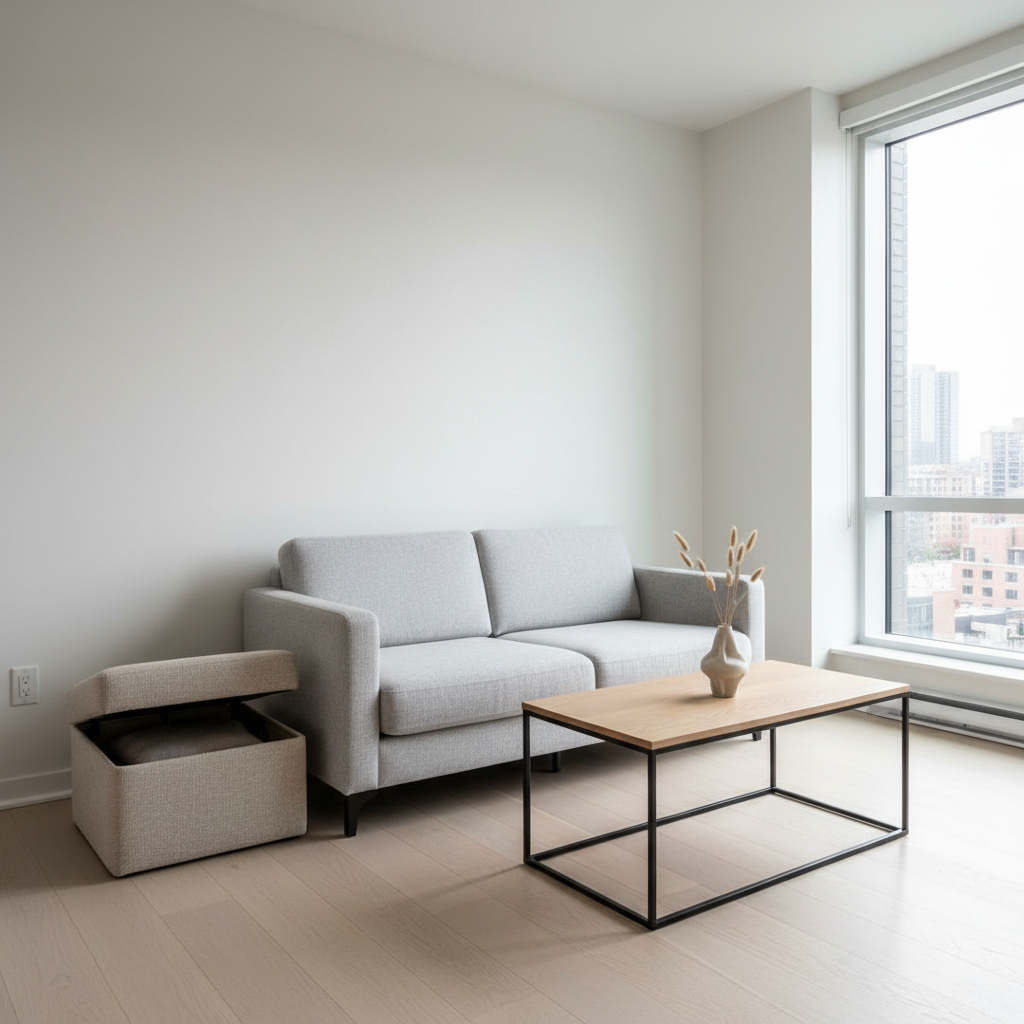
Start With One Goal: Space or Calm (Pick One First)
Minimalism can mean two different things in a small living room, and mixing them without a plan makes the room feel unfinished.
- If your goal is space, you’ll prioritize circulation, fewer surfaces, and furniture that floats or folds.
- If your goal is calm, you’ll prioritize consistent materials, concealed storage, and fewer colors competing for attention.
Once you pick the priority, the decisions get easier, especially when you’re choosing between “looks good” and “fits real life.”
Diagnose What’s Actually Making the Room Feel Small
Before you buy anything, do a quick scan. Many “small space problems” are really placement problems.
Fast self-check (5 minutes)
- Do you have a clear walkway from entry to seating without side-stepping?
- Is there one oversized piece that dominates the room (big recliner, deep sofa, bulky TV console)?
- Do most items sit on open surfaces (tables, windowsills) instead of inside storage?
- Are there more than 3 visible materials fighting for attention (mixed woods, shiny metals, loud patterns)?
- Do you have at least one “empty” wall or negative space area?
If you answered “yes” to two or more, you don’t need more decor, you need a simpler system.
Layout Ideas That Usually Work in Tight Living Rooms
Most small living rooms succeed with one of three setups. Keep it boring on purpose, boring layouts are often the most livable.
1) The “One Anchor” layout
One main seat (a small sofa or loveseat), one light side chair if needed, and everything else stays slim.
- Place the sofa on the longest wall, keep 18–24 inches for major walkways when possible.
- Use a round or oval coffee table to reduce bruised shins and visual corners.
- Choose one focal point: TV wall or window, not both competing.
2) The “Float the sofa” layout
If you have an open-plan apartment, pulling the sofa slightly off the wall can define the space and improve flow.
- Add a slim console table behind the sofa for a lamp and drop zone.
- Use a rug to “lock” the seating area, but keep the pattern subtle.
3) The “No coffee table” layout
Sounds extreme, but it’s a cheat code for narrow rooms.
- Swap the coffee table for 2 nesting tables or a C-table that slides under the sofa.
- Use an ottoman with a tray, so it can switch roles fast.
According to National Association of Home Builders (NAHB)... open circulation and usable clearances are core to functional spaces, and in small rooms that practicality matters more than styling.
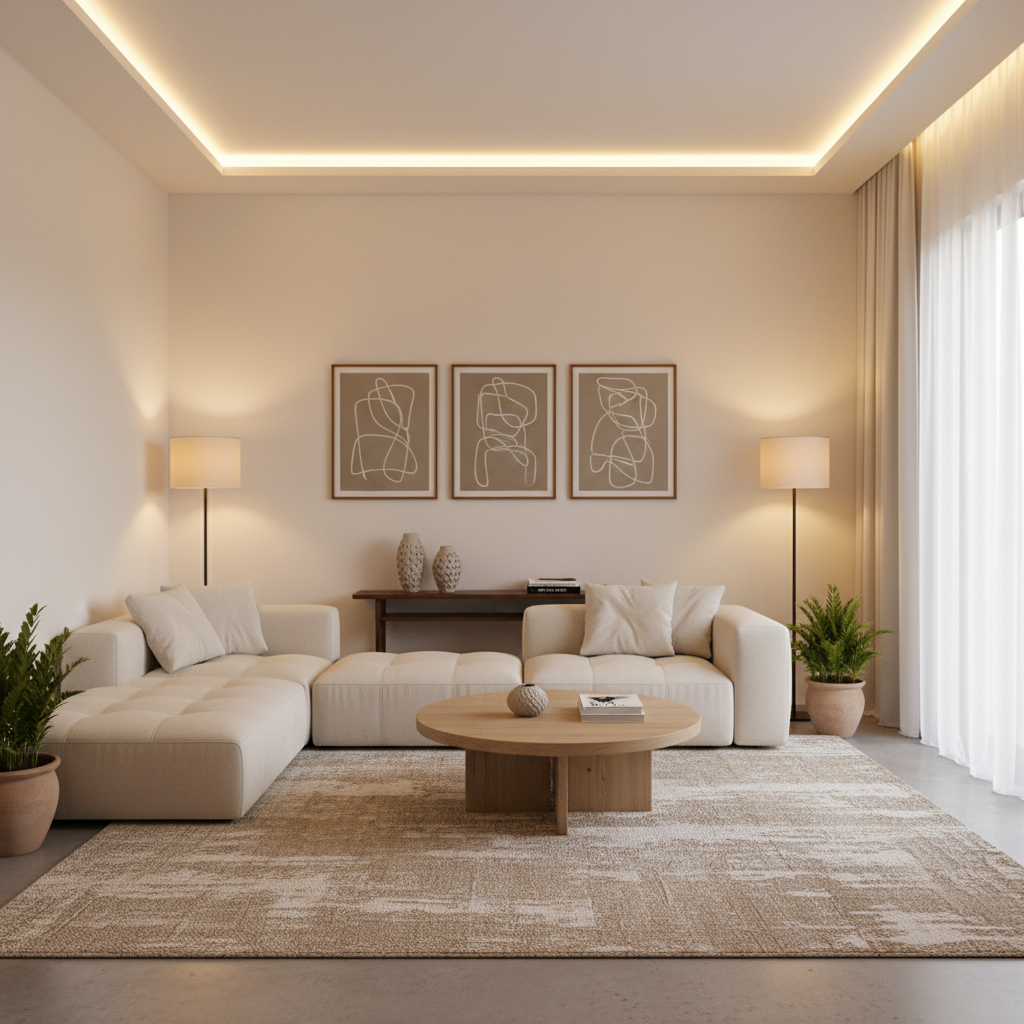
Furniture Rules: Fewer Pieces, Better Proportions
Minimalist living room ideas for small spaces usually fail when furniture is “standard size” but the room is not. Scale is the quiet deal-breaker.
What to look for when buying (or editing)
- Legs and lift: sofas and cabinets with visible legs often feel lighter than floor-hugging blocks.
- Shallow depth: a 32–36 inch deep sofa can be more comfortable in daily use than a giant lounge sofa that eats the room.
- Closed storage: one closed cabinet can replace three open shelves worth of visual mess.
- Armless options: armless chairs or benches reduce visual bulk.
A quick decision table (keep it practical)
| Room pain point | Better minimalist choice | Why it helps |
|---|---|---|
| No walking space | Round coffee table or nesting tables | Smoother movement, less visual blocking |
| Always looks messy | Closed media console + one tray | Hides “daily life” items fast |
| Feels dark | Light rug + wall-mounted lighting | Brightens without adding clutter |
| Too many small decor items | One larger art piece or mirror | Less noise, stronger focal point |
Storage That Doesn’t Look Like Storage (The Real Minimalist Trick)
People think minimal rooms stay minimal because the owner is disciplined. Often it’s just better hiding places.
Low-effort storage upgrades
- Ottoman with storage for throws, controllers, chargers.
- Wall shelves used sparingly, one or two, not a whole library wall unless you can keep it curated.
- Vertical cabinet (tall, narrow) instead of a wide console when floor space is tight.
- Entry “landing strip” near the living room, a small bowl or tray to stop keys and mail from spreading.
Try this: pick one “clutter category” you see daily, like mail, kids’ items, or pet stuff, then build one dedicated home for it. Don’t redesign the whole room at once.
Color, Lighting, and Texture: Minimal Doesn’t Have to Mean Cold
Minimalist living room ideas for small spaces look inviting when you limit contrast but keep texture. Flat white + shiny black can feel harsh fast.
A simple palette that rarely fights you
- Base: warm white, light greige, soft beige.
- One wood tone: pick oak, walnut, or black-stained, then repeat it.
- One accent: olive, rust, navy, or charcoal, used in 2–3 places max.
Lighting that makes a small room feel bigger
- Layer light: overhead + one floor lamp + one table or wall light.
- Choose warm bulbs (many homes prefer 2700K–3000K), harsh cool light can flatten the room.
- If you rent, plug-in sconces often give that “designed” look without hardwiring, but electrical changes may require a pro.
According to U.S. Department of Energy... lighting efficiency and thoughtful placement can reduce wasted energy, and in small rooms that often pairs nicely with a less-is-more setup.
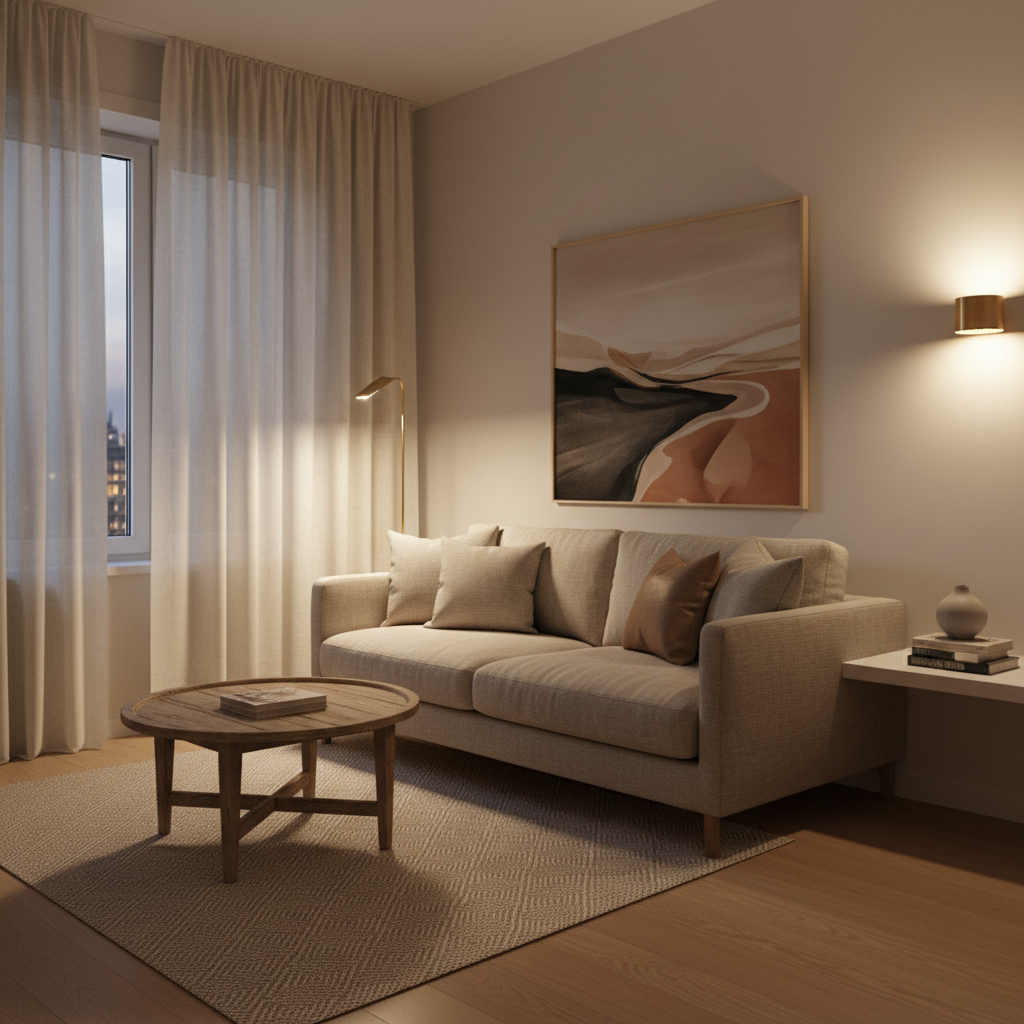
Practical Styling: What to Display vs. What to Hide
The easiest way to keep a small minimalist living room looking “done” is to limit what lives out in the open, then make those few items intentional.
What can stay visible (and still feel minimalist)
- One tray on the coffee table with 2–3 items, candle, coaster stack, small vase.
- One plant with a clear silhouette, snake plant, rubber tree, or pothos on a shelf.
- Books, but grouped, not scattered, think one neat stack, not ten single spines.
What usually should disappear
- Extra throw pillows you move every day.
- Loose cables and device clutter, use a cable box or a cord raceway.
- Small decor clusters on every surface, they read as clutter in tight rooms.
Key takeaway: in small spaces, “decor” that requires daily maintenance isn’t decor, it’s a chore.
A 60-Minute Reset Plan You Can Do This Weekend
If you want results fast without a full makeover, this is the sequence that tends to pay off.
- 10 minutes: clear every flat surface, coffee table, console, side tables.
- 15 minutes: pick one storage zone for loose items, basket, drawer, or cabinet.
- 15 minutes: pull furniture 2–4 inches apart where possible, tiny gaps can improve flow and cleaning.
- 10 minutes: set one focal point, one art piece, one lamp, one plant, stop there.
- 10 minutes: do a “night mode” routine, decide where remotes, chargers, and throws live.
If something still feels off after this, it’s often scale. That’s when swapping one oversized item (not buying five new ones) makes the room click.
Conclusion: Keep the Room Simple, Not Sterile
Minimalism in a small living room works when it protects your everyday routine, easier cleaning, fewer decisions, and a space that feels open even when life gets busy.
Your next step can be small: pick one layout from this article, then remove or replace just one bulky piece, after that, give yourself a week to see what you actually miss and what you don’t.