
Best air purifiers for small bedrooms usually come down to three things people feel immediately at night: noise, real filtration (not marketing), and not wasting money on a unit that’s too big or too weak.
If you’ve ever woken up with a dry throat, itchy eyes, or that “stale room” feeling, you’re not imagining it, small rooms can trap dust, pet dander, and outdoor pollution that sneaks in through windows and HVAC gaps. A good purifier won’t solve every health issue, but it can make a bedroom feel noticeably easier to breathe in many households.
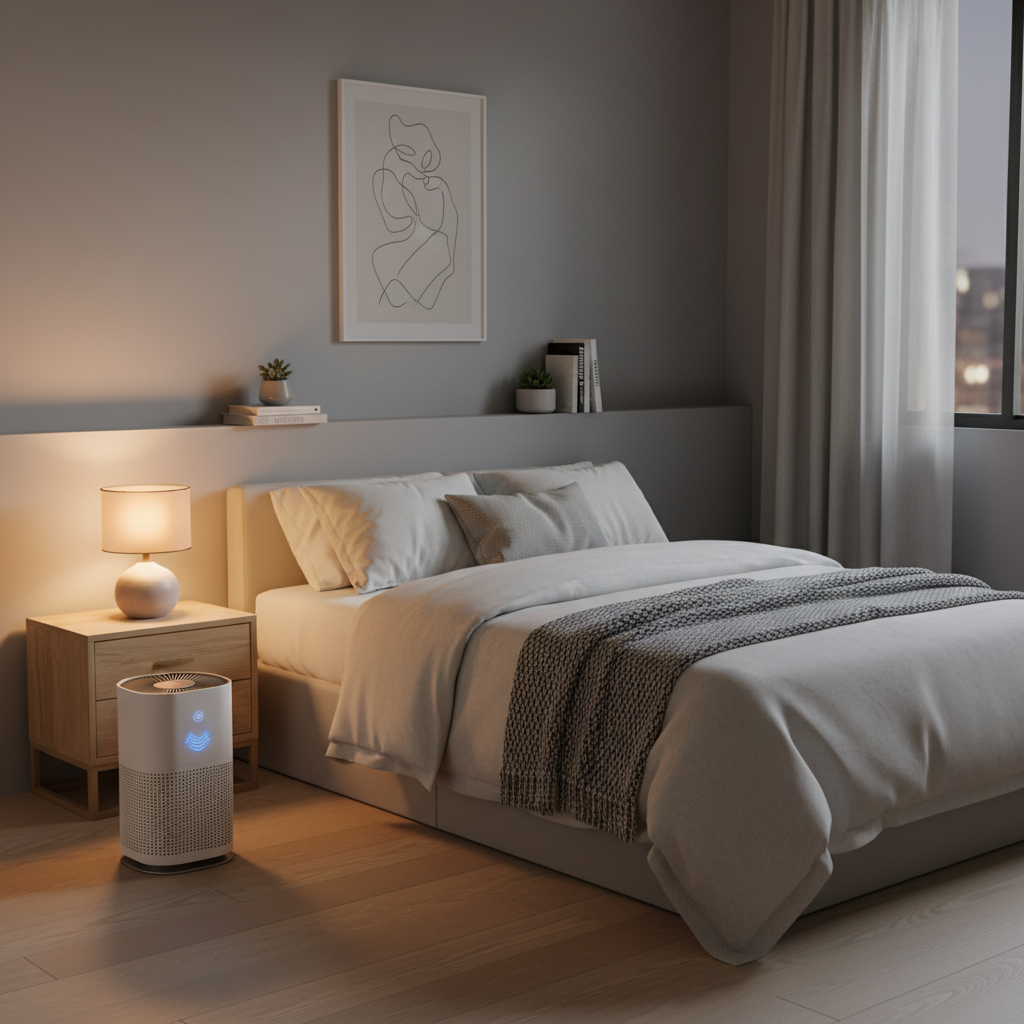
This guide focuses on what actually matters for small bedrooms in the US: CADR and room size matching, HEPA-type vs true HEPA, carbon for odors, sleep-mode noise, and how to avoid “filter subscription regret.” You’ll also get a quick comparison table and a practical setup checklist.
What “small bedroom” means for an air purifier (and why sizing goes wrong)
Most “bad purifier experiences” come from buying based on vibes, not math. For bedrooms, you want enough clean air delivery to keep up with what you’re shedding (skin flakes), what your pets bring in, and what’s drifting from outdoors.
Two sizing terms you’ll see: CADR and ACH. CADR is Clean Air Delivery Rate, basically how much filtered air a unit can push. ACH is Air Changes per Hour, how many times the purifier can cycle the room’s air.
- Typical small bedroom: 80–200 sq ft (often 8x10 to 12x14).
- Good target for sleep comfort: roughly 4–5 ACH on a quiet setting, and higher for allergy season if noise tolerance allows.
- Reality check: brands may rate coverage using low fan speed, which can be too gentle to meaningfully reduce particles fast.
According to AHAM (Association of Home Appliance Manufacturers), CADR is a standardized way to compare how purifiers remove smoke, dust, and pollen. It’s not perfect, but it beats “covers 1,000 sq ft!” claims with no context.
Quick picks comparison table (what to look for at a glance)
Instead of pushing one “winner,” here’s a practical matrix you can use while shopping. It helps you shortlist options that fit your room and your sleep habits.
| Bedroom need | What to prioritize | What to avoid |
|---|---|---|
| Allergies (pollen, dust) | True HEPA or HEPA-grade, solid CADR, sealed body | “HEPA-like” with vague specs, leaky filter doors |
| Pets (dander + smell) | HEPA + activated carbon, prefilter you can clean | Tiny carbon pads marketed as “odor removal” |
| Light sleeper | Low dB sleep mode, dimmable lights, no rattles | Units that only clean well on loud max speed |
| Wildfire/urban pollution days | Higher CADR, readily available replacement filters | Hard-to-find filters or off-brand refills only |
| Small room + tight budget | Right-sized unit, affordable filters, simple controls | Cheap device with expensive proprietary filters |
Key features that matter most in a small bedroom
Small spaces are unforgiving: a purifier sits close to you, you hear it, and you notice if it smells plasticky. Here’s what tends to separate “works great” from “ended up in the closet.”
1) Filtration: True HEPA (or equivalent) is the baseline
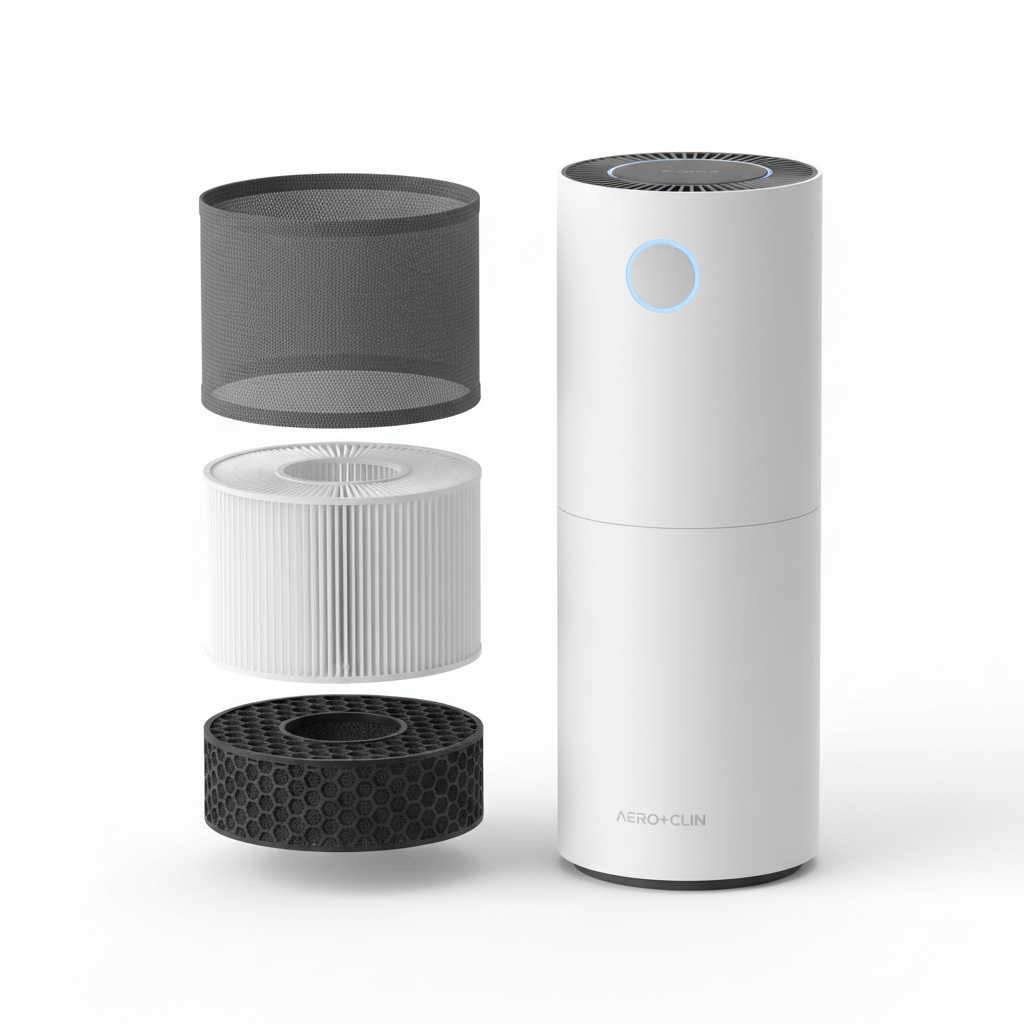
If allergies or dust are part of your reason, HEPA is usually non-negotiable. True HEPA is commonly described as capturing 99.97% of particles at 0.3 microns under test conditions, though real-life performance depends on airflow and sealing.
According to EPA (United States Environmental Protection Agency), HEPA filtration is effective at removing many airborne particles, and portable air cleaners can help improve indoor air quality when used correctly. If you have asthma or other conditions, it’s sensible to ask a clinician what’s appropriate for your situation.
2) Activated carbon: useful, but only if there’s enough of it
Carbon helps with odors and some VOCs, but the amount matters. Many “odor filters” are thin sheets that saturate fast. For a bedroom with pets, cooking smells drifting in, or smoke concerns, look for a thicker carbon layer or heavier carbon pellet design.
3) Noise and sleep usability
Specs can mislead here. A purifier can advertise “quiet,” yet still produce a whine or vibration on your nightstand. In small bedrooms, you typically win by choosing a unit that can meet your needs on medium speed, not only on turbo.
- Sleep mode should lower fan noise and dim lights.
- Physical stability matters, avoid wobbly bases on carpet.
- Controls should be simple at 2 a.m., ideally with a display-off option.
4) Ozone and “ionizer” extras
This is where people get tripped up. Some purifiers include ionizers or “plasma” features that may generate small amounts of ozone, and that can be irritating for sensitive people. According to EPA (United States Environmental Protection Agency), ozone can be harmful, and consumers should be cautious with devices marketed as ozone generators or ozone-producing air cleaners. In a bedroom, many shoppers prefer to keep things simple: HEPA + carbon, no extra “active” tech unless you’re confident it stays off.
A fast self-check: which type of purifier fits your room?
Use this to narrow your shopping list in two minutes. You’ll get more value from matching the scenario than chasing brand hype.
- Your room is under ~120 sq ft and you sleep lightly: pick a compact unit with strong CADR for its size and a genuinely quiet low/medium speed.
- You have pets and fabrics everywhere: prioritize a good prefilter plus HEPA, and plan to vacuum and wash bedding more often, the purifier can’t catch what’s already embedded.
- You deal with seasonal pollen: go for better CADR and run it earlier in the evening, not only when symptoms hit.
- Odors are the main complaint: choose stronger carbon and set expectations, odor control is usually gradual, not instant.
- You’re worried about wildfire smoke: aim for higher particle performance, keep windows closed, and stock an extra filter if supply gets tight.
If your bedroom connects openly to a hallway or living room, treat it like a larger space. An “underpowered” unit might still help, but it can feel like it does nothing because clean air mixes into adjacent rooms.
How to set up an air purifier in a small bedroom (so it actually works)
The placement and habits matter more than people want to admit. A great device pushed into a corner behind a curtain performs like a mediocre one.
Placement checklist
- Give it breathing room: keep at least 6–12 inches around intake/exhaust, more if the manual says so.
- Don’t hide it: avoid under desks, behind laundry baskets, or tight shelves.
- Near the “source,” not your face: for pets, closer to where they sleep; for pollen, closer to the window side. Don’t point strong airflow directly at your head all night if it dries you out.
- Stable surface: hard floors are easiest, on carpet use a firm base to reduce vibration.
Run-time that makes sense
In many bedrooms, the most noticeable improvement comes from running the purifier before bedtime, then keeping it on a quieter speed overnight. If you only turn it on when you get in bed, you’re asking it to clean up after hours of particle buildup.
Cost of ownership: filters, energy, and the sneaky stuff
The purchase price is only half the story. With the best air purifiers for small bedrooms, the ongoing costs are usually manageable, but only if you check a few things upfront.
- Filter price and availability: confirm the exact model number and how often it’s replaced in typical use.
- Prefilter maintenance: washable prefilters can reduce how fast the main filter clogs.
- Energy use: most bedroom units are modest on low/medium, but turbo can add up if you run it 24/7.
- Auto mode sensors: convenient, but not magic, and some sensors react better to smoke than to larger dust.
If you’re comparing two similarly performing units, the one with cheaper, easy-to-find filters often becomes the better long-term pick. This is the unglamorous part, but it’s where regret shows up.
Common mistakes that keep a “good purifier” from feeling effective
A purifier can be perfectly fine and still disappoint if one of these is happening. These are the patterns that show up most in small bedrooms.
- Buying for maximum room size instead of your real target speed, you end up needing loud settings to get results.
- Ignoring leaks: if the filter doesn’t seal well, air takes the easy path around it.
- Running it next to open windows during high pollen or smoke days, it’s fighting a losing battle.
- Expecting odor removal without carbon, HEPA is for particles, not smells.
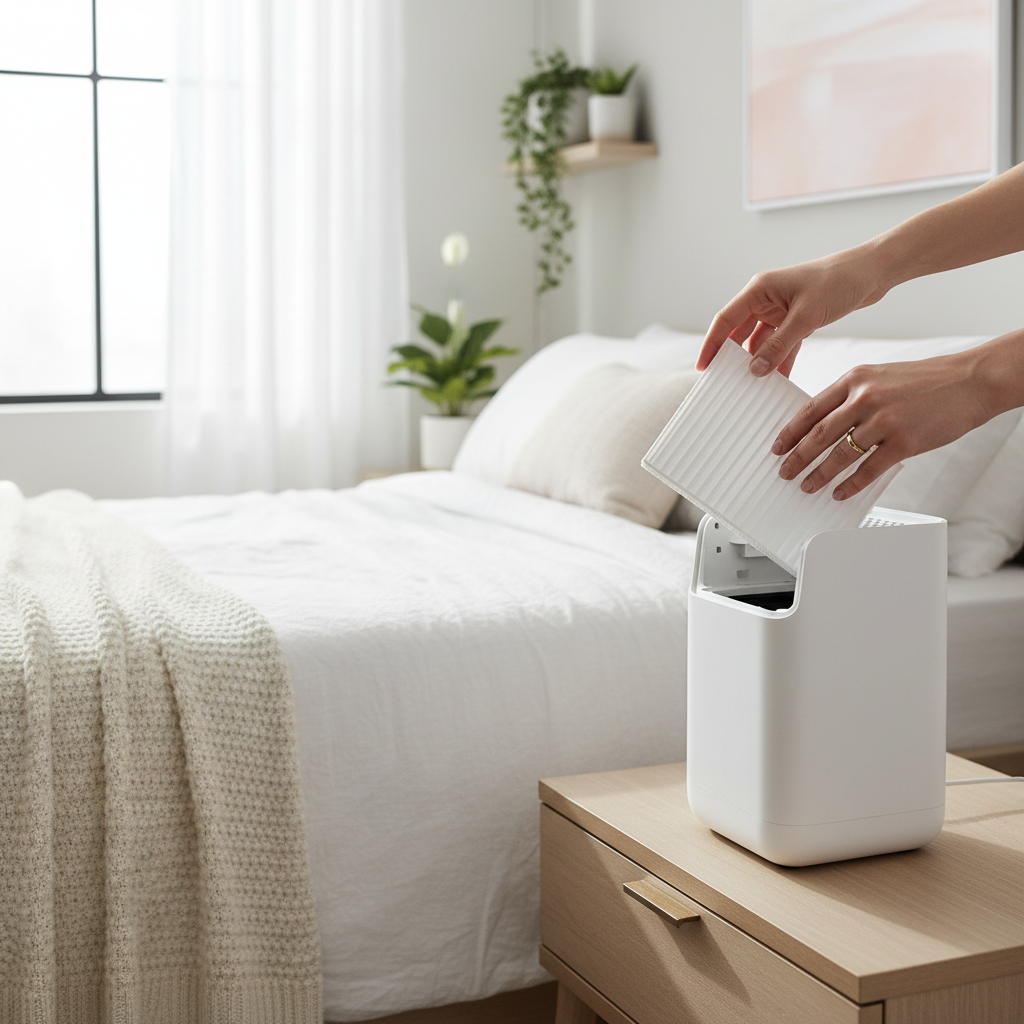
- Not changing filters: once clogged, airflow drops and so does cleaning performance.
Conclusion: how to choose with confidence (without overthinking it)
The best air purifiers for small bedrooms tend to be the ones that quietly do their job every night: right-sized CADR for your square footage, a real HEPA-grade filter, enough carbon if odors matter, and controls you won’t hate using in the dark.
If you want a simple action plan, measure your room, shortlist a few models that meet that size on a comfortable fan setting, then compare filter cost and noise behavior. If respiratory symptoms are persistent or severe, it’s smart to consult a qualified medical professional, an air purifier can help with particles, but it’s not a diagnosis or a cure.
Key takeaways:
- Match performance to your room and the fan speed you’ll actually use at night.
- HEPA handles particles, carbon handles odors, and “extras” like ionizers are optional.
- Placement and filter replacement schedule can make or break results.
If you’re shopping right now, pick two candidates, check replacement filter pricing, and choose the one you can realistically keep running and maintained, that’s usually the one you’ll still like three months later.